In the fast-paced world of photography gear, “new” is often synonymous with “better.” Manufacturers push out updates every couple of years, promising faster autofocus, lighter builds, and sharper corners. But every once in a while, a piece of glass comes along that defies the aging process.
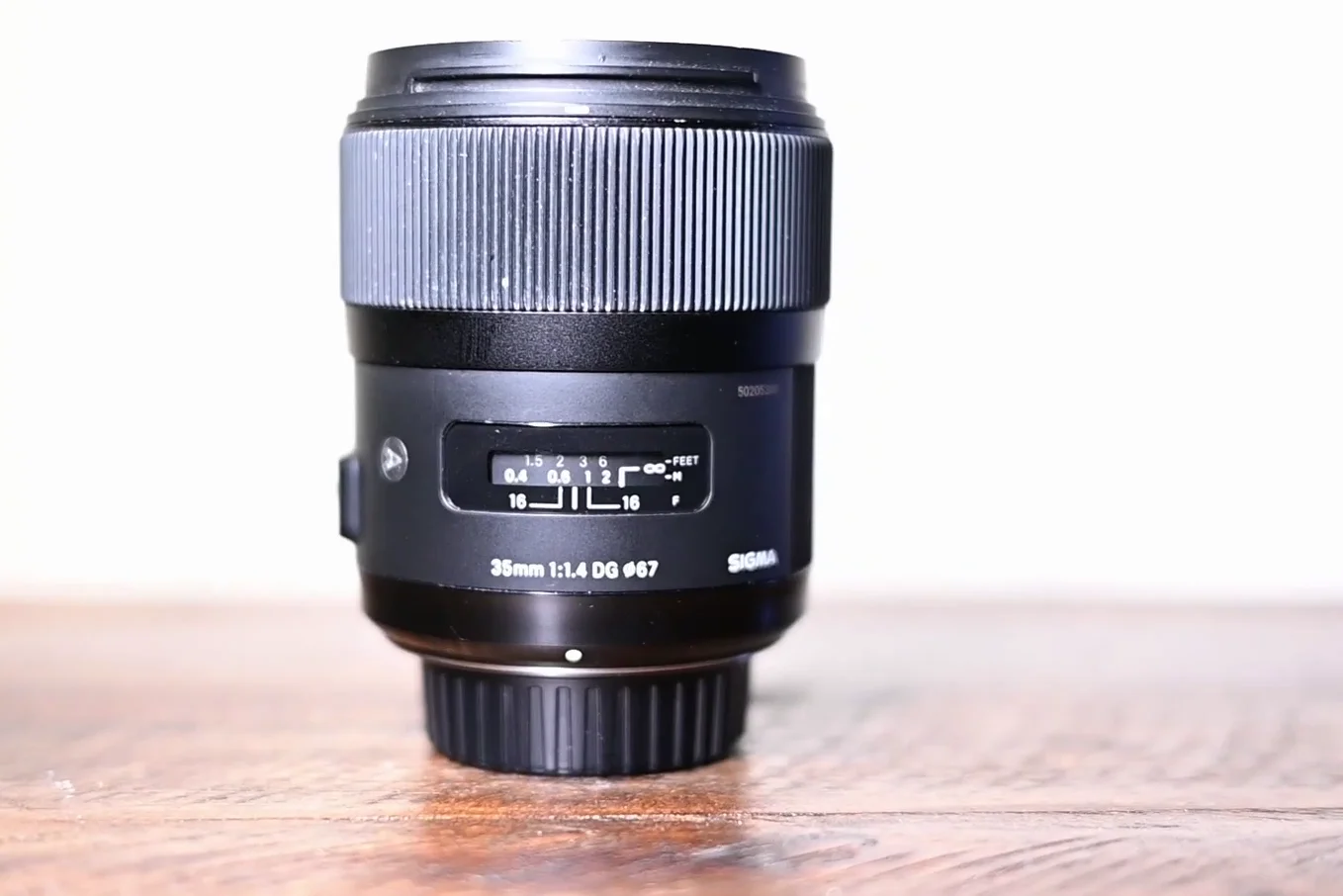
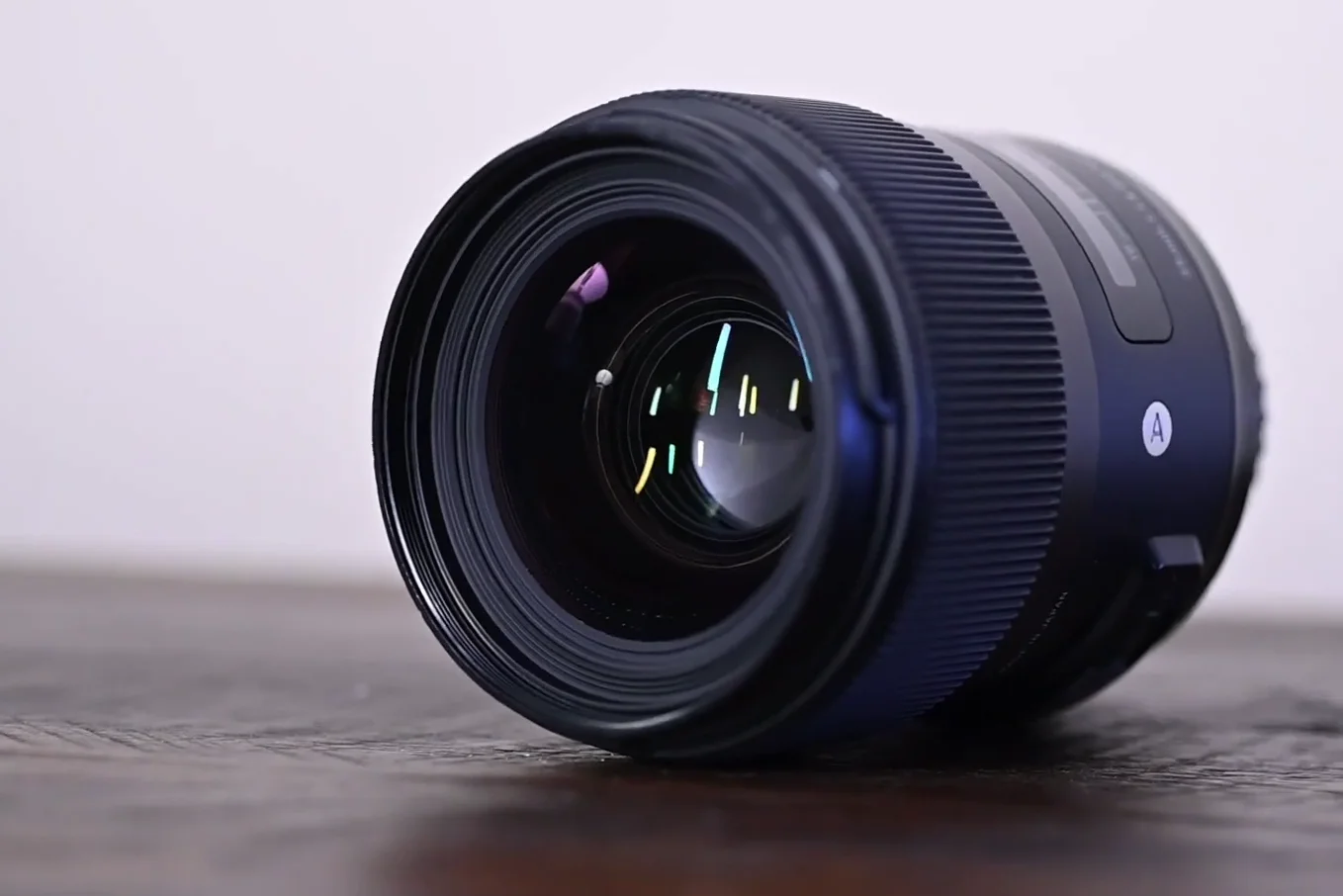
If you’ve been shooting for a while, you probably remember the earthquake that happened in 2012. That was the year Sigma decided to stop being the “budget alternative” and started aiming for the throat of the giants like Canon and Nikon. Their weapon of choice? The Sigma 35mm f/1.4 DG HSM Art.
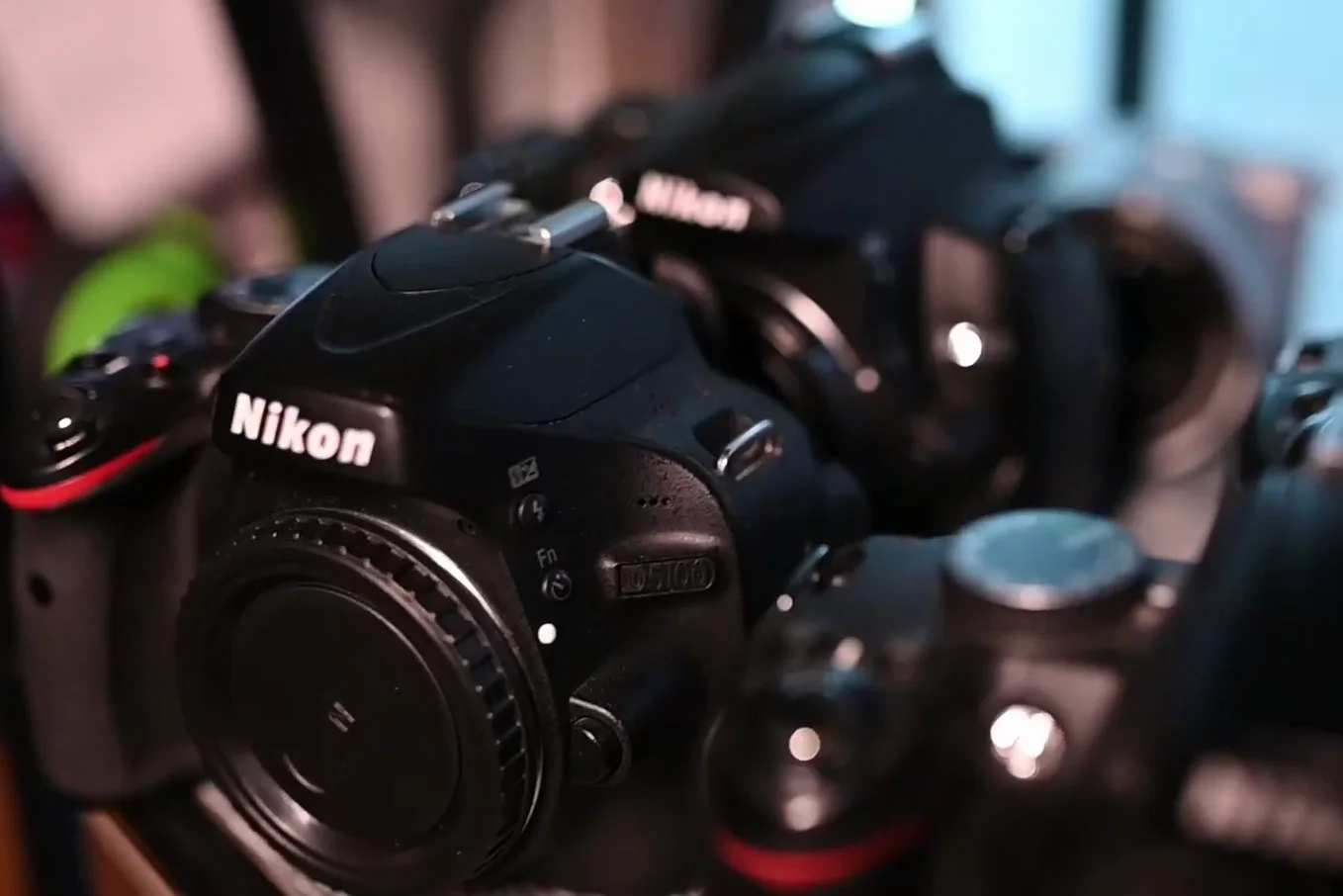
I’ve been using this lens extensively, pairing it with everything from the rugged Nikon D3 to the modern Z6, and I’m here to tell you why, more than a decade later, this lens isn’t just relevant—it’s still one of the best value propositions on the market.
When this lens first hit the shelves in 2012, it carried a price tag of around $900. At the time, that was a steal compared to the native equivalents, which often cost nearly double while offering similar (or sometimes worse) optical performance.
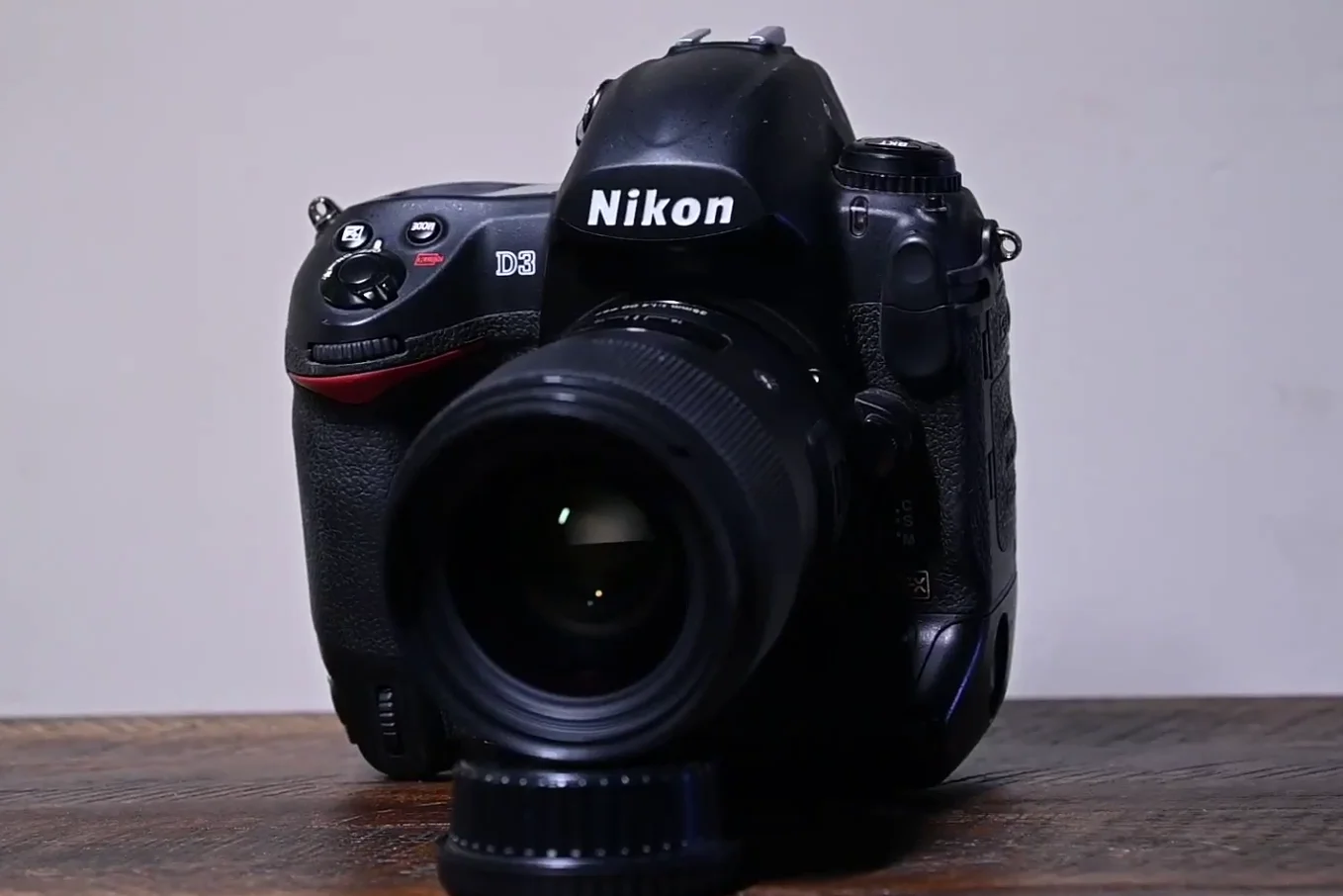
The Sigma 35mm Art balances perfectly on larger bodies like the Nikon D3, creating a formidable setup.
Fast forward to today, and the landscape has changed. With the release of newer mirrorless versions (the DG DN line), the price of this original DSLR masterpiece has plummeted on the used market. I picked mine up a few years ago for about $400, but if you are patient and scour the forums or eBay, you can easily find copies floating between $350 and $400.
For a professional-grade f/1.4 prime lens, that price-to-performance ratio is frankly ridiculous. It allows enthusiast photographers to access that “creamy pro look” without selling a kidney.
The 35mm vs. 50mm Dilemma: Finding Your Style
One of the most common questions I see in photography communities is the eternal battle: Should I get a 35mm or a 50mm?
It’s a tough choice, and frankly, many photographers own both. However, if you are on a budget and can only choose one, the decision defines your style. The 50mm (often the “nifty fifty”) is the classic starter lens. It’s great for isolating subjects and is generally easier for beginners to compose with because it cuts out a lot of the background distraction.
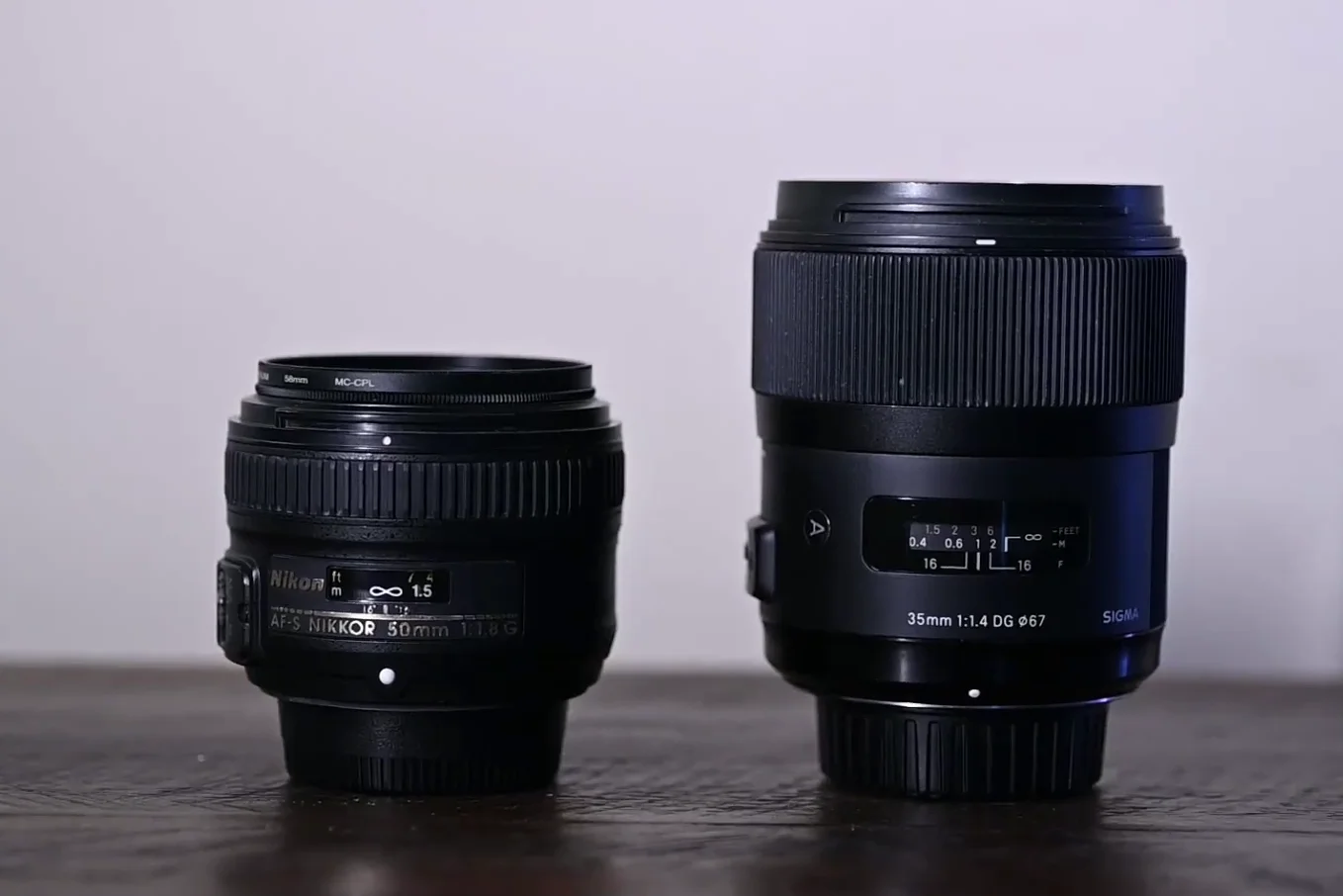
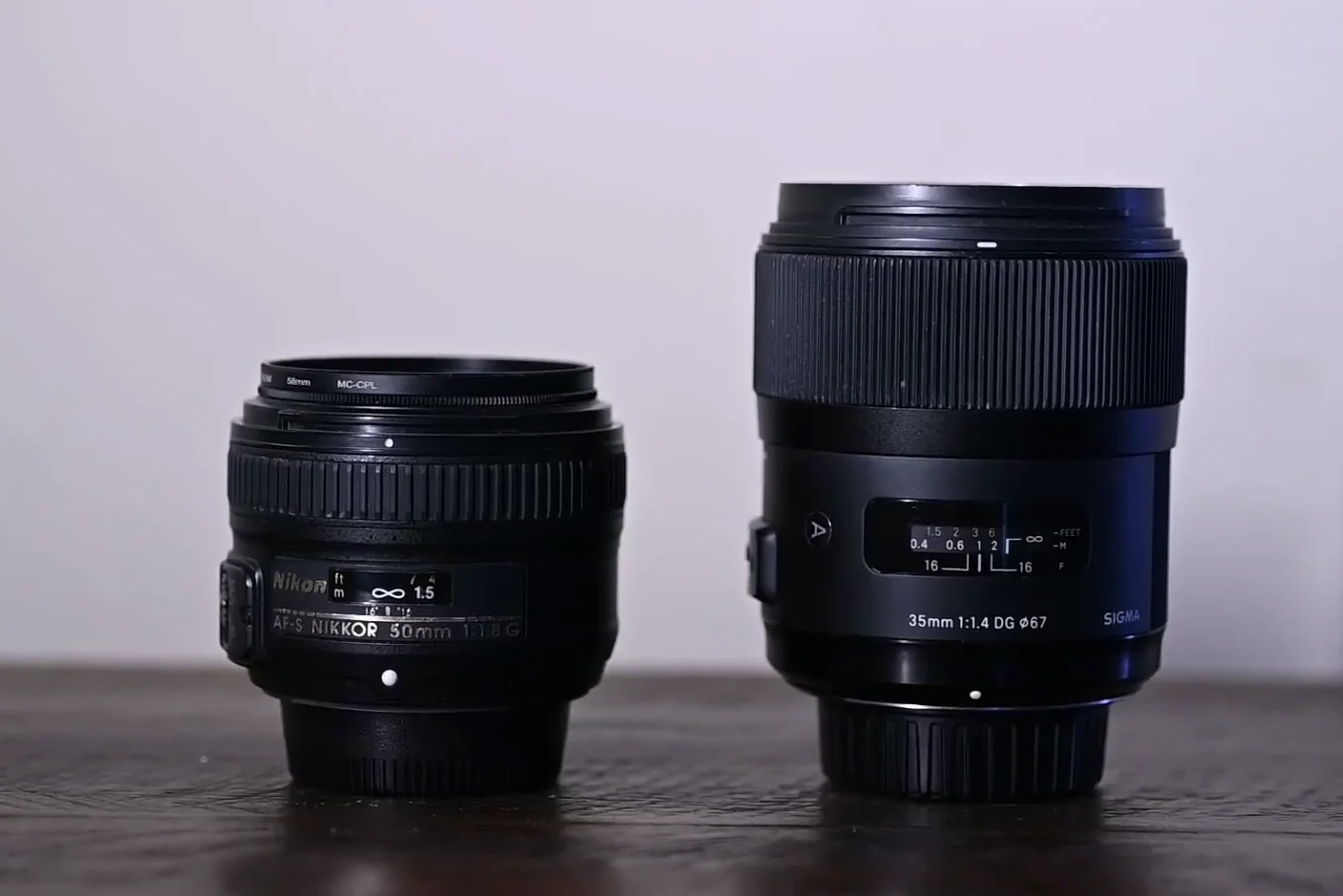
The Sigma 35mm Art (right) is significantly beefier and more substantial than the standard Nikon 50mm f/1.8 (left).
However, graduating to the 35mm focal length often feels like taking the training wheels off. I personally choose the 35mm over the 50mm almost every time. Why? Because the 35mm is a storytelling lens.
Why 35mm Wins for Me:
Environmental Portraits: It allows you to include enough background to give your subject context.
Versatility: It is wide enough for car shows and tight indoor wedding venues, but you can still get close enough for intimate portraits without the distortion you’d get from a 24mm.
The “Human Eye” Feel: While 50mm is technically “standard,” I find 35mm mimics the field of view of human attention much better.
When I pair this Sigma 35mm with my Nikon D3 or D700, magic just happens. It fits my style of capturing car culture, weddings, and lifestyle portraits perfectly.
Build Quality and Ergonomics
Let’s address the elephant in the room: The Size.
If you are coming from a plastic “nifty fifty” like the Nikon 50mm f/1.8G, the Sigma 35mm Art is going to feel like a tank. It is dense, heavy, and bulky. But for me, that’s a feature, not a bug. The weight gives it a premium feel; you know you are holding a serious piece of optical engineering.
The metal mount and robust build quality are signatures of the Sigma Art line, though note the lack of a rubber weather-sealing gasket.
The One Major Downside: Weather Sealing
If there is one nitpick to have about this lens, it is the lack of weather sealing. Unlike its modern mirrorless successors or the native Nikon/Canon equivalents, the original 35mm Art doesn’t have that rubber gasket at the mount to keep moisture out.
Does this mean it will die if a raindrop touches it? No. I’ve used it in less-than-ideal conditions, and it survived. But, you do need to be mindful. If you are shooting in a downpour or a dusty environment, you’ll want to be careful.
Optical Performance: Is it Still Sharp?
The short answer: Yes, it is razor sharp.
When Sigma launched the Art line, their goal was to prioritize optical performance above all else, and it shows. What surprised me most when I first started using this lens was its performance wide open.
Shooting at f/1.4
Usually, with older fast primes, shooting at the maximum aperture (f/1.4) results in soft, dreamy images with a lot of chromatic aberration. You often have to stop down to f/2 or f/2.8 to get usable sharpness.
Not with the Sigma. It is incredibly sharp right at f/1.4.
Center Sharpness: Excellent. You can count the eyelashes on a portrait subject.
Bokeh: The out-of-focus areas are buttery smooth. It creates that distinct separation between subject and background that gives photos a “3D pop.”
Low Light: The f/1.4 aperture sucks in light, making it a beast for dark wedding receptions or night street photography.
With a 67mm filter thread and a massive front element, the lens gathers light beautifully for low-light situations.
Autofocus Speed
For a third-party lens adapted to different systems, the autofocus is surprisingly snappy. On my DSLRs, it locks on quickly. It’s reliable enough for event work where moments happen in a split second. However, user experience may vary depending on calibration (a known quirk of DSLR lenses), but usually, it performs admirably.
Video Capabilities: The Cinematic Look
I’ve found myself reaching for this lens constantly for video work. The rendering of the Sigma Art glass has a certain character—a micro-contrast and color rendition—that just looks “cinematic” straight out of the camera.
Whether I’m filming a vlog, a car cinematic, or B-roll for an event, the footage has a professional sheen to it.
The Audio Warning
However, videographers need to be aware of one thing: The Noise.
This lens uses a Hyper Sonic Motor (HSM), and while it’s fast, it is not silent. If you are using the on-camera microphone and autofocusing, your audio will be filled with clicking and grinding sounds.
Pro Tip: If you use this lens for video, you absolutely must use an external microphone (like a shotgun mic or lavalier) placed away from the lens body, or switch to manual focus.
Compatibility: The Universal Soldier
One of the best things about buying this F-mount version of the lens is its backward compatibility. It works on almost any Nikon DSLR you can throw at it.
Whether you shoot with a pro-body D4 or an entry-level D3000 series, this lens is compatible across the entire F-mount ecosystem.
Full Frame (FX): D3, D700, D850, D6. This is where the lens shines, giving you that true 35mm field of view.
Crop Sensor (DX): D3000, D5000, D7000 series. On these cameras, the crop factor turns this lens into roughly a 52mm equivalent. This actually makes it a fantastic standard portrait lens for crop sensor shooters, behaving very similarly to a nifty fifty on full frame but with better glass quality.
Mirrorless (Z Mount): With the FTZ adapter, this lens works flawlessly on Nikon Z cameras like the Z6, Z8, or Zf. In fact, the In-Body Image Stabilization (IBIS) on the mirrorless bodies gives this lens a new lease on life for handheld video.
Conclusion: Should You Buy It?
If you have $350-$400 to spend and you want to elevate your photography, the Sigma 35mm f/1.4 Art is a no-brainer.
It’s a lens that forces you to be a better photographer. It makes you move your feet to compose. It rewards you with stunning sharpness and beautiful bokeh. Yes, it’s heavy, and yes, it lacks weather sealing, but the image quality you get for the price is unmatched.
For beginners looking to move past the plastic 50mm, or professionals looking for a budget-friendly backup that delivers first-party results, this 12-year-old lens is not just surviving; it’s thriving.
Pros:
* Incredible sharpness at f/1.4.
* Beautiful, creamy bokeh.
* Fast autofocus.
* Excellent build quality.
* Amazing value on the used market.
Cons:
* Heavy and bulky.
* No weather sealing rubber gasket.
* Noisy autofocus for video.
Do not let the age of this lens scare you. Good glass is good glass, forever.