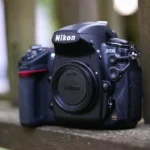
In the fast-paced world of digital photography, “obsolete” is a word thrown around too casually. We are constantly told that we need more megapixels, faster processors, and AI-driven autofocus to take good pictures. But sometimes, looking back reveals a tool so well-engineered that it defies the aging process.
Enter the Nikon D3.
Released back in August 2007, this camera was a revolution. It was Nikon’s first true full-frame digital SLR, a direct answer to Canon’s dominance at the time. Back then, it cost $5,000 (roughly $7,700 in today’s money). Today? You can pick one up for the price of a mid-range point-and-shoot—somewhere between $300 and $600 depending on condition.
I’ve spent extensive time shooting with this 18-year-old beast, and I’m here to tell you why it might just be the smartest purchase a budget-conscious photographer can make in 2025. It’s not just a camera; it’s a tank, a statement piece, and a surprisingly capable imaging tool.
Before we dive into the “feeling” of the camera, let’s look at the raw numbers. On paper, an 18-year-old digital sensor sounds like a recipe for disaster, but the D3 surprises you.
Sensor: 12.1 Megapixel FX (Full-Frame) CMOS
Autofocus: 51-point Multi-CAM 3500FX AF system
ISO Range: 200–6400 (Expandable to 25,600)
Speed: 9 FPS (11 FPS in DX crop mode)
Storage: Dual Compact Flash (CF) slots
Build: Magnesium alloy chassis, weather-sealed
Shutter Rating: 300,000 actuations
The heart of the beast: A 12.1MP Full-Frame sensor that prioritizes pixel size over pixel count.
The immediate standout here is the 12.1 megapixels. In an era of 45MP and 60MP sensors, 12 sounds paltry. However, fewer pixels on a large full-frame sensor means larger individual pixels (photosites). This translates to distinct advantages in dynamic range and low-light performance that actually rival some modern APS-C cameras. It’s quality over quantity.
Build Quality: The “Tank” Factor
There is a tactile joy in holding a Nikon D3 that modern mirrorless cameras simply cannot replicate. Modern cameras are technical marvels, but they often feel like computers with lenses attached. The D3 feels like a weapon.
It is big. It is heavy. It has an integrated vertical grip. When you pick it up, your confidence immediately spikes. This camera was built to survive war zones, sidelines of the Super Bowl, and torrential downpours.
Professional ergonomics: A button for every function, designed to be operated by muscle memory.
The ergonomics are quintessentially Nikon. If you have larger hands, the deep grip fits perfectly. The balance—especially with heavier lenses like a 70-200mm f/2.8 or an 85mm prime—is superior to smaller bodies where the lens makes the setup front-heavy.
A Professional Workflow
Because this is a flagship body, you aren’t digging through menus to change settings. Everything you need—ISO, White Balance, Quality, Bracketing—is on a physical dial or button.
However, it does show its age in some quirky ways. For example, reviewing images. On modern Nikons, you zoom in using the magnifying glass button. On the D3 (and its predecessors like the D2 series), you have to hold a specific button and then rotate the command dial to zoom. It’s a muscle memory hurdle, but one you get used to.
Performance: Is It Fast Enough?
You might expect a camera from 2007 to be sluggish. You would be wrong.
The D3 was built for speed. It rips through frames at 9 frames per second. The shutter sound is mechanical, loud, and incredibly satisfying. It sounds like photography.
The Autofocus Reality
With 51 autofocus points, the D3 is still competent. Is it as sticky as a Sony A9 or a Nikon Z9? Absolutely not. It doesn’t have Eye-AF or AI subject recognition. You have to actually be the photographer. You need to select your point and track your subject.
But here is the truth: this system was used to shoot the Olympics. If it was good enough for Usain Bolt in Beijing 2008, it is good enough for your portrait session, street photography, or local sports event today. The 3D tracking still works surprisingly well for cars and moving subjects.
The optical viewfinder provides a clear, lag-free view of the world, essential for timing your shots.
Live View Limitations
The D3 does have Live View, which was a cutting-edge feature at the time. However, don’t expect to use it like a modern mirrorless. The contrast-detect AF in Live View is painfully slow. It is useful for precise manual focusing on a tripod for landscapes or macro, but for handheld shooting, you stick to the viewfinder.
Nikon D3 vs. Nikon D700: The Sibling Rivalry
Whenever the D3 is mentioned, the Nikon D700 inevitably comes up. Released just a few months later in 2008, the D700 shares the same legendary 12MP sensor and AF system but in a smaller body without the integrated grip.
So, which one should you choose?
David vs. Goliath: The D3 (left) towers over the D700 (right), offering superior battery life and dual card slots.
Choose the Nikon D700 if:
* You want a lighter kit for travel.
* You want a built-in pop-up flash (which can command other flashes).
* You don’t need dual card slots.
Choose the Nikon D3 if:
* You need 100% Viewfinder Coverage: The D700 only covers 95%, meaning things will appear in the edges of your final photo that you didn’t see in the viewfinder. The D3 shows you exactly what you get.
* You need Speed: The D700 tops out at 5 FPS (unless you buy the optional bulky grip). The D3 gives you 9 FPS out of the box.
* You need Reliability: The D3 has dual CF card slots. For wedding or event photographers, this is non-negotiable for data backup.
* Battery Life: The massive EN-EL4a battery in the D3 lasts virtually forever. You can shoot an entire weekend event on a single charge.
* Durability: The shutter is rated for 300,000 cycles vs. 150,000 on the D700. My own D3 has over 160,000 clicks and feels brand new.
Image Quality: The “Look”
This is where the D3 shines. There is a distinct “look” to the files coming out of this sensor.
Because the pixel density is low, the photos have a clean, organic feel. The color science from this era of Nikon is often preferred by portrait photographers for its skin tone rendering, which feels less “digital” and clinical than modern sensors.
The 51-point AF system covers a good portion of the frame, holding up well even by modern standards.
Low Light Performance
You can comfortably shoot up to ISO 3200 or 4000. While modern cameras go higher, the quality of the noise on the D3 is pleasing. It resembles film grain rather than digital color blotches. With modern AI noise reduction software (like Lightroom’s Denoise or Topaz), D3 files are incredibly resilient.
Sharpness
12 megapixels is plenty for social media, web use, and even prints up to A3 size. Paired with high-quality glass—like the Sigma 35mm f/1.4 Art or a classic Nikon 85mm f/1.8G—the images are tack sharp. In fact, older lenses often perform better on the D3 because the lower resolution sensor is more forgiving of lens imperfections than a 45MP sensor.
The Verdict: Who is this for?
The Nikon D3 is not for the videographer (it has zero video capability—for that, you need the D3s). It lacks Wi-Fi and Bluetooth, meaning you need a card reader to get photos to your phone.
However, for $400, you are getting a professional-grade tool that once defined the industry.
Paired with modern glass, the D3 produces imagery that rivals cameras costing ten times as much.
It is the perfect camera for:
1. Students: Learn exposure, focus, and composition on a camera that punishes mistakes but rewards skill, without breaking the bank.
2. Aspiring Pros: If you want to shoot weddings or events on a budget, the dual card slots and tank-like build make this a viable entry-level pro body.
3. The Second Body: If you already shoot Nikon, having a D3 as a backup or a dedicated telephoto body is a no-brainer.
4. The Purist: If you miss the feeling of a heavy, mechanical shutter and an optical viewfinder, the D3 is pure photography therapy.
The Nikon D3 proves that great technology doesn’t expire; it just matures. It is, unequivocally, the cheapest way to feel like a professional photographer today.