If you were into photography back in 2008, you remember the Nikon D90. It wasn’t just another camera release; it was a watershed moment. It was the prosumer body that bridged the gap between the enthusiast and the professional, and historically, it holds the title of being the world’s first DSLR to feature video recording.
But that was over 15 years ago. In the world of technology, a decade and a half is usually enough to turn cutting-edge gear into a paperweight. However, cameras are different. Light is still light, and glass is still glass.
I recently took the Nikon D90 out into the field—specifically to a rugged, beautiful archipelago environment—to answer a burning question: Does this legendary 12.3-megapixel workhorse still have a place in a photographer’s bag today? Or is it finally time to let it retire to the museum shelf?
Let’s dive deep into the experience of shooting with the D90 in the modern era.
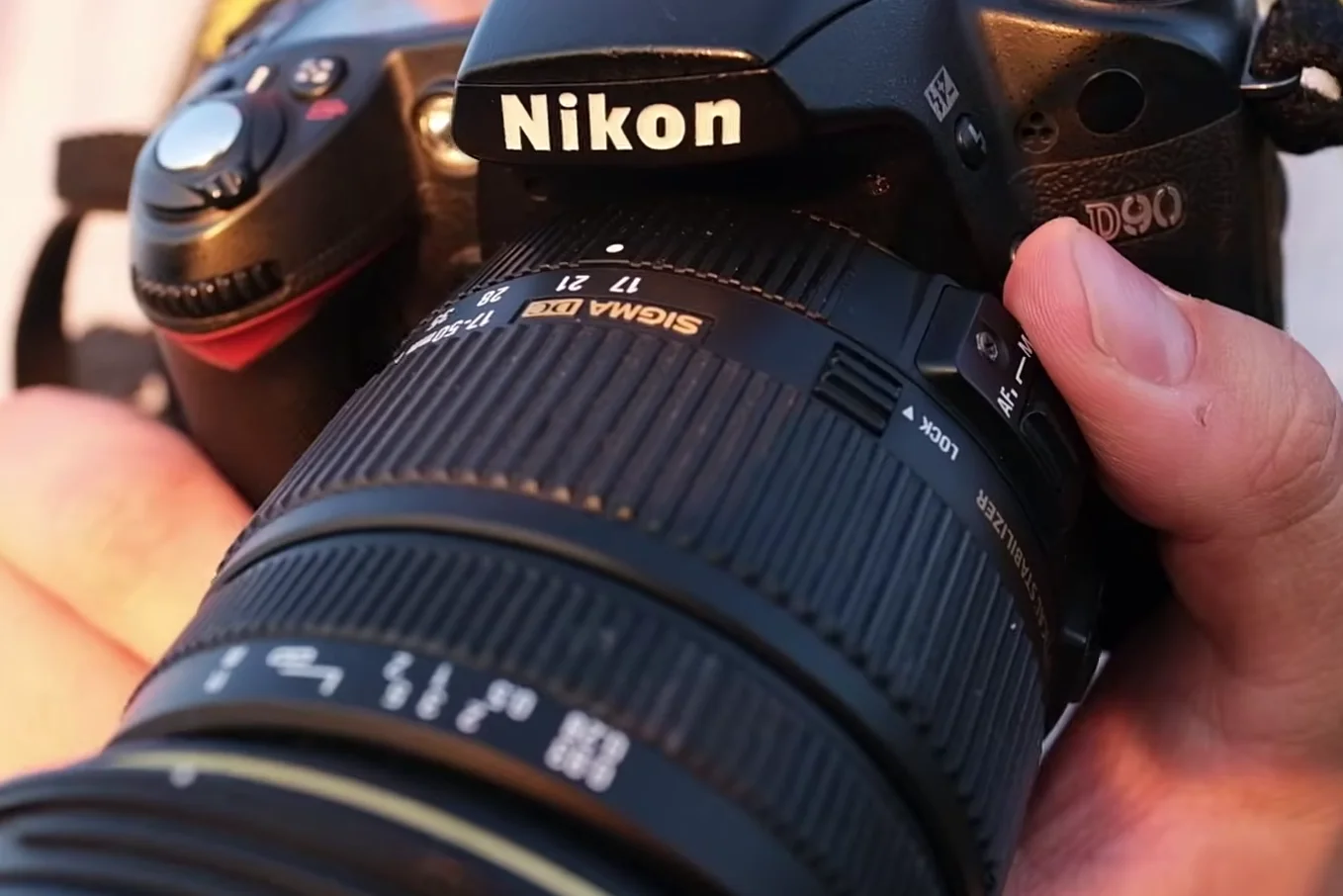
Picking up the D90 today, the first thing that strikes you is how right it feels. If you are coming from modern mirrorless cameras, which can sometimes feel like holding a bar of soap, the D90 is a refreshing return to chunky, substantial grips.
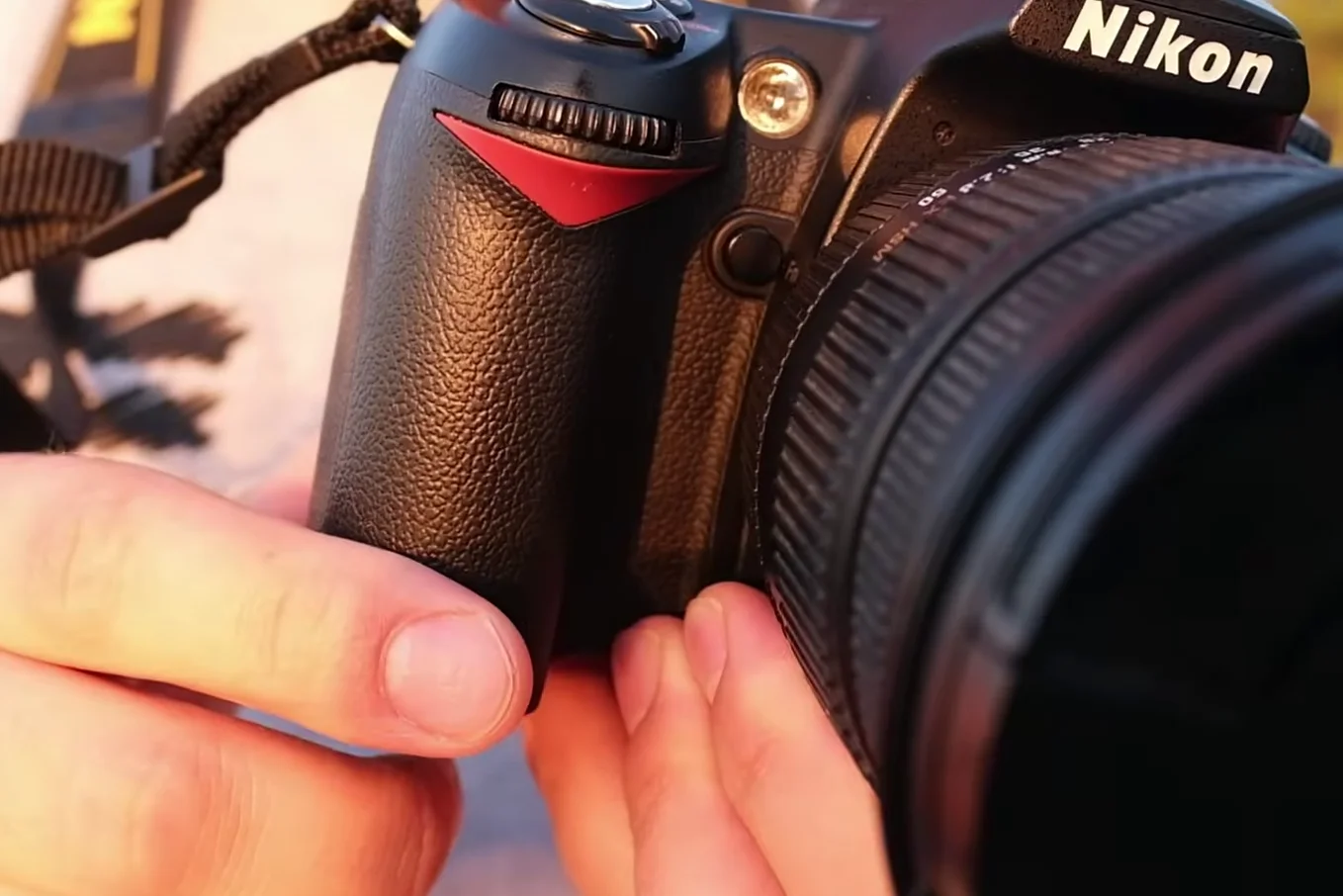
The dual control dials on the D90 offer a professional shooting experience that entry-level cameras lack.
It sits in a sweet spot. It’s significantly lighter than the professional tanks of its era, like the Nikon D200 or D300, yet it doesn’t feel plasticky or cheap like the entry-level D3000 or D5000 series. It has a magnesium alloy frame that inspires confidence. You feel like you can take this hiking, banging it against a few rocks (though I don’t recommend it), and it will keep ticking.
The Control Layout
Nikon nailed the control layout back then, and it hasn’t changed much because it works. You have two command dials—one on the front for aperture and one on the back for shutter speed (in Manual mode). This is a feature often stripped from entry-level cameras today, and once you get used to it, you can’t go back.
However, it’s not all perfect. One quirk that shows the camera’s age is the ISO button placement. It’s located on the back left of the camera, near the screen. To change ISO, you have to press and hold this button while spinning a dial. This means you often have to take your eye away from the viewfinder or perform some finger gymnastics to adjust exposure on the fly. Later models moved this closer to the shutter button, which is far superior.
The Viewfinder and Screen
The optical viewfinder is a pentaprism (not the cheaper pentamirror), offering a bright and clear view of your scene. There is a certain organic joy in looking through an optical viewfinder that electronic screens still struggle to replicate perfectly. You are seeing the actual light, not a digital interpretation of it.
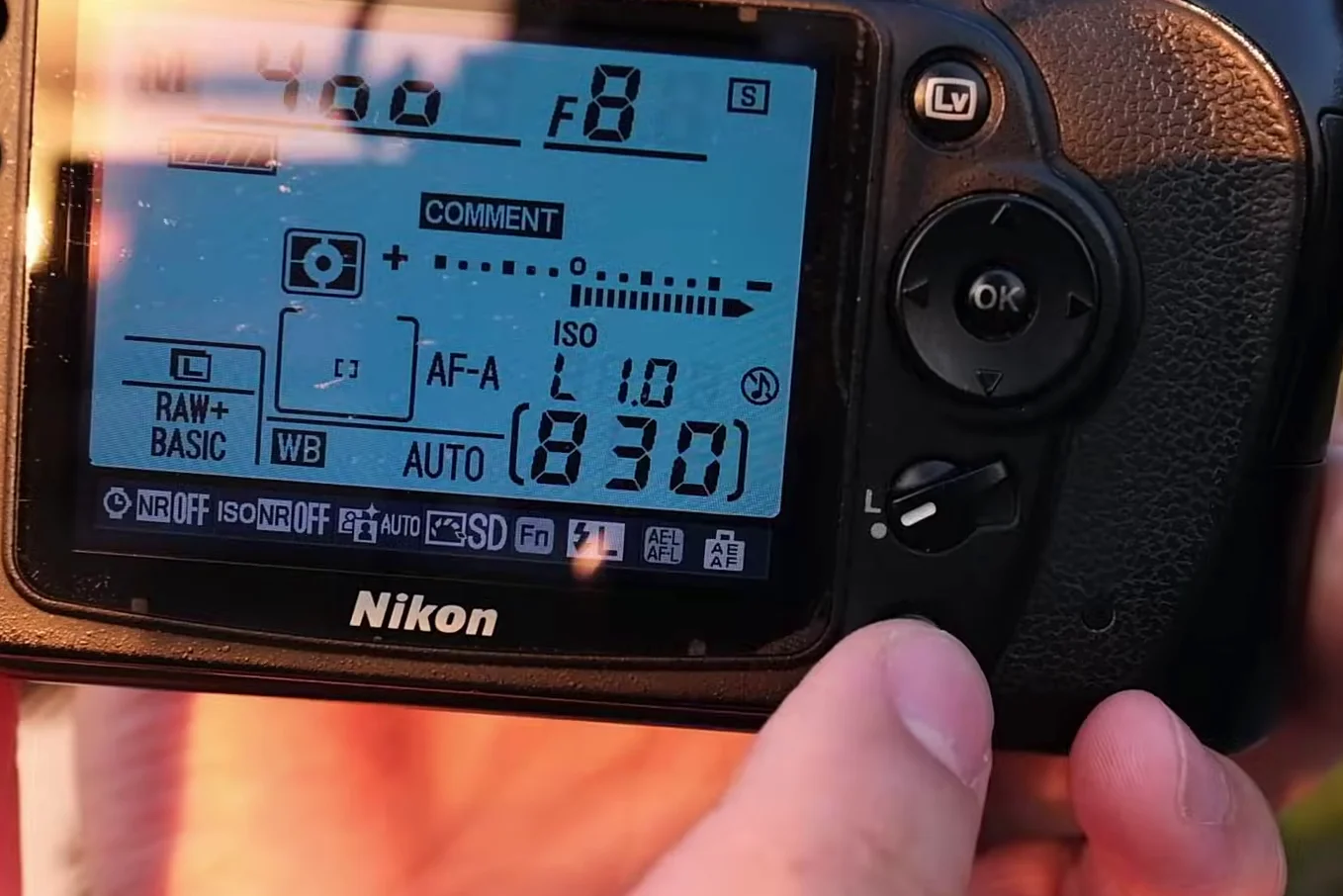
The top deck LCD and the rear info screen provide all the exposure data you need at a glance.
Surprisingly, the rear LCD screen holds up well. It’s a 3-inch, 920k-dot display. While it lacks the touchscreen capabilities and articulating hinges of modern cameras, the resolution is sharp enough to review focus and check exposure. It gets the job done, which is all you really need.
The “First” Video Mode: A Historical Curio
We have to address the elephant in the room: Video. The D90 is famous for introducing video to the DSLR market. But if you are buying this camera today for video, stop.
The implementation is archaic by modern standards. There is no dedicated record button. To shoot video, you have to enter “Live View” mode, and then press the “OK” button to start recording. It’s unintuitive and clearly feels like a feature that was tacked on as an experiment.
The specs? 720p at 24fps. It’s low resolution, mono audio (no external mic input), and worst of all, there is no autofocus during video. You are stuck with manual focus on a screen that isn’t designed for it. Unless you are chasing a specific lo-fi, vintage aesthetic, the video mode is practically unusable for serious work.
Image Quality: The 12.3 Megapixel Debate
Now, for the most important part: The photos.
The D90 uses a 12.3-megapixel DX-format CMOS sensor. In an age where phone cameras have 50+ megapixels, 12 sounds tiny. But let me tell you, 12 megapixels is plenty for 99% of users. It’s enough for a high-quality A3 print, and it’s more than enough for Instagram, Facebook, or a 4K monitor wallpaper.
The 12.3MP sensor still captures stunning colors and dynamic range, especially during golden hour.
The move from CCD (used in the D80) to CMOS with the D90 brought better high-ISO performance. While you won’t want to push this camera above ISO 1600 or 3200, the noise at lower levels has a film-grain quality rather than the ugly color blotching seen in some modern sensors.
Color Science
Nikon’s color science from this era is fantastic. The colors are punchy but realistic. In my testing along the coast, the camera handled the warm hues of the sunset and the cool blues of the twilight beautifully. There is a depth to the images that feels distinct from the clinically sharp, over-processed look of modern digital photography.
Lens Compatibility: The Secret Weapon
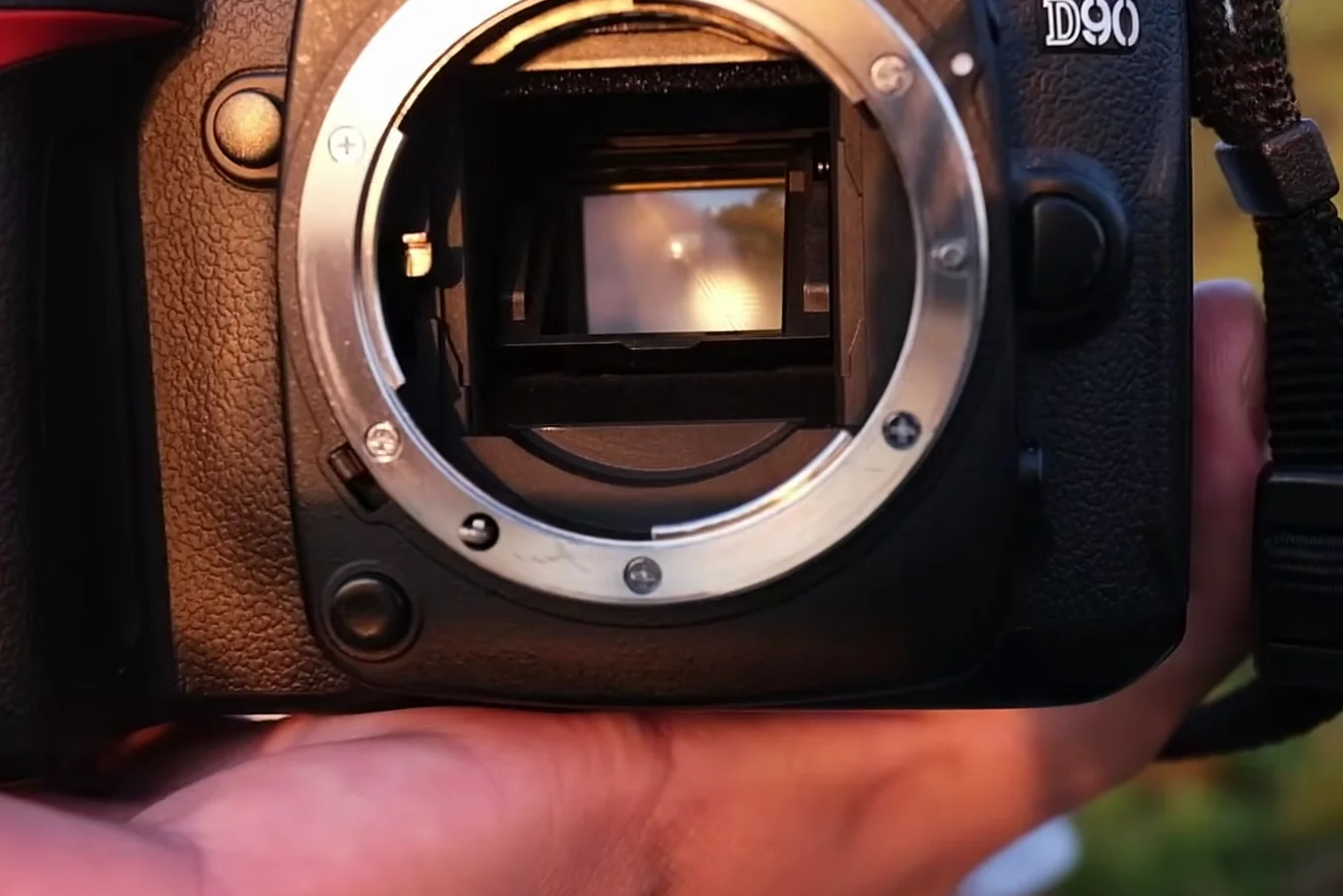
One of the biggest reasons to buy a D90 today is the lens mount. This camera has a built-in focus motor (the “screw drive”).
The built-in focus motor allows the D90 to use older, affordable AF-D lenses with full autofocus capabilities.
Why does this matter? It means you can buy older Nikon “AF-D” lenses—which are optically fantastic and dirt cheap on the used market—and they will autofocus on this camera. If you bought a newer entry-level camera like a D3500 or D5600, those lenses would be manual focus only.
For my tests, I used a Sigma 17-50mm f/2.8, a sharp standard zoom, and an old Micro-Nikkor 105mm f/2.8 D for macro shots. The D90 drove them both perfectly.
Field Test: Into the Archipelago
I took the D90 out to a rocky coastal area to test its dynamic range and handling in harsh light. The conditions were challenging—bright sun reflecting off the water and deep shadows in the forest.
Dynamic Range and Exposure
The D90 struggles a bit more with high-contrast scenes compared to modern sensors that have seemingly infinite dynamic range recovery. You have to be more careful with your exposure. If you blow out the highlights, they are gone. However, this forces you to be a better photographer. You learn to read the light, use exposure compensation, and trust your histogram.
Challenging lighting conditions require careful exposure control, but the results can be incredibly atmospheric.
Macro Performance
Using the 105mm macro lens, the D90 proved to be a capable tool for detail work. The lack of an articulating screen makes shooting low-to-the-ground subjects (like moss or mushrooms) a bit of a physical workout—you have to lie on the ground to see through the viewfinder. But the detail resolution is crisp.
Despite its age, the D90 resolves fine textures and details beautifully when paired with good glass.
The “Live View” focus for macro is slow and clunky compared to mirrorless peaking, but it works for static subjects if you have patience.
Who is the Nikon D90 For in 2025 – 2026?
After spending a day shooting landscapes, macro details, and sunsets with the D90, I’ve come to a conclusion. This camera is an absolute steal on the used market. You can pick up a body for the price of a fancy dinner.
You should buy a Nikon D90 if:
1. You are a student or beginner: You want to learn the “triangle of exposure” (ISO, Aperture, Shutter) on a camera that has dedicated dials for everything. It forces you to learn the craft.
2. You are on a tight budget: You can build a pro-level kit (D90 + 50mm f/1.8D + a telephoto) for less than $300.
3. You want a backup body: If you shoot Nikon DSLRs, this is a great rugged backup to throw in the car.
4. You value ergonomics: You hate small, cramped camera bodies.
You should skip it if:
1. You care about video: Just use your phone; it will be better.
2. You shoot low light/sports: The autofocus system (11 points) and high ISO performance can’t keep up with modern standards.
Conclusion
The Nikon D90 is not just a relic; it’s a testament to how good digital photography got, very quickly. It has “soul.” The shutter sound is satisfying, the grip is comfortable, and the images have a timeless quality.
The D90 is a rugged companion for outdoor adventures, handling heat and rough terrain with ease.
It doesn’t have Wi-Fi, Bluetooth, or AI autofocus. It doesn’t upload to the cloud. It just takes pictures. And sometimes, that disconnect is exactly what we need to reconnect with the art of photography. If you see one at a garage sale or a camera shop, pick it up. You might be surprised at how much fun you have.
The Nikon D90 proves that you don’t need the latest gear to capture beautiful moments; you just need good light, a decent lens, and a camera you enjoy using.