In a world obsessed with 45-megapixel sensors, 8K video recording, and eye-tracking autofocus that seems to read your mind, picking up a camera from 2005 feels like an act of rebellion. But lately, there’s been a resurgence in the photography community—a longing for the “soul” of older digital technology.
Today, I want to take a walk down memory lane with the Nikon D200. Released in November 2005 with a hefty price tag of around $1,700, this camera was a semi-pro beast in its day. Now, fifteen years later (and counting), you can pick one up for the price of a cheap vintage lens. But is it just e-waste, or is it a hidden gem for photographers on a budget? Let’s dive in.
The headline feature of the Nikon D200 isn’t its speed—it’s the sensor. It houses a 10.2 megapixel DX-format CCD sensor.
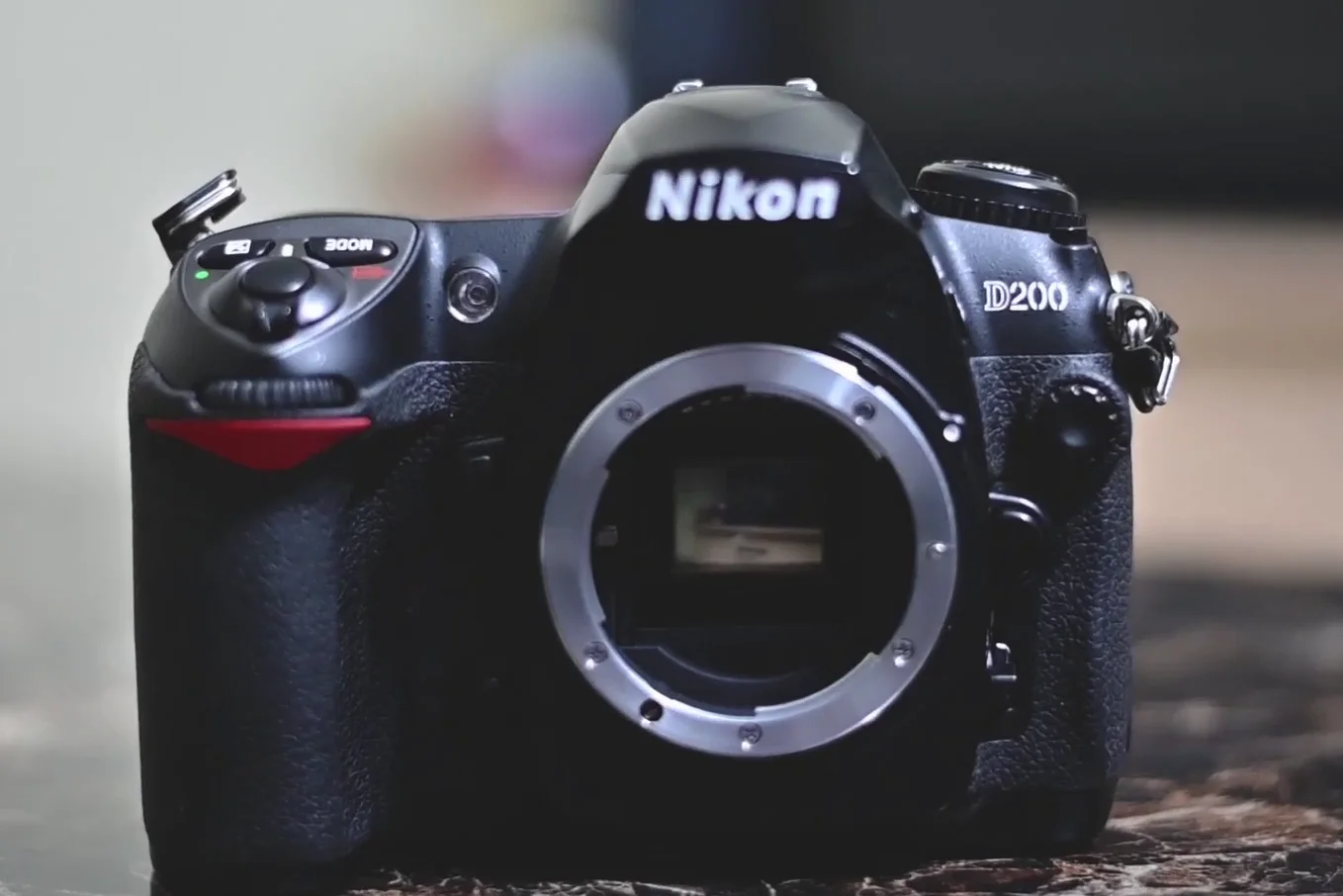
The robust body of the Nikon D200 houses a legendary CCD sensor.
If you’re new to photography, you might be asking, “Only 10 megapixels?” Yes, and for most applications, that is plenty. Unless you are printing billboard-sized advertisements, 10MP is more than sufficient for high-quality Instagram posts, web viewing, and even decent-sized prints for your wall.
But the real story is the CCD (Charge-Coupled Device) technology. Unlike the modern CMOS sensors found in almost every camera today, older CCD sensors are famous for their color rendition. Many photographers swear that CCD sensors produce more “film-like” images with richer, more organic colors straight out of the camera. It’s a distinct look that is hard to replicate with modern, clinically perfect sensors.
Built Like a Tank: Professional Ergonomics
One thing you lose with modern entry-level mirrorless cameras is the feeling of holding a substantial piece of machinery. The D200 feels like a tool. It was built as a workhorse.
The top LCD panel allows for quick setting checks—a pro feature often missing on budget cameras.
It features a dedicated top LCD screen, something usually reserved for high-end models. This allows you to check your shutter speed, aperture, and battery life without draining the main screen or looking through the viewfinder.
Furthermore, the button layout is fantastic. You have dedicated buttons for almost everything—ISO, White Balance, Quality—meaning you spend less time digging through menus and more time shooting.
The Autofocus and Speed
Let’s manage expectations here. This is a camera from 2005. It has 11 Autofocus points, which you can group down to 7 wide frame areas if you prefer.
The 11-point AF system is simple but effective for still subjects.
It shoots at 5 frames per second. By today’s standards, that sounds pedestrian. However, 5 fps is still respectable for street photography, portraits, and general travel shooting. It’s not a sports camera anymore, but it catches the moment.
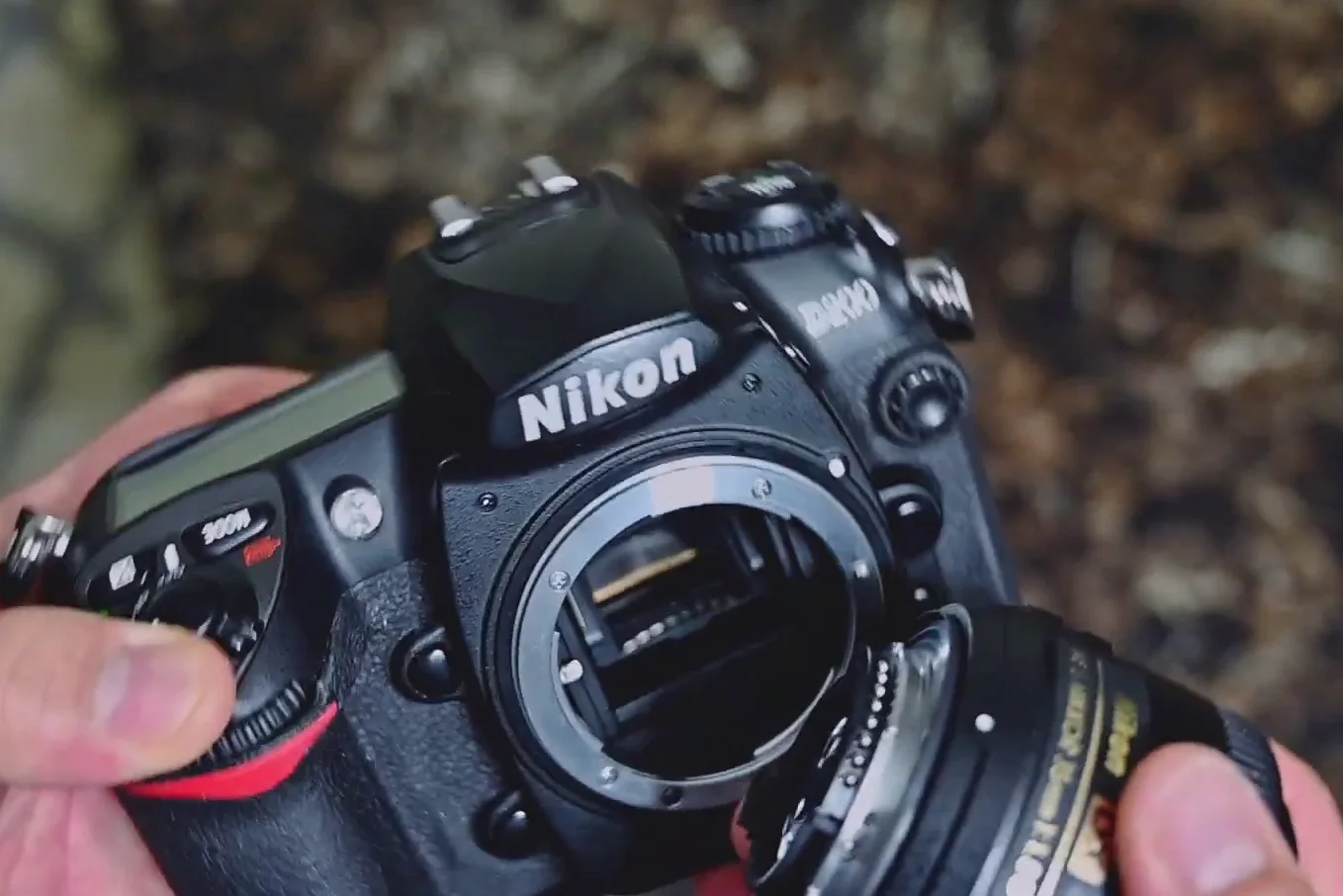
One massive advantage of the D200 is its built-in focus motor. This means it is fully compatible with older Nikon AF-D lenses.
Compatibility with older screw-drive lenses opens up a world of affordable glass.
You can buy fantastic, sharp, vintage Nikon glass for very cheap, and they will autofocus perfectly on this body. This makes the D200 system incredibly economical to build out.
The Reality Check: ISO and Storage
Here is where the age shows. The ISO range is natively 100 to 1600, expandable to 3200 (Hi-1). However, CCD sensors are notorious for struggling in low light.
In my experience, and as seen in various tests, images look great up to ISO 800 or 1000. Once you push past that, you will start to see significant grain and color noise in the shadows.
At ISO 1250 and above, expect a gritty, grainy look—which some actually embrace for black and white photography.
If you are a “natural light only” shooter at night, this might struggle. But flash photography? The D200 is legendary for its flash sync speed and works beautifully with strobes.
Another quirk to remember: The D200 uses Compact Flash (CF) cards, not SD cards. You’ll need to hunt down a CF card and a reader, as these aren’t standard in laptops anymore.
The D200 relies on Compact Flash (CF) cards, a robust but older storage format.
A Pure Photography Experience
Finally, it’s worth noting what this camera doesn’t do: It does not record video.
For many of us, this is actually a feature, not a bug. When you pick up a D200, you are there to take photos. There are no distractions, no video switches to accidentally hit, and no microphone jacks getting in the way. It forces you to focus entirely on the art of the still image.
Verdict: Underrated in 2025 and Beyond?
Is the Nikon D200 still good? Absolutely. In fact, I’d argue it is one of the most underrated bargains on the used market.
If you want razor-sharp autofocus for running dogs or clean images at ISO 6400, look elsewhere. But if you want to learn the fundamentals of photography on a professional-grade body, or if you are chasing that nostalgic, rich CCD color science for your daylight portfolio, the D200 is a joy to use.
It’s a 15-year-old camera that reminds us that great photography isn’t about the specs—it’s about the light, the composition, and how the camera makes you feel when you press the shutter.