CCD vs. CMOS in 2025: The Truth Behind the Vintage Sensor Hype
In the photography world of 2025, we are witnessing a fascinating paradox. As modern mirrorless cameras push the boundaries of resolution, dynamic range, and AI autofocus, a massive counter-movement is sweeping through the community. The “Digicam” trend hasn’t just survived; it has evolved into a serious pursuit of the “CCD Look.”
Photographers are scouring eBay for cameras from the mid-2000s, convinced that the older Charge-Coupled Device (CCD) sensors possess a magical, film-like color science that modern Complementary Metal-Oxide-Semiconductor (CMOS) sensors simply cannot replicate.
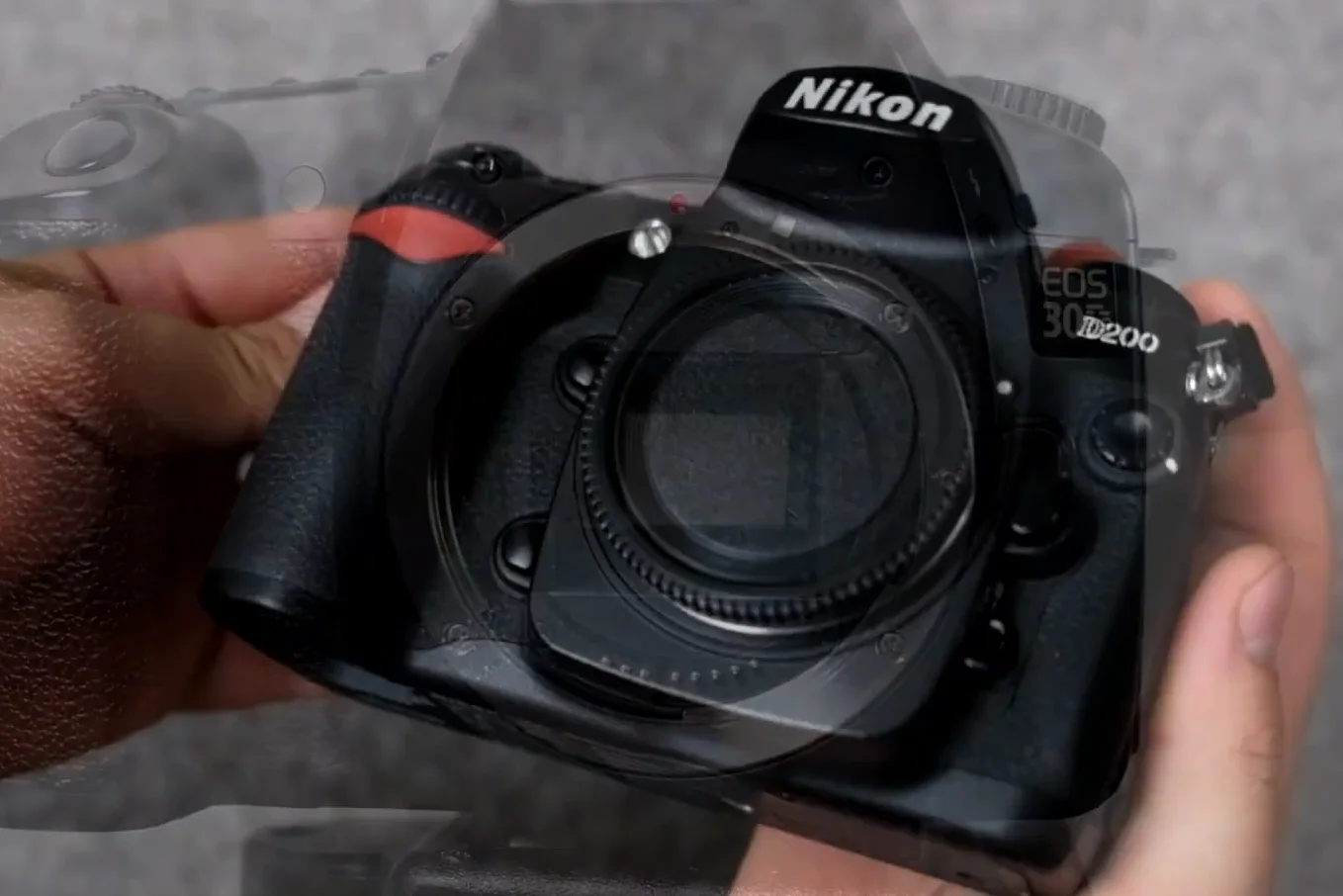
But is this nostalgia, or is there a quantifiable difference? To settle this debate, we are diving deep into a side-by-side comparison of two heavyweights from the golden era of DSLRs: the Nikon D200 (a CCD legend from 2005) and the Canon EOS 30D (an early CMOS adopter from 2006).
The Contenders: A Battle of 2000s Titans
To make this test scientifically relevant, we need cameras that are contemporaries. Comparing a 2005 CCD to a 2025 CMOS isn’t fair due to processor advancements.
Nikon D200 (2005): This camera is often cited as the “last great CCD” DSLR. It features a 10.2 MP Sony-manufactured CCD sensor. In 2025, it’s built like a tank and still feels professional.
Canon EOS 30D (2006): released just a year later, this features an 8.2 MP CMOS sensor. At the time, Canon was pioneering CMOS technology in DSLRs to improve battery life and high-ISO performance.
Both are APS-C cameras, and for this test, they are shooting similar subjects under identical conditions to see if the “CCD Magic” holds up to scrutiny.
The Nikon D200 (left) and Canon 30D (right) represent the transitional era of digital photography technology.
Daylight Performance: Busting the “Color Science” Myth
The primary argument for buying a CCD camera in 2025 is the color reproduction. Enthusiasts often claim CCDs render greens and reds with a richness that resembles Kodachrome slide film.
However, when we put the Nikon D200 and Canon 30D side-by-side in a controlled daylight environment (specifically, an overcast forest and golden hour fields), the results are surprising.
The Raw Reality
When shooting RAW and matching the white balance, the differences are… negligible.
The Nikon D200 files do tend to lean slightly warmer initially, with a tint that favors green/yellow hues. The Canon 30D leans slightly more magenta/neutral. However, this isn’t necessarily a property of the sensor technology (CCD vs. CMOS) as much as it is the manufacturer’s specific Color Filter Array (CFA) and processing algorithms.
Daylight comparison: Nikon D200 (Left) vs Canon 30D (Right). Once white balance is corrected, the “CCD Magic” becomes much harder to distinguish from CMOS.
If you are a JPEG shooter, you will see a massive difference. Nikon’s image processing engine from 2005 renders images very differently than Canon’s. But if you edit your photos (as most of us do in 2025), you can easily grade the CMOS file to look like the CCD file, and vice versa. The “unreplicable” colors are, in fact, quite replicable with a few slider adjustments.
Resolution and Detail
One minor victory for the Nikon D200 here is resolution. The 10.2 MP sensor does resolve slightly more detail than the Canon’s 8.2 MP. In landscape scenarios with intricate textures like grass or brickwork, the CCD camera offered a crisper image, though this is purely a megapixel advantage, not a sensor-type advantage.
Testing color rendering on bright green subjects. The differences are subtle and largely preferential.
Low Light: Where the Technologies Diverge
If daylight leveling the playing field was a disappointment for CCD purists, the low-light tests reveal exactly why the industry switched to CMOS.
This is where the physics of the sensors come into play. CCD sensors consume more power and generate more heat. The readout process is different, which historically made them more susceptible to noise at higher ISOs.
The Noise Character
At ISO 1600 or 3200, the Canon 30D (CMOS) produces a significantly cleaner image. The noise is uniform and less intrusive.
The Nikon D200 (CCD), conversely, falls apart more dramatically. However, in 2025, this is actually a selling point for many. The noise from the CCD sensor feels more “organic.” It lacks the aggressive noise reduction smoothing that modern cameras apply even to RAW files. It looks grittier, more akin to high-ISO film grain than digital artifacting.
If you are looking for clinical perfection, the CMOS wins. If you want that “lo-fi” aesthetic without using a filter app, the Nikon D200 delivers it natively.
Low Light Test: The CMOS sensor (Right) handles shadows much cleaner, while the CCD (Left) introduces significant noise and texture.
The “Glitch” Aesthetic: Amp Glow and Smearing
One of the most interesting findings in this test is the imperfections found in the CCD sensor, which have become desirable “features” for artistic photography today.
1. Amp Glow
During long exposures or high ISO shooting, the circuitry surrounding the CCD sensor heats up. This heat leaks onto the sensor as infrared energy, creating a phenomenon known as “Amp Glow.”
On the Nikon D200, this manifests as a purple haze creeping into the corners of the frame. Modern CMOS sensors have designs that mitigate this almost entirely. While technical photographers in 2005 hated this, artistic photographers in 2025 love the unpredictable, analog error it introduces to the frame.
The “Amp Glow” effect (purple haze in the top left) is a characteristic flaw of older CCD sensors like the Nikon D200 during long exposures.
2. Smearing and Blooming
Another CCD quirk observed is the handling of bright point light sources. In the underground tunnel test, the artificial lights on the D200 showed distinct purple fringing and “blooming” edges. This is likely related to “CCD Smearing,” where excessive charge from a bright pixel leaks into vertical adjacent pixels.
The Canon 30D handled these highlights with boring precision. The D200 gave them a strange, ethereal glow. Again, technically a flaw, but artistically a vibe.
Conclusion: Which Should You Buy?
After putting the Nikon D200 and Canon 30D through their paces, the conclusion is nuanced.
If you are buying a vintage camera expecting that the CCD sensor alone will magically transform your daylight photography into film-like masterpieces, you might be disappointed. With proper editing, a RAW file from a CMOS Canon 30D is nearly indistinguishable from the CCD Nikon D200 in good lighting.
However, the CCD experience is real, but it lives in the flaws, not the perfection.
Choose the Nikon D200 (CCD) if:
* You want a more “organic,” gritty noise structure in low light.
* You appreciate “digital rot” aesthetics like amp glow and blooming.
* You want that specific, slightly warmer, greener starting point for your color grade.
* You want the build quality of a semi-pro body from 2005.
Choose the Canon 30D (CMOS) if:
* You want a cleaner image with better high-ISO performance.
* You prefer a more neutral/magenta starting point for portraits.
* You want longer battery life (CMOS is much more power-efficient).
Ultimately, the war between Nikon and Canon, and CCD and CMOS, is less about “better” and more about “flavor.” In an era where every smartphone photo looks over-processed and identical, both of these 20-year-old cameras offer a refreshing, tactile, and raw photographic experience that is well worth the investment in 2025.