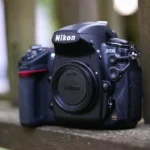
In the world of photography, 2025 has become a year of looking backward as much as looking forward. While mirrorless cameras push the boundaries of autofocus and AI, there is a massive resurgence of interest in “vintage digital.” Specifically, the debate between the older CCD sensors and the “modern” CMOS sensors has reached a fever pitch.
Today, we are diving deep into a fascinating comparison between two absolute legends of the Nikon F-mount lineage: the Nikon D700 (a full-frame CMOS beast from 2008) and the Nikon D200 (an APS-C CCD classic from 2005).
The question on everyone’s mind is simple: Does the D200’s CCD sensor actually possess that mythical “film-like” color science that justifies the hype? Or is the D700, with its larger sensor and better low-light capabilities, simply the superior tool, rendering the sensor technology debate irrelevant?
I took both cameras out into the field on an overcast day—perfect for testing dynamic range and color without the harshness of direct sun—to find the truth.
Before we look at the files, let’s establish what we are dealing with. These cameras represent two different eras and two different philosophies, yet they share a rugged DNA that Nikon simply doesn’t make anymore.
Nikon D200 (The CCD Hero)
Released: 2005
Sensor: 10.2 MP CCD (Sony manufactured)
Format: DX (APS-C)
The Hype: Known for rich, dense colors and “organic” grain at base ISO.
Nikon D700 (The Low Light Legend)
Released: 2008
Sensor: 12.1 MP CMOS
Format: FX (Full Frame)
The Hype: Arguably the best DSLR Nikon ever made for pure shooting joy, sharing the sensor with the flagship D3.
We aren’t comparing build quality here—both are built like tanks. We are strictly comparing the files. Color, dynamic range, and noise.
To keep things fair, I used the same glass: the Sigma 17-50mm f/2.8 DC OS HSM.
The Setup: Leveling the Playing Field
To ensure this was a fair fight, I used the same lens on both bodies: the Sigma 17-50mm f/2.8. Since this is a DX (crop sensor) lens, when mounted on the full-frame D700, the camera automatically enters “DX Mode.” This crops the D700’s image down to roughly 5 megapixels, but it allows for a direct optical comparison without swapping lenses constantly.
Later in the test, I also switched to a Nikkor AF 35-105mm and a Tokina 12-24mm to test different focal lengths and full-frame capabilities.
Round 1: Daylight and Color Science
The primary argument for buying a D200 in 2025 is the color. Enthusiasts claim CCD sensors render reds, greens, and skin tones in a way CMOS cannot replicate.
I started with a subject that offered a mix of textures and muted colors: an old boat resting in the grass. The lighting was flat and overcast, which is actually challenging for sensors because it requires subtle tonal transitions rather than punchy contrast.
Can you tell the difference? Side by side, the D200 and D700 daylight performance is shockingly similar.
The Results
Here is the cold, hard truth: The difference is negligible.
When shooting the same subject, with the same white balance and similar exposure settings, the files from the D700 (CMOS) and D200 (CCD) were nearly indistinguishable.
Greens: The D200 is often praised for its greens, but the D700 matched it effortlessly.
Reds: I photographed a bright red canoe to test saturation handling. Both cameras handled the red channel without clipping, maintaining texture in the fiberglass.
Dynamic Range: In these even lighting conditions, neither camera struggled. The highlights on the white boat were preserved on both sensors.
If you were expecting the D200 to suddenly look like Kodachrome and the D700 to look “digital and sterile,” you would be disappointed. In standard daylight conditions, Nikon’s image processing (the “Expeed” logic, even if older) aims for a consistent Nikon look, regardless of the sensor tech underneath.
Round 2: The Full Frame Advantage
Moving locations, I switched to an older Nikkor AF 35-105mm lens. This allowed me to shoot the D700 in its native FX mode, utilizing the full 12.1 megapixels, while the D200 remained at 10.2 megapixels.
We photographed a birch tree avenue. This scene had depth, detailed bark textures, and lush yellow/green wildflowers.
Detail comparison between the two sensors. The D700 in FX mode offers slightly better depth rendering due to the larger sensor size.
Even here, uncropped, the “CCD Magic” didn’t suddenly appear to crush the CMOS sensor. The D700 provided a slightly shallower depth of field (inherent to full-frame sensors) and perhaps a microscopic edge in clarity due to the larger pixel pitch, but the color tonality remained 95% identical.
However, using DX lenses on the D700 does come with a quirk. While the camera crops the file, the viewfinder remains full size, meaning the corners are darkened/masked out visually. It’s a bit of a “tunnel vision” experience, but it works in a pinch if you’re migrating from crop to full frame.
Round 3: Low Light & High ISO (The CMOS Domain)
This is where the nostalgia trip hits a brick wall.
To test low light, I went into a dimly lit pedestrian underpass. I used a Tokina 12-24mm f/4, a DX lens. Interestingly, the D700 allows you to override the crop mode. At 18mm and wider, this lens covers the full-frame sensor reasonably well (with some vignetting), turning the D700 into an ultra-wide beast.
I pushed the ISO to 1600. In 2025, ISO 1600 is considered “clean” on modern cameras. In the mid-2000s, this was the danger zone.
The low light test reveals the true age of the CCD sensor. The D200 struggles significantly compared to the D700 here.
The “Charming” Noise vs. Unusable Noise
Nikon D700: At ISO 1600, the D700 produces grain, but it is monochromatic and pleasant. It retains color accuracy. The shadows hold detail. It is entirely usable for gritty street photography or moody portraits.
Nikon D200: The CCD sensor falls apart. The noise is aggressive, introducing color artifacts (chroma noise) that degrade the image structure. Dynamic range collapses, and shadows become muddy.
This highlights the fundamental architectural difference. CMOS sensors read data faster and cooler, allowing for much better signal-to-noise ratios. CCDs consume more power and generate heat, which introduces noise rapidly as ISO climbs. If you plan to shoot indoors or at night, the D700 is the clear winner, no contest.
The “Hidden” Variable: Exposure Drifting
During post-processing (using standard Adobe Lightroom workflows), I noticed something peculiar that affects how people perceive these cameras.
The RAW files from the D200 were consistently underexposed by about 2/3rds of a stop compared to the D700, despite using identical aperture and shutter speed settings.
This could be due to:
1. Sensor Calibration: ISO 200 on a D200 might not be the same actual sensitivity as ISO 200 on a D700.
2. Aging: Electronic components drift over 20 years.
3. Light Transmission: The smaller mirror box and sensor assembly might handle light transmission differently.
Why does this matter? Because underexposed images, when lifted in post, look moodier and more saturated—traits often attributed to “CCD Magic.” Once I matched the exposures perfectly in post, the files looked even more similar. Much of the “look” people love might just be slight underexposure and a different default contrast curve.
Conclusion: Don’t Believe the Hype (But Buy What You Love)
After analyzing these images side-by-side, my conclusion for 2025 is controversial but grounded in reality: The CCD Hype is mostly hot air.
If you put a D200 and a D700 on a tripod in good light, you will not be able to tell which camera took which photo based on “color science” alone. The processing—whether inside the camera’s JPEG engine or your RAW editor—matters infinitely more than the sensor technology.
So, which one should you choose?
Choose the Nikon D200 if:
* You are on a strict budget (it is significantly cheaper).
* You shoot exclusively at ISO 100-400 in daylight or studio settings.
* You want that specific, nostalgic workflow of older tech.
* You enjoy the challenge of a camera that punishes poor exposure.
Choose the Nikon D700 if:
* You want the best “bang for buck” DSLR experience available in 2025.
* You want to use vintage manual focus lenses with their true field of view (Full Frame).
* You need to shoot past sunset (ISO 1600-3200 is very usable).
* You want a larger, brighter viewfinder.
The D700 remains the more versatile, powerful tool. It gives you the “vintage digital” feel regarding build and interface, but with a sensor that doesn’t limit you to sunny days. However, seeing the D200 keep up in daylight is a testament to how good Nikon’s engineering was two decades ago.
Both cameras are capable of creating stunning art. Just don’t buy the D200 expecting it to magically fix your colors—that skill is still in your hands (and your editing software).
What do you think? Do you still shoot with CCD cameras in 2025? Let me know in the comments below!