If you’ve been hanging onto your trusty Nikon DSLR, wondering if the grass is truly greener on the mirrorless side, you aren’t alone. The transition from the optical viewfinder to the electronic world is a big leap.
I’ve spent the last 12 months putting the Nikon Z6 through its paces. From high-pressure weddings to casual car photography and video shoots, I’ve learned exactly where this camera shines and where it frustrates. Released alongside the high-resolution Z7 back in late 2018, the Z6 was positioned as the “all-rounder.”
Two years post-release (and one full year of ownership later), here is my honest, real-world review of the Nikon Z6. Does it hold up? Let’s break it down.
On paper, the Z6 hits that sweet spot for enthusiast and professional work. It sports a 24.5 Megapixel Full-Frame BSI Sensor. For 90% of photographers, 24MP is the perfect balance between resolution and file size.
The hybrid autofocus system covers 90% of the frame, a massive upgrade from older DSLRs.
Coming from older DSLRs like the Nikon D40 (which had a whopping 3 focus points), the Z6 feels like alien technology. It utilizes a hybrid autofocus system with 273 phase-detect points covering 90% of the frame. It also rips through action at 12 frames per second (FPS).
What I Love About the Z6
After a year of use, the “new toy” syndrome has worn off, leaving behind genuine appreciation for a few key features.
1. Video Autofocus
Historically, Nikon video AF was… let’s just say, “not great.” The Z6 changed that narrative completely. The video autofocus is surprisingly robust, sticking to subjects with a tenacity that rivals Canon and Sony. If you are a hybrid shooter doing vlogs or event videography, this system is finally reliable enough to leave on auto.
2. The EVF and Live View
The Electronic Viewfinder (EVF) and the tilting LCD screen are game-changers for composition. The ability to see your exposure in real-time before you press the shutter saves so much trial and error.
3. Low Light Performance
This is where the 24.5MP sensor really flexes. The ISO performance is stellar. I frequently shoot at ISO 3200 up to 8000 without sweating about noise. It captures clean, usable images in dimly lit reception halls or night street photography.
The “Gotchas”: It’s Not Perfect
No camera is perfect, and the Z6 has a few quirks you need to know before buying.
The XQD Card Situation
This is the biggest hurdle for new buyers. The Z6 features a single memory card slot, and it only takes XQD cards (and CFExpress via firmware update).
The Z6 relies on a single XQD card slot. It’s fast, but the cards are expensive compared to SD.
It does not take SD cards, CF cards, or Micro SDs. You have to invest in the XQD ecosystem. While these cards are incredibly fast and robust, they are significantly more expensive than the SD cards you likely already own. Plus, for professional paid work like weddings, the lack of a second backup slot is a point of anxiety for some, though I haven’t had a card failure yet.
Battery Life
Mirrorless cameras are power-hungry because you are constantly powering screens (the EVF or the rear LCD).
* The Reality: If you are shooting a long event like a wedding or a car show for 4-5 hours, one battery won’t cut it.
* The Fix: I always carry a spare. I usually get about 600-700 shots before needing to swap, but it drains much faster than a D750.
Autofocus Learning Curve
While the AF is great, it can be a bit “finicky” depending on the mode you are in. It’s not necessarily bad, but on earlier firmware (1.0), it had its moments. Even on Firmware 3.0, you need to pay attention to which AF Area Mode you are using to get the best results. It requires a bit more user input than some competitors.
The FTZ Adapter: Keeping Your Glass Alive
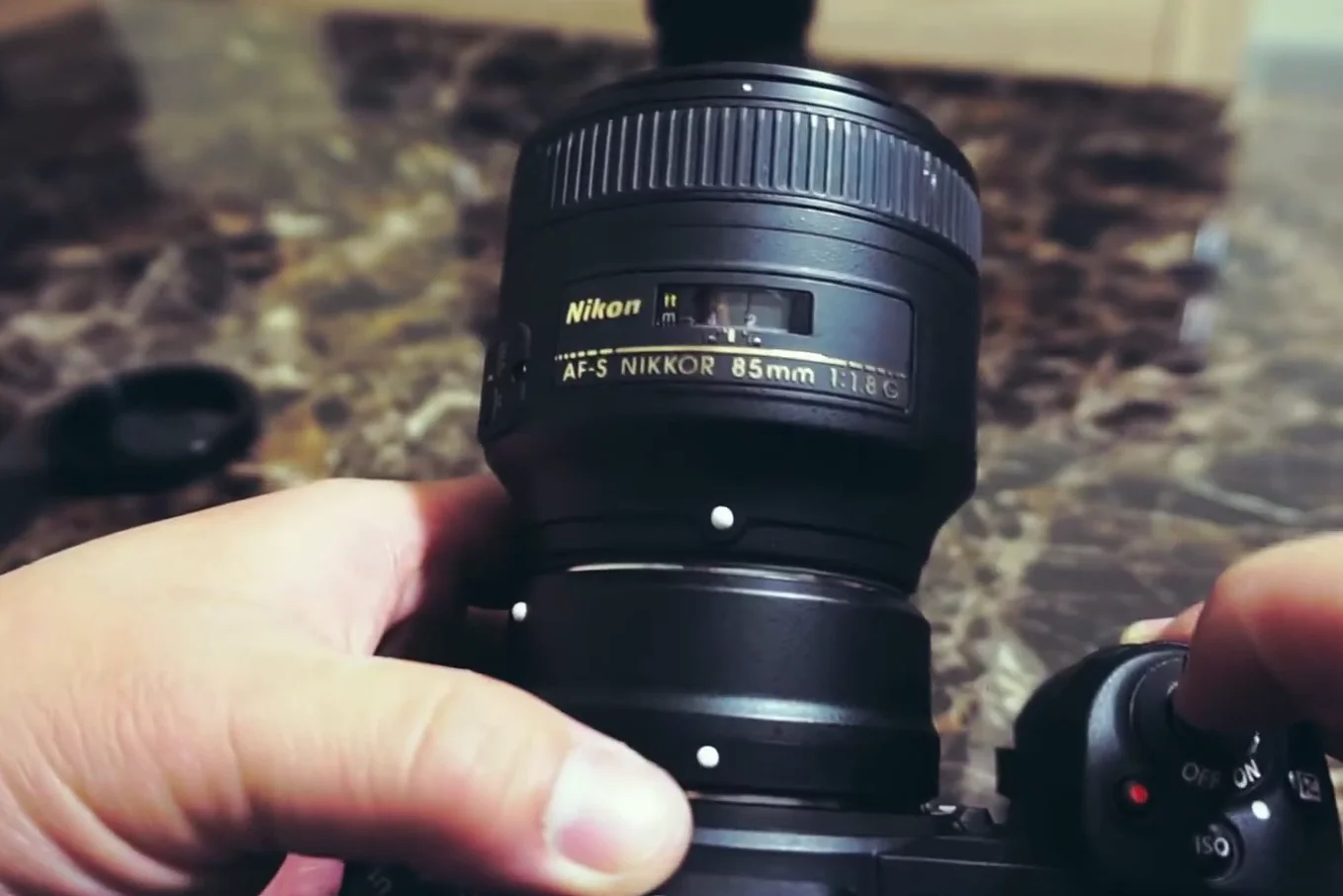
Nikon played a smart move with the FTZ (F to Z) Mount Adapter. This allows you to use your existing F-mount DSLR lenses on the new Z-mount body.
The FTZ adapter works seamlessly with AF-S G lenses, bridging the gap between DSLR and Mirrorless.
Here is the rule of thumb for compatibility:
* AF-S / G Lenses (Modern): Work perfectly. Autofocus is fast and accurate.
* AF-D Lenses (Older): These will NOT autofocus. The FTZ adapter lacks the screw-drive motor required to move the elements in these older lenses. They will mount, and you can shoot with them, but you will be stuck with manual focus.
Pro Tip for Video: If you use F-mount lenses for video, be aware that the internal focus motors can be noisy. The built-in microphone will pick up the whirring sound of the lens hunting for focus.
Ergonomics and Portability
One of the main selling points of mirrorless is the size reduction. Comparing the Z6 to my old Nikon D60 or D300s, the difference is noticeable.
The Z6 (right) is significantly slimmer and lighter than traditional DSLRs, making it great for travel.
It is lighter and more portable, yet the grip is deep enough to feel secure in the hand. It doesn’t feel like a toy; it feels like a professional tool.
The Verdict: Is it worth it in 2025?
I honestly love this camera more than my legendary Nikon D750. That is saying a lot because the D750 is a workhorse.
The Nikon Z6 feels like the spiritual successor to the Nikon D700—a camera that does everything well, is built tough, and provides immense value. With the current firmware updates, the video features (4K, slow motion), and the sheer image quality, the Z6 remains an incredible bargain on the used market.
If you are looking to upgrade to full-frame mirrorless without taking out a second mortgage, the Z6, especially paired with the 24-70mm f/4 kit lens, is a setup that will serve you well for years to come.