In the fast-paced world of camera technology, three years can feel like a lifetime. We are constantly bombarded with the “next big thing,” boasting 8K video, AI-driven autofocus, and pixel counts that would make a billboard blush. But let’s take a step back and look at reality. Does everyone need bleeding-edge tech? Or is there a sweet spot where performance meets value?
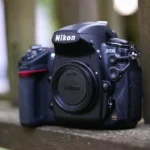
Enter the Nikon Z50. Released back in October 2019, this little APS-C (crop sensor) powerhouse has been out for a while now. But having spent significant time with it in 2023, I’m here to tell you that not only is it still relevant, but for many photographers and hybrid shooters, it might actually be the smartest purchase you can make right now.
If you are sitting on the fence, wondering if “old” tech can keep up with modern demands, let’s break down the Nikon Z50—warts and all.
Let’s get the technical stuff out of the way first. On paper, the Z50 might not look like a spec-sheet monster compared to some 2024 releases, but the numbers tell a story of reliability and capability.
At the heart of the Z50 is a 20.9 MP sensor that punches well above its weight class.
The camera sports a 20.9 Megapixel CMOS sensor. Now, before you say “only 20 megapixels?”, remember that this is essentially the same sensor architecture found in the legendary Nikon D500 and D7500. These sensors are renowned for their low-light performance and dynamic range.
ISO Range: 100 to 51,200 (expandable to a whopping 204,800).
Autofocus: 209 AF points covering a massive portion of the frame.
Speed: It shoots up to 11 frames per second (FPS), which is plenty fast for sports and wildlife.
Video: 4K UHD at 24/25/30 fps and 1080p slow motion up to 120 fps.
What stands out here isn’t just the raw numbers, but the balance. It’s not trying to do 8K and overheat in 10 minutes. It’s built to be a reliable workhorse.
Ergonomics: The “Nikon Feel” in a Tiny Package
One thing Nikon consistently nails—better than perhaps any other manufacturer—is ergonomics. If you are coming from the DSLR world, specifically bodies like the D7000 series or the D500, picking up a mirrorless camera can sometimes feel like holding a bar of soap. They are often too small, with shallow grips that cramp your hand.
Despite its compact size, the deep grip makes the Z50 feel secure and substantial in the hand.
The Z50 is different. It feels like a toy in terms of weight, but a tool in terms of build. It has that deep, substantial grip that Nikon is famous for. When you hold it, it locks into your hand.
For legacy Nikon users, the transition is seamless. The button layout, the command dials, and most importantly, the menu system, are immediately familiar. You don’t have to relearn how to operate a camera; you just pick it up and start shooting. It retains that rugged “I can take this anywhere” vibe, even though it’s significantly lighter than its DSLR ancestors.
Video & Autofocus: The Leap from DSLR
If you’ve ever tried to shoot video on an older Nikon DSLR like the D750 (or heaven forbid, the D3000 series), you know the pain. The hunting. The noise. The missed focus. It was, frankly, unusable for serious run-and-gun work.
The autofocus system on the Z50 is a massive leap forward from Nikon’s DSLR era.
The Z50 changes the narrative completely. The autofocus performance in video is excellent. Is it Sony A7IV level? Maybe not quite, but it is reliable, sticky, and smooth.
For vloggers or solo content creators, the Face and Eye Detection is a game-changer. I’ve tested this in harsh lighting, backlit scenarios (the sun directly behind me), and shifting shadows. The camera manages to lock onto the face and keep it there. You can finally trust the camera to do its job while you focus on your content, rather than worrying if you’re a blurry mess.
And yes, it shoots 4K with no crop (at 24/30fps), which is a huge advantage over some competitors that crop in heavily, ruining your wide-angle shots.
The Connectivity That Actually Works
We’ve all dealt with terrible camera apps. However, the Nikon SnapBridge implementation on the Z50 is surprisingly robust.
It uses a Bluetooth Low Energy connection to maintain a link with your phone, making the transfer of 2MP previews or full-resolution images relatively painless. If you are a social media shooter who needs to get photos from camera to Instagram in minutes, this feature is invaluable. It’s not perfect—no camera app is—but compared to the connectivity nightmares of the past, it’s a breath of fresh air.
The Reality Check: Cons You Need to Know
No camera is perfect, and I’m not here to sell you a fairytale. The Nikon Z50 has a few quirks that you need to be aware of before dropping your cash.
1. The Battery Life
Mirrorless cameras consume more power than DSLRs because they rely on electronic viewfinders (EVF) and LCD screens constantly. The Z50 uses the EN-EL25 battery. If you are out for a full day of shooting vlogs and photos, one battery won’t cut it.
Pro-tip: Stick to official Nikon batteries. I’ve had nightmare experiences with third-party batteries swelling or being rejected by the camera after firmware updates. Buy an extra Nikon battery and save yourself the headache.
2. The 1/4000th Shutter Speed Limit
The mechanical shutter tops out at 1/4000th of a second. For most people, this is fine. But, if you love shooting wide open at f/1.8 in broad daylight to get that creamy background blur (bokeh), you might find your images overexposed. You’ll likely need to invest in a Neutral Density (ND) filter to cut the light.
3. The “Vlogger” Screen Placement
This is the most controversial design choice. The screen flips 180 degrees… down.
The flip-down screen blocks the tripod mount, but a relocation plate or L-bracket solves this instantly.
If you are holding the camera, this is fine. But the moment you put it on a tripod, the tripod head blocks the screen. Nikon clearly designed this for handheld selfies, not tripod vlogging.
However, there is a simple fix. I use a SmallRig L-bracket or a relocation plate. This offsets the tripod mount to the side, allowing you to see the screen perfectly while the camera is mounted. It’s an extra accessory to buy, but it solves the problem completely and adds a bit of protection to the bottom of the camera.
The Lens Ecosystem: Quality over Quantity?
A common criticism is that Nikon hasn’t released a ton of specific “DX” (crop sensor) Z-mount lenses. While true, this argument misses two key points.
First, the “kit” lens—the 16-50mm pancake lens—is practically magic. It is incredibly sharp, collapses to be tiny, and weighs nothing. It’s one of the best kit lenses on the market, period.
While native DX lenses are few, the Z-mount opens up a world of optical possibilities.
Second, you have the FTZ Adapter. If you have a closet full of old Nikon F-mount glass (from your DSLR days), this adapter lets you use them on the Z50 with full autofocus (for AF-S/AF-P lenses).
With the FTZ adapter, you can mount practically any Nikon lens from the last 20 years, turning this small body into a versatile beast.
You can slap a massive 70-200mm f/2.8 on this tiny body. Does it look ridiculous? Yes. Does it produce incredible images? Absolutely. Plus, you can use full-frame (FX) Z lenses on this body if you decide to upgrade later.
Final Verdict: Who is the Z50 For?
So, is the Nikon Z50 still good in 2023 and beyond? Yes.
It sits in a perfect middle ground. It’s far more capable and ergonomic than a smartphone or a basic point-and-shoot, but it’s not as expensive or cumbersome as full-frame giants like the Z6 or Z8.
This camera is perfect for:
* DSLR Switchers: If you own a D3000, D5000, or D7000 series camera and want to go mirrorless without losing that “camera” feeling.
* Travel Photographers: The size-to-image-quality ratio is superb.
* Vloggers: Provided you get that mounting plate for the screen.
* Budget-Conscious Creators: You get 4K video, 120fps slow motion, and excellent AF for a fraction of the price of newer models.
The tech inside the Z50 has aged like fine wine. It focuses fast, the colors are beautiful (that classic Nikon color science), and it’s a joy to use. Don’t let the release date scare you off; this camera is a modern classic.