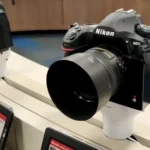
In the fast-paced world of digital photography, a camera released in December 2010 should, by all logic, be a paperweight. Tech moves fast. Sensors evolve, processors get faster, and autofocus becomes smarter. Yet, here we are, looking back at the Nikon D7000, a 12-year-old workhorse that refuses to retire.
If you are a beginner photographer looking for your first “real” camera, or a hobbyist trying to stretch a budget, you might be wondering: Is the D7000 actually usable in the 2020s?
The short answer is a resounding yes. Let’s break down why this camera holds a special place in the hearts of Nikon shooters and why many refuse to let go of it.
On paper, the D7000 might seem modest compared to modern mirrorless monsters, but for still photography, it checks every box that actually matters.
It sports a 16.2 Megapixel CMOS crop sensor. While we are used to seeing 24MP or 45MP sensors today, 16.2MP is honestly the sweet spot for most web use and even moderate printing. It keeps file sizes manageable while delivering plenty of detail.
Despite its age, the D7000 features a robust build and excellent ergonomics that rival modern cameras.
Autofocus and ISO
The camera features 39 Autofocus points, which is a significant step up if you are coming from entry-level bodies like the D3000 series. You can also strip this down to 11 points if you prefer a simpler shooting experience.
Regarding low light, the ISO ranges from 100 to 6400 (boostable to 25,600). Back in 2010, this was revolutionary. Today? It’s still very capable. Unless you are shooting in pitch black, the D7000 produces clean, usable images in most lighting conditions.
You can customize the autofocus system, toggling between 39 points or a simplified 11-point array.
The Secret Weapon: The Built-in AF Screw Drive
This is the number one reason to buy a D7000 over a newer, entry-level D3000 or D5000 series camera.
The D7000 includes an internal autofocus motor (screw drive). This might sound like technical jargon, but it has a huge impact on your wallet. It allows you to use older Nikon “AF-D” lenses. These lenses are optically fantastic, built like tanks, and are significantly cheaper on the used market than the newer “G” or “Z” lenses because they don’t have motors inside them.
The metal lens mount and aperture feeler allow for backward compatibility with decades of legendary Nikon glass.
With the D7000, you can pick up a legendary 50mm f/1.8D for dirt cheap and get full autofocus performance. If you bought a D3500 or D5600, that same lens would be manual focus only.
Video Capabilities: A Mixed Bag
Can it shoot video? Yes. It shoots 1080p, and the footage can look quite cinematic if you know what you’re doing.
However, we have to be realistic about the limitations of 2010 technology.
Autofocus in Video: It is essentially non-existent. While the camera can hunt for focus (AF-F mode), it is slow, loud, and unreliable for moving subjects. If you are filming a running child or a moving car, you will struggle.
Live View: The 3-inch LCD screen is beautiful—a massive upgrade from the D90 era. It’s crisp and great for composing shots in tight spaces. However, unlike modern mirrorless cameras, the Live View doesn’t give you a “what you see is what you get” exposure preview. When you change shutter speed or aperture, the screen brightness doesn’t change to reflect the exposure.
The high-resolution LCD screen makes Live View composition a joy, significantly better than the older D90.
If you are a vlogger, this isn’t the camera for you. But if you are learning cinematography and are willing to pull focus manually, the video quality is surprisingly decent.
Ergonomics and Build Quality
The D7000 sits in that “pro-sumer” sweet spot. It feels substantial in the hand—not plasticky like the rebel series. It features dual SD card slots, a feature usually reserved for professional cameras. This allows you to set the second card as a backup (overflow) or to separate RAW and JPEG files.
There are some quirks, of course. The ISO button placement is a bit odd if you are coming from newer Nikon bodies (like the Z6 or D7500), but it is consistent with the D90 and D600 era. It takes some muscle memory to get used to, but once you do, it becomes second nature.
The Verdict: Is it Worth $300?
If you check the used market (eBay, MPB, KEH), you can find a D7000 body in good condition for around $300 (sometimes even less).
For that price, you are getting:
* Semi-professional weather sealing and build quality.
* Access to cheap, vintage autofocus lenses.
* Dual card slots.
* Image quality that still holds up for social media and prints.
* 6 Frames Per Second (FPS) burst shooting.
The image quality relies heavily on the lens. Since the body is so affordable, you can allocate more of your budget toward high-quality glass, which is always the smartest move in photography.
If you are on a tight budget, don’t feel pressured to buy the latest mirrorless tech. The Nikon D7000 proves that great gear doesn’t expire; it just becomes a better bargain.
A budget king: The D7000 offers professional features at an entry-level price point in the used market.