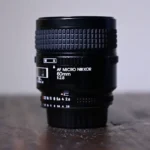
If you are shooting with a Nikon DX format camera (like the D3000, D5000, or D7000 series) and you feel like your photos are lacking that “professional” pop, the problem usually isn’t your camera body. It’s the glass in front of it. Most of us start with the standard 18-55mm kit lens. While versatile, it often struggles in low light and fails to deliver those creamy, blurred backgrounds that make subjects stand out.
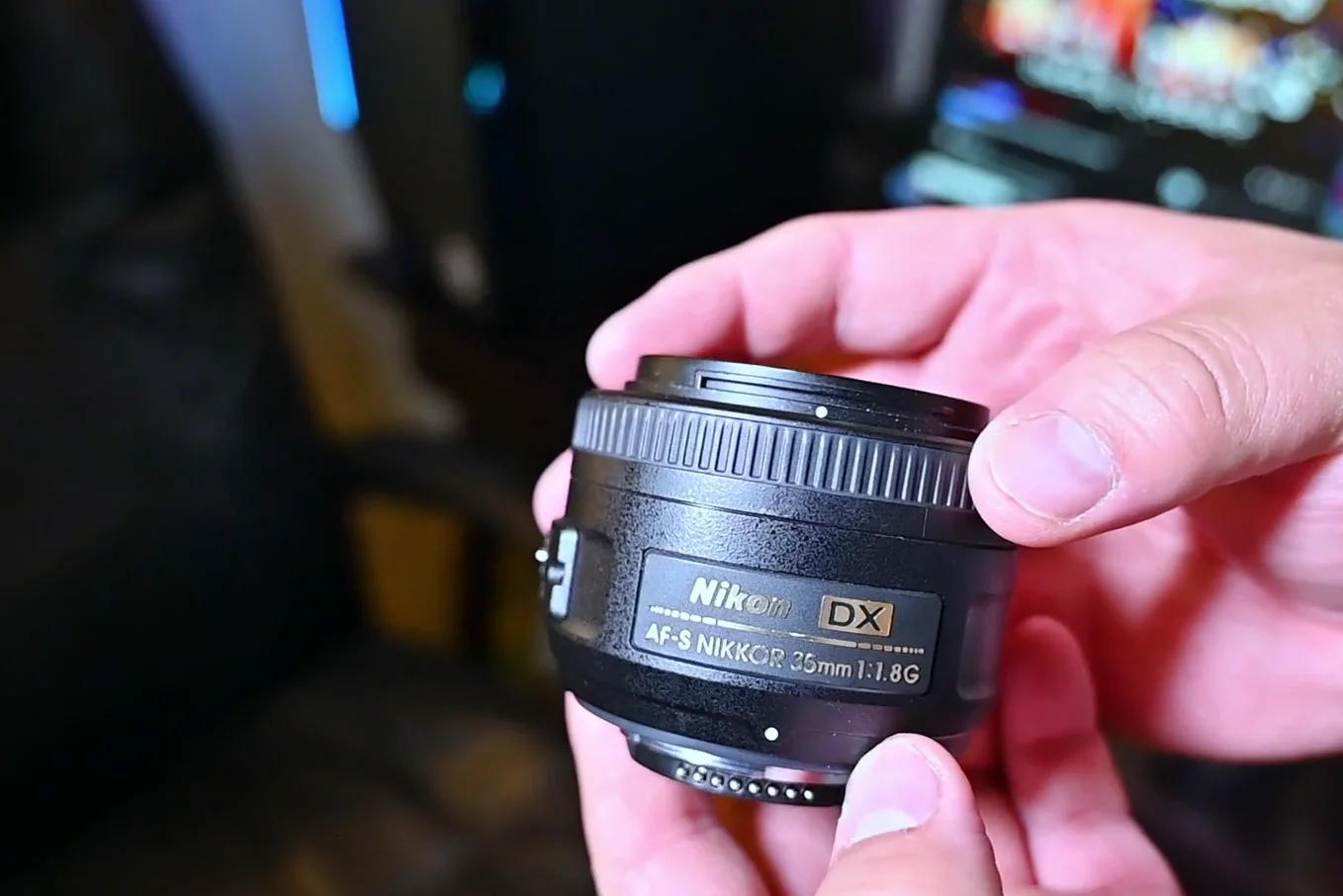
Enter the Nikon AF-S DX Nikkor 35mm f/1.8G. For years, this lens has been the “first upgrade” recommendation for almost every Nikon shooter. But in today’s market, does it still hold the crown as the best budget lens you can buy?
After revisiting this little gem and putting it through its paces, I can confidently say that it offers a price-to-performance ratio that is incredibly hard to beat. Let’s dive into why this lens should probably be in your camera bag right now.
The 35mm f/1.8G is a “prime” lens, meaning it has a fixed focal length. You cannot zoom in or out by twisting a ring; instead, you “zoom with your feet” by moving closer or further away. On a DX crop-sensor camera, 35mm provides a field of view equivalent to roughly 52mm on a full-frame camera. This is crucial because it mimics the natural field of view of the human eye. It’s not too wide, not too zoomed in—it’s just right.
The fast f/1.8 aperture allows significantly more light to enter compared to standard kit lenses.
Here are the key technical features that make it user-friendly:
* AF-S Motor: This is a big deal. It means the lens has its own internal Silent Wave Motor for autofocus. It will autofocus perfectly on entry-level bodies (like the D3300 or D5600) that lack an internal focus motor screw.
* 52mm Filter Thread: A very common, small size, making filters like polarizers or NDs very affordable.
* Compact Size: It is incredibly lightweight and unobtrusive.
Image Quality and The “Bokeh” Factor
The main selling point of this lens is the fast f/1.8 aperture. If you are coming from a kit lens that typically stops at f/3.5 or f/5.6, opening up to f/1.8 is a revelation.
This wide aperture serves two main purposes:
1. Low Light Performance: You can shoot indoors or at dusk without using a flash and without cranking your ISO to noisy levels.
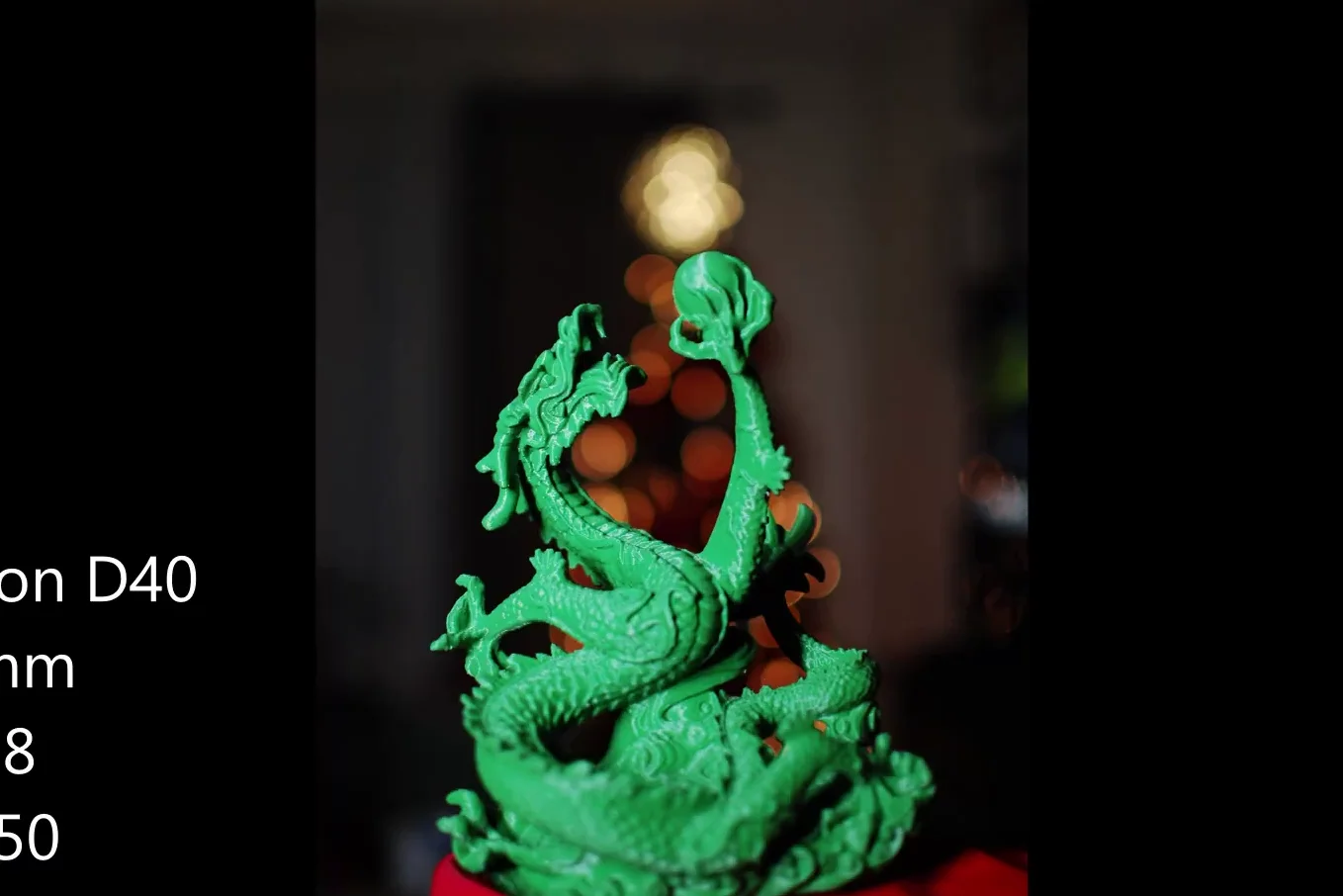
2. Depth of Field: This is where the magic happens. At f/1.8, you can achieve a very shallow depth of field, isolating your subject against a beautifully blurred background (bokeh).
Notice how the background lights turn into soft circles, separating the subject from the clutter.
However, from a critical standpoint, no budget lens is perfect. When shooting wide open at f/1.8, the images can be slightly “soft” if you are pixel-peeping. The sweet spot for this lens tends to be around f/2.2 to f/2.8. Stopping down just a fraction sharpens the image up significantly while still maintaining excellent background separation.
Usability and Autofocus
In terms of operation, the autofocus is snappy and reliable for photography. Whether you are shooting street photography, portraits, or stationary objects, the Silent Wave Motor does a great job of locking on quickly.
However, there is a caveat for videographers. While the lens is marketed as “Silent” (SWM), it is not completely silent. If you are using the on-camera microphone, you will likely hear a clicking or whirring sound as the lens hunts for focus. For video, it’s often better to use manual focus or an external microphone to avoid picking up motor noise.
The lens features a simple switch for Auto/Manual focus and a smooth focus ring.
Versatility: What Can You Shoot?
Because of the “normal” field of view, this lens is a jack-of-all-trades.
Portraits: It’s fantastic for environmental portraits where you want to show a bit of the surroundings.
Product/Food Photography: The minimum focusing distance is quite close (30cm), allowing for great detail shots.
Automotive: As seen in my testing, the contrast and color rendition make cars pop, especially when shooting details or wider angles.
Street: Its small size makes you look like a tourist rather than a pro, helping you blend in.
One limitation to remember is the fixed focal length inside tight spaces. Since you can’t zoom out, if you are shooting indoors in a small room, you might find yourself backing into a wall to get everything in the frame.
The lens renders colors with excellent contrast and saturation straight out of the camera.
Can You Use It On Full Frame?
Technically, this is a DX (crop) lens. However, Nikon F-mount ensures compatibility. If you mount this on a full-frame (FX) camera, it will work, but you will see heavy vignetting (dark corners) because the image circle isn’t large enough to cover the whole sensor. Modern Nikon cameras usually have a “DX Crop Mode” that automatically crops the image to fix this, though you lose some megapixels in the process. It’s a nice bonus if you upgrade cameras later, but it’s definitely designed for the DX ecosystem.
Final Verdict
The Nikon 35mm f/1.8G DX is often called a “plastic fantastic.” The build quality is decent (metal mount with a plastic barrel), but the optical quality punches way above its weight class.
If you are looking to learn photography, a prime lens like this is the best teacher. It forces you to think about composition by moving your body, and it teaches you how to manage exposure with wide apertures. For the price, used or new, it offers one of the most significant upgrades to image quality you can get for a DX system. It brings the fun back into photography, giving your images a look that a smartphone or kit lens simply cannot replicate.
Is it the best budget lens? Absolutely. It’s sharp, fast, and gives your photos character. If you don’t have one yet, you’re missing out.