If you are a beginner photographer, chances are you are sticking with the lens that came with your camera. You know the one—the 18-55mm f/3.5-5.6. It does the job, sure, but it often leaves you wanting more. More light, more background blur, more… “pop.”
Usually, the advice is to go buy a “Nifty Fifty” (50mm f/1.8). But what if you lose the versatility of the zoom? What if I told you that for the price of a nice dinner—or in this case, about $60 to $100—you could get a lens that stays at a fast f/2.8 aperture all the way through the zoom range?
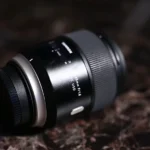
Enter the Tamron SP AF 17-50mm f/2.8 XR Di II. It’s an older lens, a relic from the early 2000s DSLR boom, but it is arguably the best “bang for your buck” upgrade you can make today if you are shooting on a budget APS-C system. I recently snagged a copy for just $63 locally, and honestly, it’s been a revelation.
Let’s dive into why this lens deserves way more respect than it gets.
Build Quality: Plastic but Confidence-Inspiring

When you first pick up the Tamron 17-50mm, you’ll notice it’s surprisingly light. It weighs in at roughly 430g. Yes, the construction is mostly polycarbonate (fancy word for plastic), but don’t let that fool you. Unlike the hollow, rattling feel of some cheap kit lenses, this Tamron feels dense and well-assembled.
It features a 67mm filter thread, which is a standard size, making filters affordable. While it doesn’t have the cold touch of a metal-body vintage lens, it balances perfectly on bodies like the Nikon D90, D7000 series, or even the beefier D300 and D200.
In terms of size, it is slightly bulkier than a standard 18-55mm, but that extra girth accommodates the larger glass elements required for that constant f/2.8 aperture. It’s still compact enough to be a daily walk-around lens.
The Game Changer: Constant f/2.8 Aperture
This is the headline feature. This is why you buy this lens.
If you are coming from a variable aperture kit lens, you know the struggle: you zoom in to 50mm to take a portrait, and suddenly your aperture closes down to f/5.6. You lose light, your shutter speed drops (introducing blur), and your background comes into sharp focus, ruining that portrait look.

With this Tamron, you have f/2.8 at 17mm, and you still have f/2.8 at 50mm.
This constant aperture unlocks two major things for beginners:
1. Low Light Performance: You can shoot in dimmer conditions without cranking your ISO to noisy levels.
2. Subject Separation: At 50mm f/2.8, you can achieve legitimate bokeh (background blur) that makes your subject stand out. The bokeh on this lens is surprisingly smooth and creamy, not busy or nervous like some cheaper optics.
Image Quality: Does it Hold Up?
For a lens that costs less than a tank of gas, the image quality is shocking.
Sharpness: Is it razor-sharp wide open at f/2.8? It’s decent, but a little soft in the corners. However, this is typical for lenses of this era. The magic happens when you stop it down just one click to f/4. At f/4, this lens becomes incredibly crisp, rivaling much more expensive glass.
Color & Contrast: Tamron lenses from this era have a distinct look—slightly warmer tones with good contrast. It renders images with a bit of “character” rather than the clinical sterility of modern digital lenses.

Flaws: It’s not perfect.
* Vignetting: There is noticeable darkening in the corners when shooting wide open at 17mm.
* Distortion: You will get some barrel distortion at the wide end.
* Chromatic Aberration: You might see some purple fringing in high-contrast areas (like tree branches against a bright sky).
The good news? All of these are easily fixable with a single click in Lightroom or Photoshop using lens profile corrections.
The “Screwdriver” Autofocus Caveat (Nikon Users Read This!)
Here is the most critical part of this review if you shoot Nikon.
There are different versions of this lens. The older model (Model A16) often utilizes the camera body’s motor to drive the autofocus. This is known as “screw drive.”

What does this mean for you?
If you have an entry-level Nikon DSLR from the D3000 series (D3100, D3200, etc.) or D5000 series (D5100, D5600, etc.), this lens will NOT autofocus. You will be stuck with manual focus.
To use the autofocus on this specific version of the lens, you need a Nikon body with an internal focus motor, such as:
* D70, D80, D90
* D7000, D7100, D7200, D7500
* D200, D300, D500
The autofocus is also distinctively noisy. It makes a mechanical “zzzt-zzzt” sound. If you plan on shooting video, this is terrible. But for photography? It’s actually quite charming and tactile. It’s reasonably fast, but it won’t track sports quite like a modern ultrasonic motor.
Note: Tamron did release a later version with a built-in motor (BIM), so check the specific model before you buy.
No Stabilization (VC)? No Problem.
This specific model does not have Vibration Compensation (VC). Tamron released a VC version later, but ironically, many enthusiasts prefer this non-VC version because it is widely considered to be optically sharper than its stabilized successor.
Since you are shooting at f/2.8, you are letting in 4x more light than a kit lens at the telephoto end, meaning you can use faster shutter speeds, which negates the need for stabilization in many scenarios.
In The Field: A Street Photography Companion
I took this lens out to a local car show to test its versatility. The 17mm focal length (which is roughly 26mm equivalent on full frame) is wide enough to capture entire cars even when space is tight on a crowded street.

The distortion at 17mm exists, but unless you are shooting architectural grid lines, you likely won’t notice it in organic shots.
When zooming into 50mm for detail shots—hood ornaments, badges, textures—the bokeh balls produced by lights in the background are pleasingly round. It separates the subject from the busy crowd effectively.

Final Verdict: The Best Value Upgrade?
If you have $100 burning a hole in your pocket and you want to take your photography to the next level, skip the filters, skip the fancy strap, and buy the Tamron 17-50mm f/2.8.
It bridges the gap between amateur and pro gear. It teaches you how to manage depth of field and exposure in a way a variable aperture lens simply cannot.
Who is this for?
* Beginners looking to replace their 18-55mm kit lens.
* Budget photographers needing a fast lens for events or clubs.
* Travel photographers who want one lens to do it all without carrying heavy glass.
Who is this NOT for?
* Owners of Nikon D3xxx/D5xxx cameras (unless you find the BIM version).
* Video shooters who need silent autofocus.
* Pixel peepers who demand corner-to-corner sharpness at f/2.8.
For the price of $63 used, this lens is an absolute steal. It commands respect not for its price tag, but for the images it allows you to create. Go find one, verify compatibility with your camera body, and start shooting.