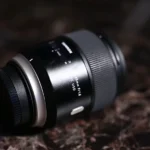
If you have been into photography for any length of time, you have likely heard the whispers (or the buzzing autofocus noise) of a certain legendary piece of glass. It’s cheap, it feels like a toy, but it produces images that have launched thousands of careers.
I’m talking, of course, about the Canon EF 50mm f/1.8 II.
Released over 30 years ago, this lens is an “old classic” in every sense of the word. Recently, I decided to dust off this little gem and take it for a spin around the city. I wanted to see if the so-called “Nifty Fifty” still holds up in the modern era of high-megapixel sensors and silent mirrorless cameras.
Spoiler alert: It does, but it comes with some quirks that you need to love—or hate.
First Impressions: The “Toy” That Means Business
Let’s address the elephant in the room immediately: the build quality. When you first pick up the Canon EF 50mm f/1.8 II, you might think you’ve accidentally bought a lens mug instead of a real lens.

It is entirely plastic—including the mount. There is no weather sealing, no distance scale, and the focus ring is a tiny, scratchy strip of plastic at the very front. However, this cheap construction is also its superpower. It weighs practically nothing (about 130g). You can throw this in a jacket pocket and forget it’s there until you need it.
But photography isn’t about how the gear feels in the hand; it’s about what it puts on the sensor.
The Versatility Factor
During my photo walk, the first thing that struck me was just how versatile this focal length remains.
On Full Frame vs. APS-C
On a Full Frame camera (like the 5D Mark III used in my tests), 50mm is the “Goldilocks” zone. It’s not too wide, not too zoomed in. It mimics the human eye’s perspective, making it incredibly intuitive for street photography. You see a shot, you lift the camera, and the frame matches your vision.
However, if you are shooting on an APS-C sensor (like a Canon Rebel or the m50), keep in mind the crop factor (1.6x). This lens effectively becomes an 80mm equivalent.

This isn’t necessarily a bad thing. In fact, 80mm is a classic portrait focal length. But for tight city streets or indoor spaces, you might find yourself backing up into walls to get everything in the frame.
Image Quality: Where the Magic Happens
So, why do people still buy this 30-year-old plastic tube? Because the optics are shockingly good for the price.
That f/1.8 Aperture
The main selling point is the fast f/1.8 aperture. This allows for significant background separation (bokeh) and low-light capability. Even with just 5 aperture blades (creating pentagon-shaped bokeh balls when stopped down), the out-of-focus areas are generally pleasing and creamy wide open.

Sharpness
Here is the breakdown of what you can expect regarding sharpness:
* f/1.8 to f/2.8: It’s a bit soft, especially in the corners. It has a “dreamy” character that works for portraits but might annoy pixel peepers.
* f/4: This is where the lens wakes up. The center becomes razor-sharp.
* f/5.6: This is the sweet spot. Corner-to-corner sharpness is excellent, easily rivaling lenses that cost ten times as much.
The Autofocus Experience: Loud and Proud
If you are used to modern STM or USM motors, the Canon EF 50mm f/1.8 II will startle you. It uses an old micro-motor that emits a distinct “buzz-zip-buzz” sound. It is not subtle. If you are trying to shoot candid street photography in a quiet library, you will get caught.
However—and this is a big “however”—it is fast.
Surprisingly, I found the autofocus on this dinosaur to be snappier in broad daylight than even the newer STM version. It jumps to focus instantly. Occasionally it might “hunt” (go back and forth) in lower contrast situations, but for general walking around, it rarely missed a beat.
The Three Main Drawbacks
To give you an honest review, I have to highlight the things that might frustrate a modern photographer:
- The “Cheap” Feel: As mentioned, the plastic mount feels fragile. I always worry I might snap it if I’m not careful when changing lenses.
- Minimum Focus Distance: You have to be about 45cm (1.5ft) away from your subject.
- Why this matters: If you love taking photos of food or details (like flowers or product shots), you will find yourself leaning back awkwardly because you are too close for the lens to focus.
- Flaring: The lens coatings from 1990 aren’t up to modern standards. If you shoot directly into the sun or a bright street light, you will lose a lot of contrast and see significant flaring.

Final Verdict: Is it Still Worth It?
There is a reason this lens is often called the “gateway drug” to prime lenses. It offers a level of image quality that kit lenses simply cannot touch.
While the newer Canon 50mm f/1.8 STM has better build quality (metal mount) and a silent motor, the optical formula is very similar. If you are on a strict budget and can find the II version on the used market (often for under $70-$80), it is an absolute steal.
It forces you to zoom with your feet. It teaches you about depth of field. And despite its toy-like appearance, it captures images with soul. If you have never owned a “Nifty Fifty,” do yourself a favor: grab one, go for a walk, and enjoy the process.