In a world obsessed with the latest mirrorless autofocus tracking and 8K video, it’s easy to overlook the giants of the past. But if you are a beginner photographer on a budget, or perhaps a student looking for your first “real” camera, the used market is a goldmine.
Today, we’re dusting off the Nikon D3100. Released back in August 2010, this camera is well over a decade old. In tech years, that’s practically ancient. But does age make it obsolete? After taking it for a spin recently, I’ve come to a surprising conclusion: this little DSLR isn’t just “okay” for its age—it is genuinely a fantastic starting point for photographers.
Let’s break down why this 14.2-megapixel workhorse might just be the best budget decision you make this year.
Before we dive into the user experience, let’s look at what’s under the hood. The D3100 marked a significant shift for Nikon’s entry-level line.
Sensor: 14.2 MP DX CMOS Sensor.
Autofocus: 11 AF points (a big step up from the 3 points found in its predecessors).
Video: Full HD 1080p (24fps) and 720p (30fps).
Screen: 3-inch LCD.
While 14.2 megapixels might sound low compared to the 45MP monsters of today, it is more than enough for digital sharing, Instagram, and even printing up to A3 size comfortably.
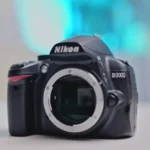
The compact and lightweight body of the D3100 makes it an excellent walk-around camera.
The User Experience: A Massive Leap Forward
If you are coming from older budget DSLRs like the Nikon D40, D60, or even the D3000, the D3100 feels like a revelation. The biggest game-changer here is the LCD screen.
The 3-inch display is crisp and bright. When you are reviewing your photos in the field, you can actually tell if you nailed the focus—something that was always a bit of a guessing game on the older, lower-resolution screens of the D40 era.
Live View: Use It Wisely
One feature that modern users take for granted is Live View (seeing your image on the screen before you shoot). The D3100 has it, and it’s incredibly useful for composing shots at awkward angles, like holding the camera high above a crowd or getting low to the ground without laying in the mud.
Live View allows for precise composition, though the contrast-detect autofocus can be slower than the viewfinder.
However, there is a caveat. The autofocus in Live View mode is noticeably slower compared to modern standards. If you are shooting landscapes, architecture, or still life, it works perfectly fine. But if you are trying to shoot portraits or moving subjects using the screen, you might find the “hunting” for focus frustrating. For those moments, stick to the optical viewfinder—it’s faster and saves battery.
Image Quality: The “Hidden Gem” Sensor
This is where the D3100 truly shines. The image quality coming out of this 10+ year old sensor is shocking in the best way possible.
Many users and reviewers have noted that the image output is dangerously close to the Nikon D7000 (a semi-pro body from the same era). When paired with a decent lens, the colors are rich, and the dynamic range is respectable.
Low Light Performance
You might expect an old crop-sensor camera to fall apart when the sun goes down, but the D3100 holds its own.
Shot at ISO 1600, the camera retains impressive detail in the highlights and shadows.
If you are into night portraits or street photography, this camera delivers. While I wouldn’t recommend it for high-speed sports photography in a dark gym, for atmospheric night shots or tripod work, the results are clean and usable, especially when you keep the ISO reasonable.
Video Capabilities: A Mixed Bag
It’s important to manage expectations here. Yes, the D3100 shoots video. It offers 1080p and 720p, which is great for a camera of this vintage.
The footage looks distinctively “DSLR-like” with that nice depth of field. However, the autofocus system for video is practically non-existent by modern standards. You cannot rely on the camera to track a moving subject automatically.
To focus during video, you have to half-press the shutter button, which causes the lens to hunt and make noise. If you are planning to be a vlogger who walks around talking to the camera, this isn’t for you. But if you are shooting cinematic b-roll where you can manually focus, the video quality is surprisingly pleasant.
The Limitations (The Cons)
To give you an honest review, we have to talk about the downsides.
Shutter Speed Cap: The maximum shutter speed is 1/4000th of a second. For 99% of people, this is fine. However, if you are shooting wide open at f/1.8 on a super bright sunny day, you might overexpose your image. You’d need an ND filter to compensate.
Live View Speed: As mentioned, it’s slow. Don’t rely on it for action.
Video AF: It requires manual intervention.
Single Card Slot: It takes standard SD cards, but there is no backup slot.
The D3100 relies on a single SD card slot, which is standard for entry-level bodies.
Final Verdict: Who is this for?
If you are looking at listings for the Nikon D3000, D60, or D40, stop and look for a D3100 instead. The jump in technology—specifically the CMOS sensor, better low light performance, and the high-resolution LCD screen—makes it a vastly superior tool for learning photography.
It captures that “pro” look, offers full manual controls to help you learn the exposure triangle, and gives you access to the legendary library of Nikon F-mount lenses.
For the price these are going for on the used market today, the value proposition is unbeatable. It’s a camera that proves you don’t need to spend thousands to create beautiful art; you just need to get out there and shoot.
Paired with the 18-55mm kit lens, this setup is lightweight, versatile, and capable of professional-looking results.