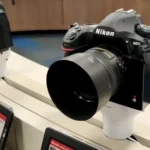
There is a running joke in the photography world about lens names, and the Nikon 18-200mm f/3.5-5.6G IF-ED AF-S VR DX certainly earns its place in the hall of fame for “longest tongue-twister.” But beyond the alphabet soup of acronyms lies a piece of glass that was, for a very long time, the absolute holy grail of walk-around photography.
Released back in November 2005 with a hefty price tag of around $700, this lens promised to be the only optic a DX shooter would ever need. Fast forward to today, and you can snag one on the used market for roughly $110. But in an era of ultra-sharp Sigma Art primes and clinical mirrorless S-line lenses, is there still a place for this old “superzoom”?
I took this lens out for a spin through the streets of Chicago, paired with both a classic Nikon D90 and a modern mirrorless Nikon Z50 (via adapter), to see if the legend holds up. The short answer? It’s surprisingly good.
The 18-200mm VR is designed specifically for Nikon’s crop-sensor (DX) cameras. If you apply the crop factor, you are looking at an equivalent field of view of roughly 27mm to 300mm. That is an insane amount of versatility packed into a relatively compact barrel.
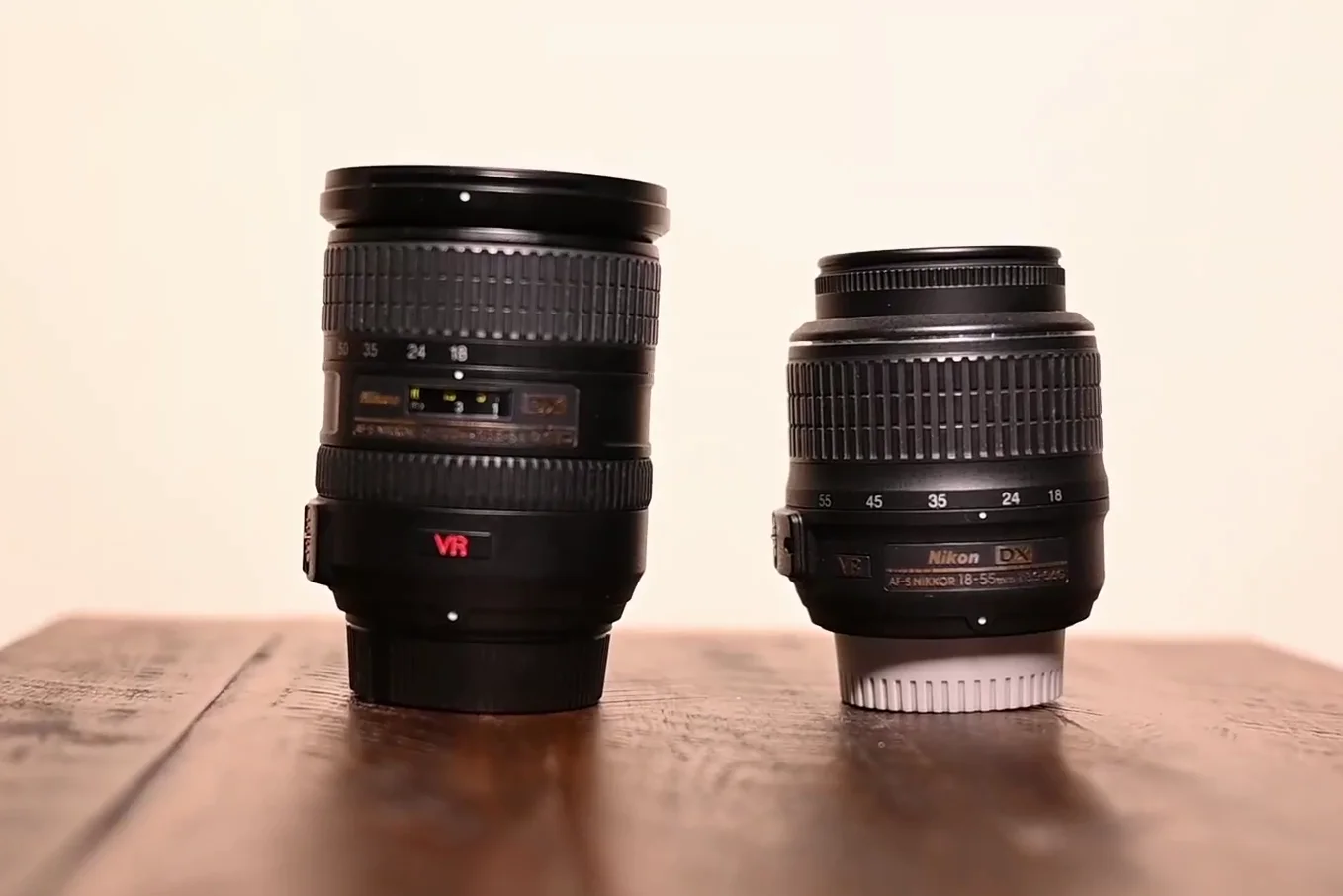
Despite its massive zoom range, the 18-200mm (left) isn’t overwhelmingly large compared to standard primes.
When you are traveling, the last thing you want to do is constantly swap lenses. Not only do you risk getting dust on your sensor (a nightmare to clean on the go), but you also risk missing the moment. There is a specific freedom in being able to shoot a wide landscape at 18mm and immediately zoom in to capture a candid portrait at 200mm without moving your feet or fumbling with your bag.
I polled my Instagram followers before my Chicago trip, asking whether I should bring my Sigma 10-20mm or this 18-200mm. The vote was overwhelming: 78% said bring the zoom. They were right.
Build Quality and Handling
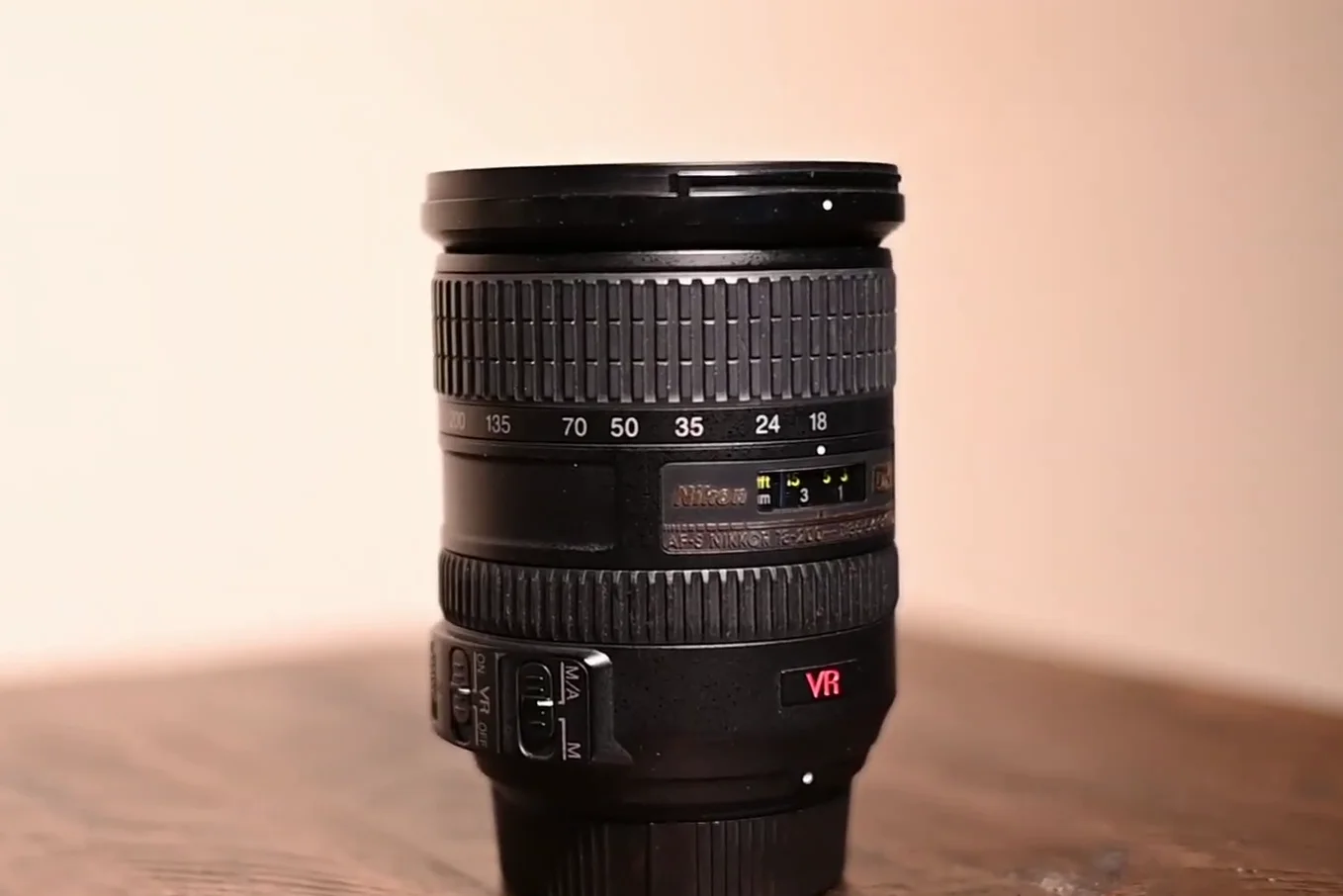
One of the first things you notice is that while it has some heft, it isn’t a brick. It feels substantial—like a serious piece of glass—but it balances beautifully.
Whether I had it mounted on the chunky DSLR body of the Nikon D90 or the slim profile of the mirrorless Z50, it never felt front-heavy. This balance is crucial for a travel lens because if a setup is uncomfortable, it stays in the hotel room.
The build quality strikes a nice balance between durability and portability.
Real World Performance: The Chicago Test
Walking through Chinatown in Chicago provided the perfect testing ground. The lighting conditions varied from bright mid-day sun to shadowed alleyways, and the subjects ranged from architecture to street life.
The Vibration Reduction (VR) Factor
The “VR” in the name stands for Vibration Reduction. While modern cameras have In-Body Image Stabilization (IBIS), many older Nikon DSLRs do not. The VR on this lens is a lifesaver, especially when you are racked out to 200mm. At that focal length, even your heartbeat can shake the camera enough to blur a photo. The VR helps compensate for that shake, allowing you to shoot at slower shutter speeds and keep your ISO down.
Image Quality: Sharpness vs. Character
Let’s address the elephant in the room: Is it tack sharp?
If you are a “pixel peeper” who zooms in 400% on every image, you might find it lacking compared to a prime lens like the 85mm f/1.8. It’s an 11x zoom lens; optical compromises had to be made.
However, photography isn’t just about clinical sharpness. It’s about color, contrast, and capturing the moment.
The compression at 200mm creates a fantastic look for urban environments.
I was genuinely surprised by the contrast this lens produces. The images have a punchy, vibrant look straight out of the camera. As you can see in the sample shots from the trip, the colors render beautifully. At f/8, the lens sharpens up significantly across the frame. Unless you are printing billboard-sized posters, the image quality is more than sufficient for social media, blogs, and even standard prints.
Even on modern sensors like the Z50, the lens captures intricate details with good contrast.
Why You Should Buy This Lens in 2025
If you are a beginner photographer or a traveler on a budget, this lens is arguably the best value proposition on the market right now.
Price: For ~$110, you are getting a lens that used to cost a fortune. It replaces the standard two-lens kit (the 18-55mm and the 55-200mm) with a single, superior optic.
Convenience: I didn’t take this lens off my camera the entire trip. The ability to go from wide to telephoto instantly is addictive.
Compatibility: It works natively on older DSLRs (D3000, D5000, D7000 series, D90, D300s, D500) and adapts flawlessly to the new Z-mount mirrorless cameras with the FTZ adapter.
The Verdict
The Nikon 18-200mm VR might be an “older” lens, but it has aged like fine wine. It reminds us that you don’t need the latest $2,000 gear to take compelling photos. You need a tool that doesn’t get in your way.
For street photography, travel, and general “dad cam” duties, this lens is a beast. It allows you to focus on composition and lighting rather than gear management. If you see one in a pawn shop or on eBay for a good price, grab it. It might just become your favorite travel companion.