There is a pervasive myth in the photography world today that “newer is always better.” We are constantly bombarded with marketing for the latest mirrorless lenses, boasting clinical sharpness and near-instant autofocus. But recently, an interaction at a local camera shop reminded me why we shouldn’t be so quick to discard the legends of the past.
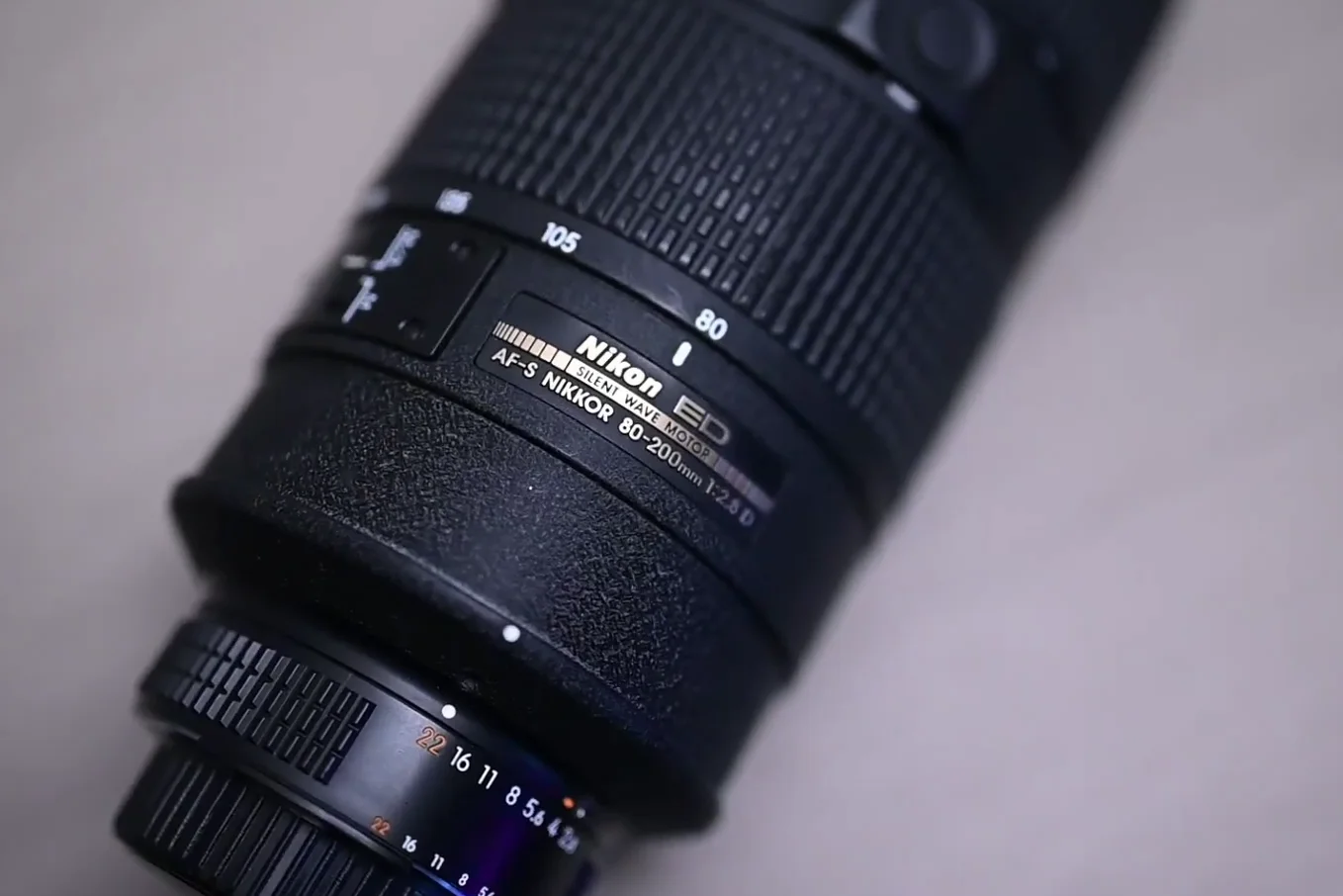
I was browsing the used section and stumbled upon a beast of a lens: the Nikon AF-S Nikkor 80-200mm f/2.8D IF-ED. It was listed for around $360—a steal compared to modern equivalents. As I was inspecting the glass, a fellow photographer leaned in and unsolicitedly advised, “Don’t get that. It’s obsolete. Invest in new glass.” He then proceeded to browse a $2,500 Sony lens.
I bought the Nikon anyway.
I didn’t argue with him, but that interaction stuck with me. Is a lens truly “obsolete” if it still delivers professional-grade images? Today, I’m going to share my experience with this “dinosaur” of a lens and explain why, for many of us, this might just be the best budget telephoto investment you can make.
To understand this lens, you have to understand its place in history. The Nikon 80-200mm f/2.8 AF-S was the final evolution of the 80-200mm line before Nikon introduced the now-ubiquitous 70-200mm VR series.
This was the first Nikon zoom lens to feature the revolutionary Silent Wave Motor.
This specific model is special because it was the first zoom lens to feature Nikon’s Silent Wave Motor (SWM). Before this, autofocus was driven by a screw drive from the camera body, which was often noisy and slower. The SWM changed the game, offering faster, quieter, and more precise focusing.
While the “Silent” part of the name might be relative by today’s standards (it makes a distinct “swish” sound compared to modern silent steppers), the speed is undeniable. Even decades later, the motor in this lens snaps into focus with authority.
Built Like a Tank (Literally)
When you first pick up the 80-200mm AF-S, the first thing you notice is the density. In an era of engineering plastics and composite materials, this lens feels like a piece of military hardware.
The Specs Breakdown
Filter Thread: 77mm (Standard for pro lenses, making filter sharing easy).
Aperture: Constant f/2.8 down to f/22.
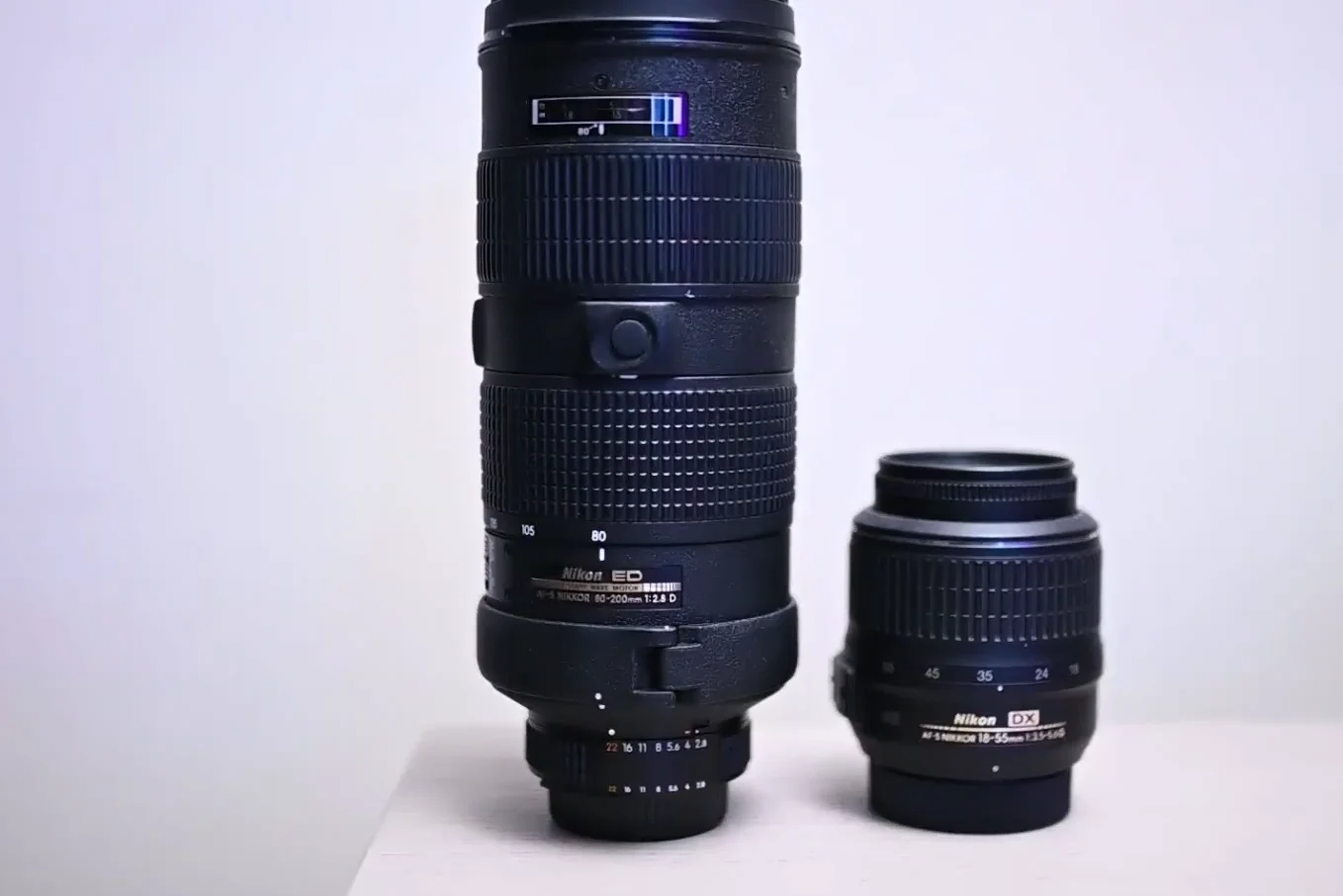
Weight: Approximately 3 lbs 4 oz (1.47 kg) naked; nearly 4 lbs with the hood and collar.
Length: Just under 9 inches; about 10 inches with the hood.
The sheer scale of this lens dwarfs standard primes and kit lenses.
Let’s be real: this lens is heavy. If you are used to shooting with a kit lens or lightweight mirrorless primes, this will be a shock to your system. I took this lens hiking in Hawaii, and after about an hour with it on a standard strap, you definitely feel it.
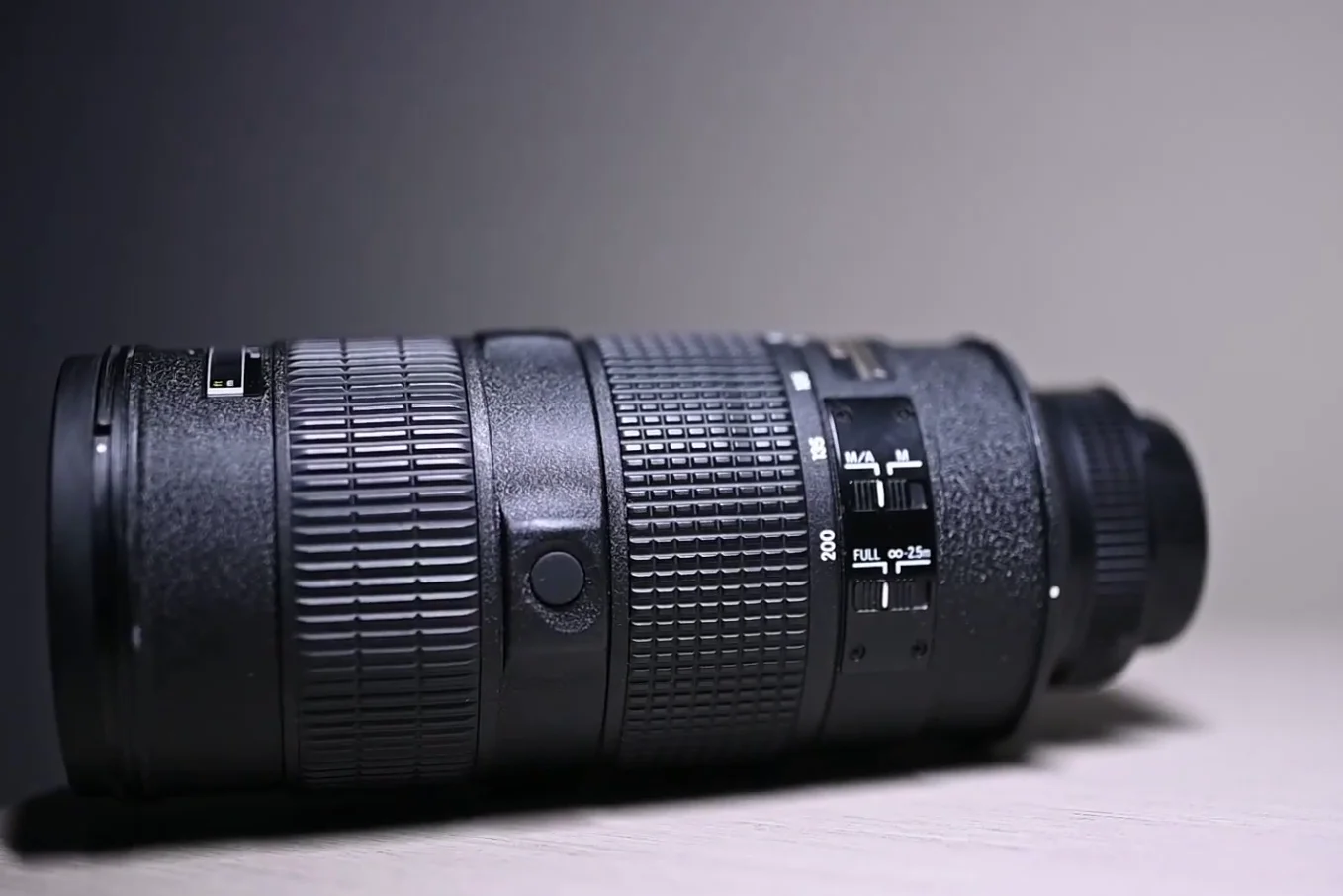
However, that weight comes with a sense of reassurance. The “crinkle” finish on the barrel (a signature of Nikon’s pro-grade lenses from this era) provides excellent grip, and the internal focusing mechanism means the lens doesn’t extend when you zoom or focus—a crucial feature for weather sealing and using polarizing filters.
Performance: Does “Old” Mean “Slow”?
The biggest concern with vintage autofocus lenses is usually speed and compatibility.
Surprisingly, the autofocus on the 80-200mm AF-S is snappy. When I tested it on my older Nikon D40, it was quick. On more modern bodies, it keeps up remarkably well. Because it uses the AF-S motor, it is fully compatible with:
1. All Nikon DSLRs: Even entry-level bodies that lack an internal focus motor (like the D3000/D5000 series).
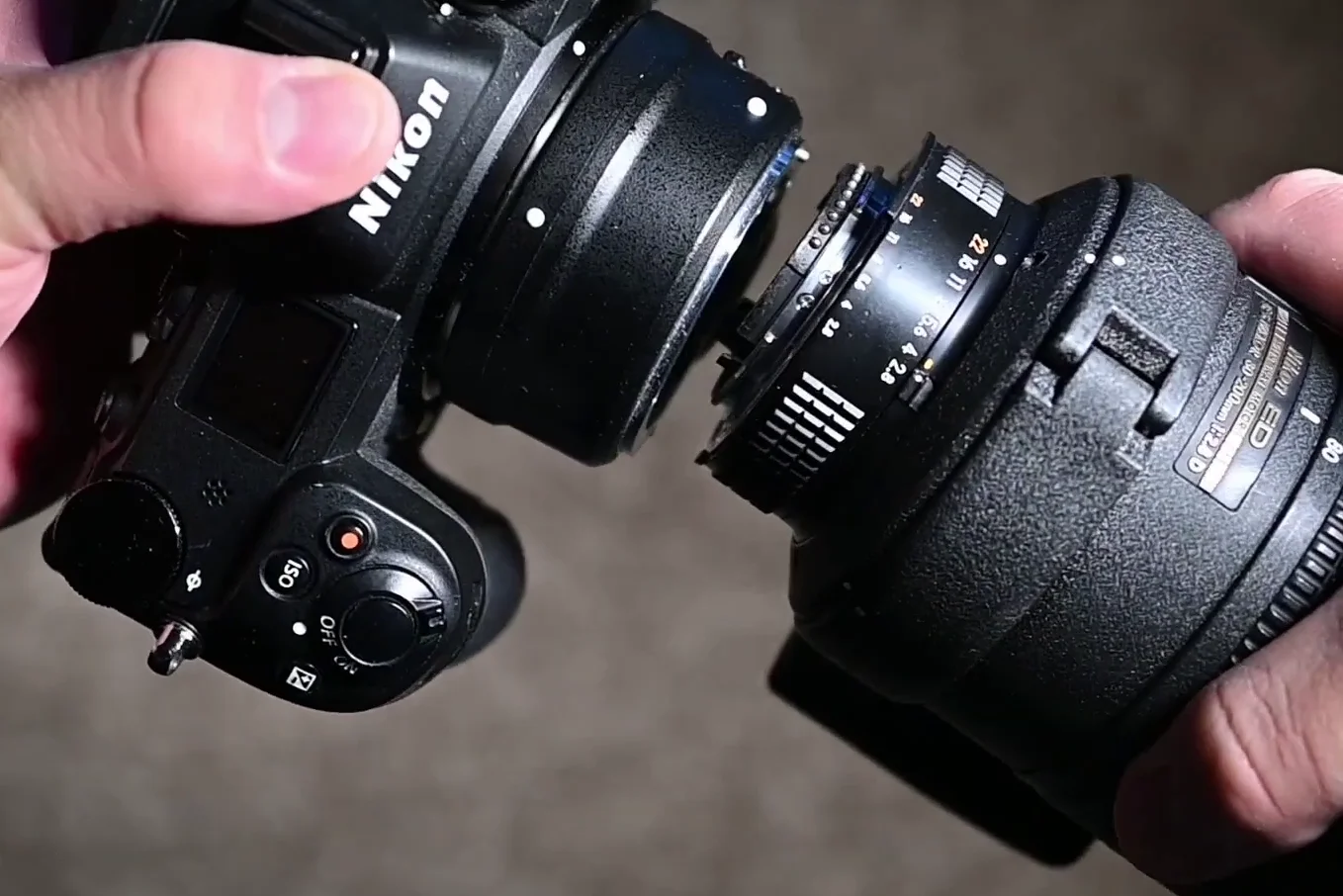
2. Nikon Z Mirrorless: It works seamlessly with the FTZ adapter.
Thanks to the internal motor, this lens adapts perfectly to modern mirrorless systems.
A Note on Condition: Since these lenses are aging, the motors can get tired. My copy sometimes requires a quick manual focus override or a “rack back and forth” to wake up, which is a sign the SWM might be fading. If you are buying one, listen for a high-pitched “squeak”—it’s a common ailment of this specific lens. It might work for years with the squeak, or it might die next week. It’s a gamble, but at this price point, it’s often a risk worth taking.
Image Quality: The “Magic” of Vintage Glass
This is where the debate with the shop photographer really falls apart. The image quality from this lens is simply stunning.
Modern lenses are often corrected to perfection—removing every aberration, maximizing contrast, and ensuring corner-to-corner sharpness. While technically impressive, they can sometimes feel “clinical” or sterile.
The 80-200mm AF-S has character. It is incredibly sharp, even wide open at f/2.8, but it renders images with a certain organic feel that is hard to replicate.
Even for nature and detail shots, the sharpness and background separation are top-tier.
The Bokeh
The background blur (bokeh) is creamy and smooth. Whether you are shooting portraits, events, or nature, the f/2.8 aperture allows you to isolate your subject beautifully. When compared to my 85mm f/1.8G, I actually find the 80-200mm to be more versatile. While the 85mm is lighter, having the compression of 200mm at f/2.8 creates a flattering look for portraits that a shorter focal length just can’t match.
The Downsides: What Are You Sacrificing?
To be fair, the “obsolete” label isn’t entirely without merit. You are giving up a few modern conveniences:
No Vibration Reduction (VR): This is the biggest miss. At 200mm, camera shake is magnified. You need to keep your shutter speed high (at least 1/200th or 1/400th) to get sharp handheld shots. This makes it harder to use in low light compared to a modern 70-200mm VR II or FL lens.
Size: As mentioned, it’s a beast. It requires a large bag and strong arms.
Repairability: Nikon no longer services these. If the motor dies, it becomes a very heavy manual focus lens.
The older style switches are tactile and durable, but lack the VR toggle of modern lenses.
The Verdict: 80% of the Performance for 20% of the Price
So, was the guy at the camera store right? Is this lens obsolete?
Technically, yes. It has been superseded by multiple generations of 70-200mm lenses. But functionally? Absolutely not.
This lens gets you 80% to 90% of the way to a modern flagship telephoto for a fraction of the cost. If you are a student, a hobbyist, or a pro on a budget, this lens is a secret weapon. It allows you to get that “pro look”—the compression, the depth of field, the sharpness—without spending $2,500.
Photography isn’t about having the spec sheet with the highest numbers; it’s about the image you create. And this 25-year-old “obsolete” hunk of metal creates beautiful images.
If you find a clean copy without the “squeak,” grab it. Your back might hate you, but your wallet and your portfolio will thank you.