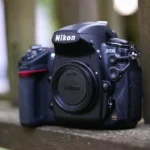
In a world obsessed with 45-megapixel sensors, 8K video recording, and autofocus systems that use AI to track a bird’s eye through a dense forest, picking up a camera from 2002 feels like an act of rebellion. It’s a step back into a simpler, albeit clunkier, time in digital photography.
Recently, I decided to dust off the Nikon D100, a camera that is now 22 years old as of mid-2024. When this beast was released, it was a technological marvel that cost photographers around $2,000. Adjusted for inflation, that’s nearly $3,400 today. It was the camera that bridged the gap between the ultra-expensive professional D1 series and the enthusiast market.
But does it hold up today? Is it just a paperweight, or is there a “vintage digital” soul hidden inside that 6.1-megapixel CCD sensor? I spent some time shooting with it to find out, and the results were surprisingly nostalgic.
To understand the D100, you have to understand the era it came from. The early 2000s were the height of the “megapixel race.” If you had 6 megapixels, you were king of the hill. Today, your smartphone selfie camera has more resolution.
However, resolution isn’t everything. The D100 uses a CCD (Charge-Coupled Device) sensor, a technology that has largely been replaced by CMOS sensors in modern cameras. There is a growing community of photographers who swear by CCD sensors for their distinct color rendition and “film-like” grain structure. They don’t have the massive dynamic range of a modern Sony or Nikon Z, but they render skin tones and greens in a way that feels organic, almost like slide film.
The 1.8-inch LCD screen is tiny by modern standards, forcing you to trust your settings rather than chimping.
The Specs: A Reality Check
Let’s look at what we are working with here. It’s important to manage expectations before you head out to shoot:
* Sensor: 6.1 MP CCD (APS-C / DX format).
* ISO: 200–1600 (expandable to 6400).
* Storage: Compact Flash (CF) card.
* Screen: A 1.8-inch LCD that is undeniably tiny.
* Speed: 3 frames per second (RAW) / 6 fps (JPEG).
It sounds ancient, and in many ways, it is. There is no video mode. There is no Wi-Fi. There is no Bluetooth. It is a device built for one singular purpose: taking still photographs.
Ergonomics: The Body of a Tank
One thing Nikon has always excelled at is ergonomics, and the D100 is no exception. If you’ve ever handled a Nikon N80 (or F80) film camera, the D100 will feel immediately familiar. That’s because the D100 was essentially built on the chassis of the N80. It has that chunky, substantial DSLR feel that fits perfectly in the hand.
Unlike modern cameras, ISO, White Balance, and Quality are physical modes on the left dial.
However, the control layout is a trip to the past. Modern photographers look for an ISO button. You won’t find one here. To change the ISO, White Balance, or Image Quality, you actually have to rotate the main command dial on the top left to the specific setting, and then use the scroll wheel to adjust it.
Is it slow? Yes. Is it annoying? At first. But it forces you to slow down. You can’t just flip settings on the fly while running and gunning. You have to be intentional.
The Shooting Experience: Limitations as Creativity
The most shocking aspect of using the D100 in 2024 is the LCD screen. At 1.8 inches, it is barely larger than a postage stamp. When you review your photos, you can check the histogram and basic composition, but checking for critical sharpness is a challenge.
Oddly enough, I found this liberating. With modern cameras, we are addicted to “chimping”—looking at the screen after every single shot. With the D100, you realize the screen is lackluster, so you stop looking at it. You focus on the viewfinder. You focus on the subject. You trust your autofocus. It brings back a shooting style that is closer to shooting film, where you don’t know exactly what you got until you get home.
Autofocus: Still Snappy?
I paired the D100 with a few different lenses, including the 50mm f/1.8D, the 60mm f/2.8 Micro, and the 35mm f/1.8G DX. Since this body has a built-in screw drive motor, it is fully compatible with older Nikon AF-D lenses, opening up a massive library of affordable, high-quality glass.
The Nikon D100 paired with the 60mm f/2.8 Micro lens, a sharp combination for detail work.
To my surprise, the 5-point autofocus system is actually quite quick. It’s not going to track an F1 car, but for street photography, portraits, and still life, it locks on confidently. Even in slightly lower contrast situations, it hunted less than I expected for a camera old enough to drink.
Image Quality: The “CCD Look”
This is the main reason anyone buys a D100 today. Does the CCD magic exist?
Yes, it does. At ISO 200 to 400, the images have a beautiful, rich quality to them. The colors are punchy but realistic. The 6-megapixel resolution translates to an image that is roughly 3000 x 2000 pixels. For Instagram, Facebook, or even 8×10 prints, this is plenty. We have been conditioned to think we need 24MP minimum, but unless you are cropping heavily, 6MP gets the job done.
One massive benefit of the lower resolution is the file size. The RAW files are tiny. They take up no space on your hard drive and import into Lightroom instantly.
The Noise Factor
Low light performance is where the age shows, but the grain structure has a nostalgic feel.
The D100 starts to show its age when the sun goes down. Once you push past ISO 800, the noise becomes very apparent. By ISO 1600, the image is quite grainy.
However, unlike the ugly, color-blotchy noise of early CMOS sensors, the noise on the D100 is monochromatic and gritty. It looks like film grain. In black and white, ISO 1600 shots from the D100 look moody and atmospheric rather than just “low quality.” If you expose to the right and process carefully, you can get usable shots in low light, but this is definitely a “fair weather” camera.
Field Test: Macro and Landscapes
I took the camera out to a sculpture park to test its dynamic range and detail rendition. Using the 60mm f/2.8 Micro lens, the sharpness was undeniable.
The dynamic range is limited compared to modern cameras, creating deeper shadows and higher contrast.
In bright sunlight, the camera tends to crush shadows a bit more than modern sensors. The dynamic range isn’t huge. If you blow the highlights, they are gone forever. But this limitation forces you to read the light better. You start looking for open shade or softer lighting conditions.
When shooting macro subjects like flowers or textures, the CCD sensor rendered greens and yellows beautifully. There is a depth to the color that feels very distinct from the clinically perfect output of a Nikon Z6 or Z7.
Even with 6 megapixels, macro shots retain a surprising amount of detail and punchy color.
Another interesting “feature” I tested was the anti-mirror shock mode. Because older DSLRs have heavy mirror slap mechanisms that can introduce vibration, Nikon included a mode to delay the shutter. It feels like the camera is taking a long exposure, but it’s actually just pausing to let the vibrations settle. It’s a quirky feature that shows this camera was aiming for high-fidelity imaging even back in 2002.
The Verdict: Just Paperweight or Hidden Gem?
If you try to use the Nikon D100 for a paid wedding gig in 2024, you are brave (and possibly foolish). It lacks the dual card slots, the high ISO performance, and the resolution for large crops.
However, photography isn’t always about the specs on paper. It’s about the feeling of creating an image.
Pros of the D100 in 2024:
1. Price: You can pick these up for $40–$50. In 2002, this was $2,000. That is an insane value proposition.
2. CCD Sensor: Unique color rendering that requires less post-processing.
3. Lens Library: Access to decades of amazing Nikon F-mount glass.
4. Simplicity: No video, no menus to get lost in. Just pure photography.
Cons:
1. The Screen: It’s terrible. You have to trust yourself.
2. Connectivity: You need a card reader; no wireless transfer here.
3. Low Light: Keep it under ISO 800.
The camera handles texture and wood tones exceptionally well, providing a warm, organic look.
Final Thoughts
The Nikon D100 is a fantastic option for students learning the basics of the exposure triangle, or for seasoned photographers who want to slow down and reconnect with the process. It strips away the safety nets of modern technology. When you get a great shot with the D100, you feel like you earned it, not the camera’s computer.
It is definitely a “vintage” experience now. It’s bulky, the battery tech is old, and the resolution is low. But for the price of a couple of pizzas, you can own a piece of history that is still capable of producing beautiful art. If you see one at a garage sale or on eBay, don’t overlook it. There is still life in this old tank.