When we hear the term “kit lens,” most of us instinctively cringe. We think of plastic mounts, noisy autofocus, and soft corners that look like they were smeared with Vaseline. It’s the lens you buy because it came in the box, and it’s usually the first piece of gear you sell when you “get serious.”
Back in 2019, when I picked up my Nikon Z6, it came bundled with the Nikon Z 24-70mm f/4 S. At the time, I viewed it as a stopgap—a placeholder until I could afford the “Holy Trinity” f/2.8 glass or some fast primes. I expected it to be basic. I expected it to be just “okay.”
Fast forward more than five years, and this unassuming piece of glass has become the most underrated lens in my entire collection. It has traveled with me on family trips, hiked up mountains, and captured street scenes across the globe. If you are sitting on the fence about this lens in 2025, or if you’re looking for a bargain in the used market, here is why this lens is a sleeper hit that punches way above its weight class.
The “Kit Lens” That Really Isn’t
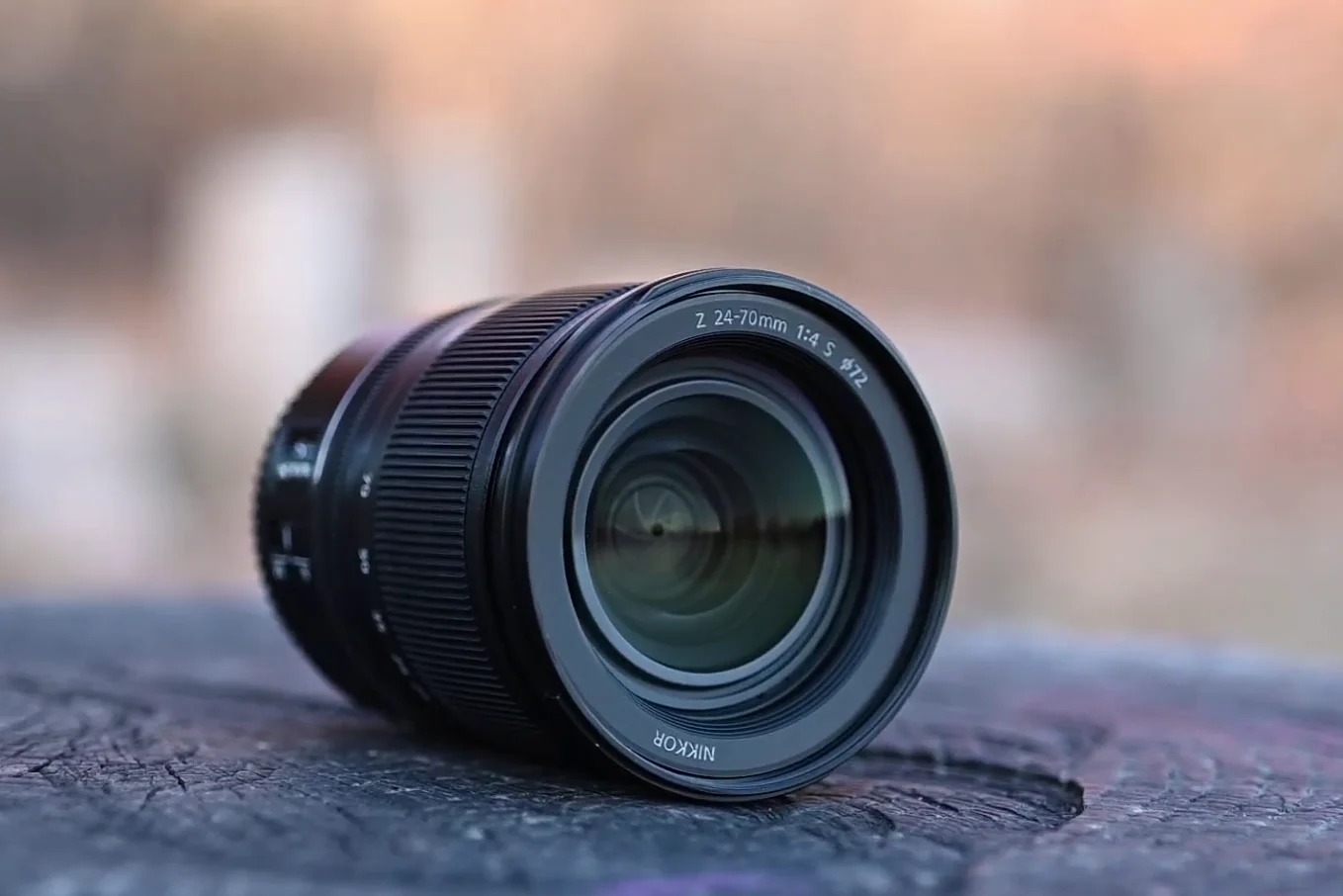
The first thing you have to understand is that Nikon approached the Z-mount differently. The “S” designation on this lens isn’t just marketing fluff; it stands for their superior optical performance line. Unlike the flimsy 18-55mm lenses of the DSLR era, this is a pro-grade optic disguised as a starter lens.
Size and Build Quality
One of the biggest hurdles in photography is friction. If your gear is too heavy, you leave it at home. If it’s too cumbersome, you miss the shot.
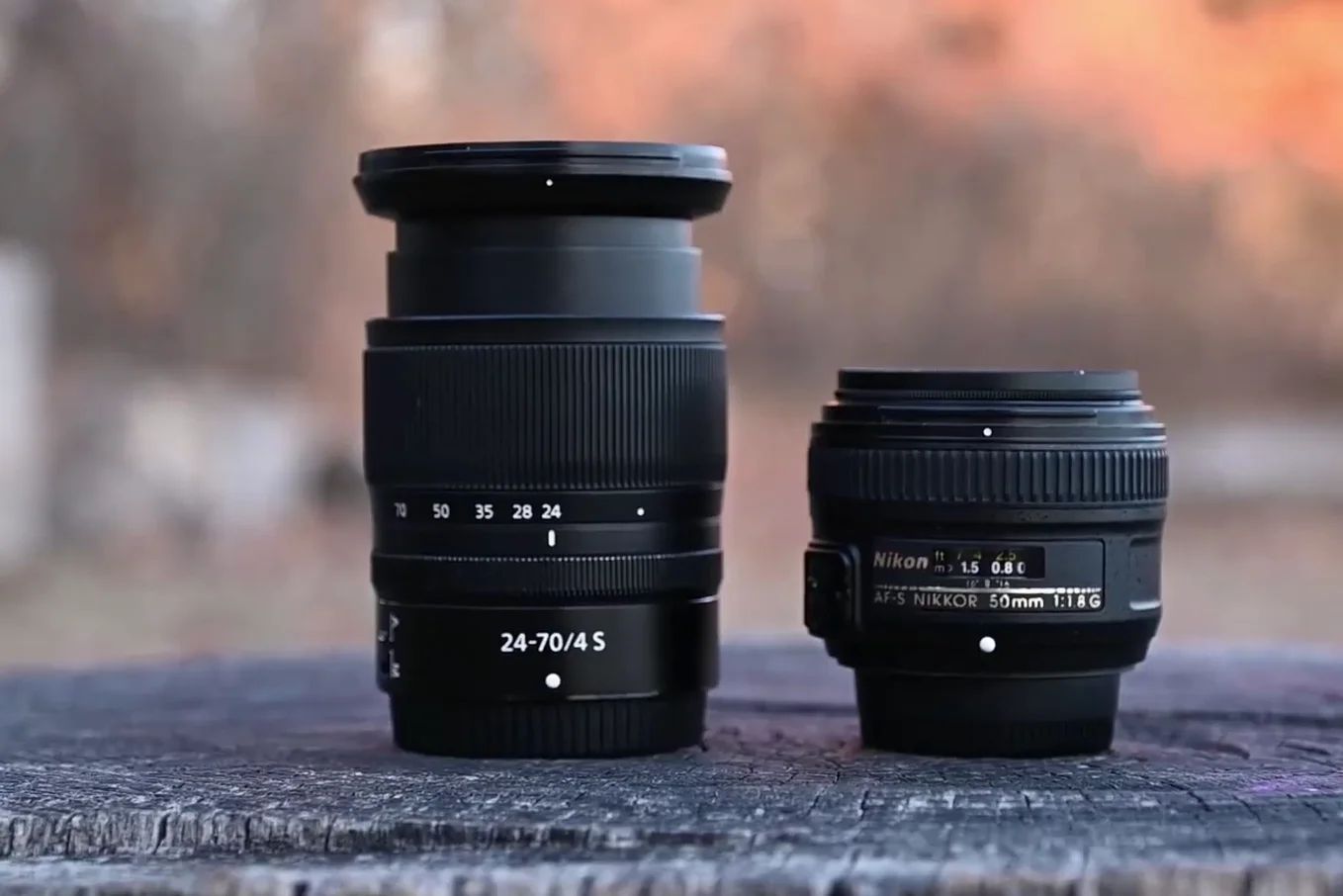
Weighing in at just over 1 pound (500g) and featuring a 72mm filter thread, this lens is shockingly compact. As you can see in the comparison above, when retracted, it isn’t much bigger than a standard 50mm f/1.8 prime. It balances perfectly on Z6, Z7, or Z8 bodies.
The lens features a retractable design. You have to twist it to unlock it before shooting. While some photographers find this annoying, I find it to be a brilliant space-saving feature for travel bags. It makes the camera vastly more portable than if you were lugging around the massive 24-70mm f/2.8.
Optical Performance: Sharpness Where It Counts
The aperture is a constant f/4 throughout the zoom range. Now, I know what the “bokeh chasers” are thinking: f/4 is too slow. And sure, if you are shooting in a pitch-black cave, it might be. But for 90% of travel and landscape photography, f/4 is the sweet spot.
What surprised me most over the years is the sharpness. Usually, zooms sacrifice edge sharpness for versatility. With the 24-70mm f/4 S, the images are crisp from corner to corner, even wide open at f/4.

Whether I’m shooting architectural details or vast landscapes, the micro-contrast is excellent. It renders colors with that classic Nikon neutrality—natural, not oversaturated, and easily workable in post-production. It doesn’t try to be flashy; it just delivers clinical performance.
The Traveler’s Dream Focal Length
The 24-70mm range covers what I call the “storytelling spectrum.”
* 24mm: Wide enough for sweeping landscapes and interiors.
* 35mm – 50mm: Perfect for street photography and environmental portraits.
* 70mm: Great for isolating subjects and standard portraiture.
I’ve found that the more I use this lens for travel, the less I reach for my primes. Changing lenses in the field exposes your sensor to dust and slows you down. Having this versatility on a body with IBIS (In-Body Image Stabilization) means I can handhold shots at slower shutter speeds, negating some of the disadvantages of the f/4 aperture in dim light.

Autofocus and Video Capabilities
If you are a hybrid shooter, this lens is a gem. The stepping motor is virtually silent. I’ve used this for video work on the Z6, and the autofocus is snappy but smooth. It doesn’t hunt, and the internal microphone rarely picks up any motor noise.
Furthermore, the focus breathing is very well controlled. This is something Nikon focused on heavily with the S-line. When you pull focus from the foreground to the background, the frame doesn’t zoom in and out distractingly—a common trait in cheaper zoom lenses.
The stabilization provided by the camera body combined with the lens’s light weight makes handheld video footage surprisingly usable. You don’t get the micro-jitters you often get with heavier, front-heavy glass.
The Nitpicks: It’s Not Perfect
After six years of use, I have to be honest about the downsides. No lens is perfect, and there are compromises made to keep it this small and affordable.
- Low Light Limitations: It is an f/4 lens. If you are shooting events in dark reception halls or trying to capture stars without a tracker, you will struggle. It relies heavily on the camera’s ISO performance.
- Bokeh: If you are looking to completely obliterate the background, this isn’t the lens for you. You can get separation at 70mm f/4 if you are close to your subject, but the “bokeh balls” can sometimes look a bit cat-eyed or busy compared to a prime lens.
- Extending Barrel: The lens telescopes out when you zoom. While I have used this in dusty environments and light rain without issue, an external zoom always invites the risk of sucking in dust or moisture over time compared to an internal zoom mechanism.
However, these are minor gripes when you consider the package as a whole. It’s built to perform, not to show off.
Is It Worth It in 2025?
Here is the best part: because so many people bought Z6 and Z7 kits and immediately “upgraded,” the used market is flooded with these lenses.
You can often find the Nikon Z 24-70mm f/4 S for incredible prices on platforms like eBay, KEH, or MPB. We are talking about S-line professional optical quality for the price of a budget plastic prime.
If you are shooting with a full-frame Z camera, this is a no-brainer. But even if you are using a crop sensor camera like the Nikon Zfc or Z50, this lens is a massive upgrade over the 16-50mm kit lens.
Final Verdict
The Nikon Z 24-70mm f/4 S is the kind of gear that gets out of your way. It doesn’t demand attention. It doesn’t break your back. It just sits on your camera and captures sharp, beautiful images day in and day out.
When I travel now, I don’t waste energy worrying about which lens to pack. I grab this one, and I focus on what actually matters: composing the shot and experiencing the moment. If you want a lens that offers the best balance of price, performance, and portability in the Nikon Z ecosystem, this is it. Don’t let the f/4 aperture scare you away; this lens is a keeper.