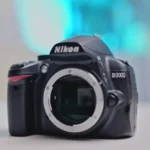
In the fast-paced world of 2025, where camera sensors are pushing triple-digit megapixels and AI autofocus can track a bird’s eye through a hurricane, it feels almost rebellious to pick up a camera from 2004. Yet, here we are, standing in the middle of a serene forest, holding the Canon EOS 20D.
Two decades ago, this wasn’t just “old tech”; it was a revolution. It was the camera that bridged the gap for serious enthusiasts and semi-pros. But does a DSLR old enough to drink alcohol still have a place in a photographer’s bag today? Let’s strip away the hype of modern mirrorless gear and take a nostalgic, yet critical look at this magnesium alloy tank.
To understand the Canon 20D, you have to respect the era it came from. In 2004, the photography world was in a frantic transition from film to digital. Canon was leading the charge with CMOS sensors while many competitors were still clinging to CCDs.
The 20D succeeded the popular Canon 10D, and while they look similar at a glance, the upgrades under the hood were substantial. We aren’t just talking about a megapixel bump (though it did jump from 6MP to 8.2MP); we are talking about speed, usability, and the introduction of a lens mount standard that defined the APS-C ecosystem for years to come.
The 20D shares a rugged design language with its predecessor, the 10D, but brings crucial internal upgrades.
Build Quality and Ergonomics: The “Pro” Feel
One thing you notice immediately when picking up the 20D in 2025 is the heft. Modern mirrorless cameras often feel like dense blocks of electronics, or conversely, plasticky and light. The 20D feels like a tool. It has that satisfying, grip-filling shape that Canon perfected early on.
The Joystick Revolution
If you have ever used a Canon 10D, you know the pain of navigating focus points. The 20D introduced a tiny, unassuming nub on the back: the joystick (multi-controller).
The addition of the joystick on the back panel significantly improved the handling of autofocus points compared to previous models.
This was a game-changer. It allowed for rapid selection of AF points without taking your eye off the viewfinder. Combined with the signature Canon rear control dial—that big, satisfying wheel—the ergonomics of the 20D are surprisingly modern. Even in 2025, this two-dial layout (one specific dial for aperture, one for shutter speed) is the gold standard for manual shooting.
The Viewfinder Reality
However, not everything has aged like fine wine. We need to address the viewfinder. If you are coming from a Canon 5D or a modern EVF, the 20D’s optical viewfinder will feel… quaint. It is an APS-C pentaprism, meaning it’s smaller and dimmer than its full-frame counterparts. It’s usable, certainly, but it feels like looking through a tunnel compared to the expansive glass of today’s flagships.
The Technical Leap: EF-S Mount
Perhaps the most significant legacy of the 20D—one that budget photographers in 2025 should care about—is the native support for the EF-S mount.
The previous 10D was an APS-C camera, but it was physically restricted to mounting full-frame EF lenses (unless you were brave enough to hack the back of your lens, which I strictly do not recommend). The 20D officially embraced Canon’s crop-sensor lens lineup.
Native support for EF-S lenses opened up a world of affordable, wide-angle possibilities for crop-sensor shooters.
This meant you could finally mount dedicated wide-angle lenses like the Canon EF-S 10-22mm, which I used extensively for the landscape shots in this review. This compatibility makes the 20D a much more versatile option on the used market today than the 10D, simply because the lens selection is vastly superior and cheaper.
Performance: Speed and Responsiveness
One of the biggest complaints about early digital cameras was the “wake-up” lag. You’d see a bird, flip the switch, and the bird would be in the next county by the time the camera was ready.
The 20D largely fixed this. The startup time is near-instantaneous. Shutter lag is minimal. It feels snappy. In continuous drive mode, it rattles off shots at 5 frames per second—a spec that, honestly, is still sufficient for casual wildlife and sports photography.
The Storage Situation
In 2025, we are spoiled by SD cards and CFexpress. The 20D uses Compact Flash (CF) cards. The good news? It addresses the 2GB limitation of older cameras. I’ve successfully used 4GB and 8GB cards. Just remember, you’ll need a dedicated card reader, as plugging this 2004 relic directly into a USB-C MacBook is asking for a headache.
Battery Life: The Unsung Hero
We often joke about mirrorless battery life, but DSLRs were kings of longevity. The 20D uses the BP-511 series batteries. These are high-capacity bricks that seem to last forever. You can go out for a full day of shooting landscapes and barely put a dent in the charge. It’s a refreshing change from carrying five spare batteries for a modern shoot.
Image Quality: Is 8.2 Megapixels Enough?
This is the big question. In an era of 45MP+ sensors, is 8.2MP a joke?
Absolutely not.
There is a misconception that you need massive resolution for everything. 8.2 megapixels is roughly 3500 x 2300 pixels. That is enough for:
* A stunning 4K monitor display.
* High-quality Instagram and social media posts.
* A perfect A4 (8×10) print.
The 20D’s sensor captures beautiful dynamic range during golden hour, proving 8MP is plenty for web use and small prints.
The CMOS sensor in the 20D has a distinct “look.” At base ISO (100-400), the images are clean, with pleasing Canon colors—specifically those warm, magical skin tones and rich greens that Canon is famous for.
When I took this out for landscape photography during the golden hour, the dynamic range was surprisingly capable. No, you cannot pull 5 stops of shadow recovery like a modern Sony sensor, but if you expose correctly (which the 20D forces you to learn), the results are organic and beautiful.
Field Test: Birds, Landscapes, and “FPS” Mode
Taking the 20D into the wild brings a mix of joy and frustration. For landscapes, it is therapeutic. You slow down. You compose carefully because you can’t just crop 50% of the image later.
For wildlife… well, that’s where the age shows. I paired the camera with a Sigma 70-300mm to try and capture some local birds. The autofocus system has 9 points (with only the center being a cross-type). It struggles to track erratic movement compared to modern AI tracking.
Looking through the viewfinder with a long telephoto lens feels like a retro ‘First Person Shooter’ game—aiming is manual and challenging!
Trying to track birds in flight felt like playing a hard-mode video game. You have to anticipate the subject. You have to be a better photographer because the camera won’t save you. But when you do nail the focus on a swan or a tern, the feeling of accomplishment is far greater than when a computer does it for you.
Conclusion: The 20D in 2025
So, is the Canon EOS 20D worth buying in 2025?
If you are a professional needing reliable workflow speed, high ISO performance (keep this under ISO 800 for best results), and massive resolution? No.
But if you are:
1. A student on a budget: You can pick these up for the price of a few pizzas.
2. A learner: This camera forces you to understand the exposure triangle.
3. A nostalgic shooter: You want that tactile, mechanical shutter sound and a distraction-free shooting experience.
Then yes. The Canon 20D remains a testament to how good Canon’s engineering was in the early 2000s. It’s a camera that reminds us that the photographer, not the megapixels, makes the image. It handles well, shoots fast enough, and produces files that have a soulfulness often missing in clinical modern imagery.