If you ask any seasoned photographer what the “holy grail” focal length is for street photography, you will almost unanimously hear one answer: 35mm. It’s the classic documentary focal length, wide enough to capture context but tight enough to focus on a subject. It’s the lens of the masters.
But what if I told you that sticking religiously to the 35mm (or even 50mm) rule might be holding you back? What if the key to unlocking a completely new layer of creativity and intimacy in your work lies in a lens that most street photographers would consider “impractical”?
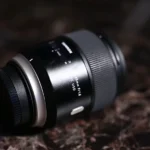
Recently, I decided to challenge the status quo. I left my comfort zone and went for a photo walk with a lens that is often overlooked: a 60mm prime. Specifically, the Sigma 60mm f/2.8 DN Art. Now, before you scroll away thinking 60mm isn’t that telephoto, keep in mind I shoot on a Micro Four Thirds (MFT) system. With the 2x crop factor, this modest lens behaves like a 120mm telephoto on a full-frame camera.
120mm for street photography? It sounds absurd to some, but the results were nothing short of eye-opening. Here is why you shouldn’t avoid a telephoto prime for the streets, and how it can completely transform the way you see the world.
The Gear: An Unlikely Hero
Let’s talk briefly about the hardware. In a world obsessed with ultra-fast f/1.4 glass, the Sigma 60mm f/2.8 doesn’t look like much on paper. It’s small, lightweight, and has a modest aperture. However, being part of Sigma’s “Art” line, it packs a punch in optical quality.

The beauty of using a lens like this on a Micro Four Thirds body (like my Olympus OM-D or Panasonic Lumix) is the size. You get the reach of a massive 70-200mm DSLR lens in a package that fits in your jacket pocket. This is crucial for street photography: you remain discreet while wielding the power to reach across the park.
The Art of Invisibility
The biggest anxiety for many street photographers, especially beginners, is the fear of confrontation. To get a frame-filling shot with a 17mm or 35mm lens, you have to get physically close—sometimes uncomfortably close—to your subject. This often disrupts the moment. The “observer effect” kicks in; people change their behavior when they see a camera lens inches from their face.
With a 120mm equivalent, the dynamic changes entirely.
During my walk, I spotted a girl sitting on a bench, smelling a flower while on the phone. Had I approached her with a wide-angle lens, she would have noticed me immediately, put the flower down, or turned away. The moment would have evaporated.
With the telephoto, I was standing meters away. I was just a guy in the distance. She remained in her own world, completely unaware of my presence. This allowed me to capture a genuine, unguarded moment of human connection. The resulting image was intimate, sharp, and, most importantly, authentic.
Decluttering the Chaos: Wide vs. Telephoto
One of the hardest skills to master in photography is exclusion—knowing what not to include in the frame. The world is a messy place. Trash cans, stray fences, random pedestrians, and ugly signage often ruin a perfect subject.
To demonstrate this, I carried two cameras. One with a standard 17mm (34mm equivalent) wide-angle, and one with the 60mm (120mm equivalent).
I came across some rather bizarre-looking swan boats stored behind a green fence.
The Wide Angle Problem
When I shot them with the 17mm, the frame was… busy. You could see the fence, the trees, the dirt, and the boats. It looked like a snapshot. It was a photo of a location, but it wasn’t a story.
The Telephoto Solution
Switching to the 60mm changed everything.

The longer focal length did two things:
1. It cropped out the junk: All the distractions on the periphery disappeared.
2. It compressed the layers: The fence and the swan heads appeared closer together.
Suddenly, those goofy swan boats looked like they were plotting a world takeover. The image became graphic, intentional, and humorous. The “tightness” of the frame forced the viewer to look exactly where I wanted them to look.
Reaching the Unreachable
Street photography isn’t just about people; it’s about the urban environment and the details we often miss. Sometimes, physical barriers prevent us from getting the shot we want.
I found a massive wire-frame statue of a horse in the park. From the ground, with a wide lens, the statue looked small against a vast, empty sky and a wide concrete base. It lacked impact.

By using the telephoto, I could isolate the horse against the blue sky, emphasizing its geometric construction. But more importantly, the magnification revealed a hidden story: graffiti tags high up on the sculpture. It made me wonder—how crazy were the teenagers who climbed up there to tag it?
The lens allowed me to see a narrative that was physically out of reach.
Wildlife and “Flight Risks”
If you enjoy incorporating urban wildlife into your work, a wide lens is often useless. Animals, much like shy humans, have a “fight or flight” zone.
I saw a group of seagulls on a pier. With my 17mm lens, I tried to get close, and they immediately panicked. The shot was ruined. I took a step back—literally and photographically—and switched to the Sigma 60mm.
Because I was standing at a safe distance, the birds relaxed. One seagull, in particular, landed right on the railing and posed for me.

This is where the optical quality of a prime lens shines. The sharpness on the bird’s feathers was incredible, and the f/2.8 aperture at this focal length rendered the background (the lake and trees) into a soft, non-distracting blur. You simply cannot achieve this level of subject separation with a wide-angle lens unless you are practically touching the subject.
Subject Isolation and Geometry
We often talk about “background separation” or “bokeh,” but telephoto lenses offer something else: Geometry Isolation.
I found a blue bicycle suspended on a decorative fence. A wide shot included the park path, a ladder nearby, and the sky. It was a mess of colors and shapes.

The 60mm frame acted like a cookie cutter. It sliced out just the bicycle and the colorful fence slats. The image became a study in color (blue vs. multicolored fence) and shape. It transformed a 3D scene into a flat, 2D canvas, which is a very powerful aesthetic in photography.
Landscape Compression
Even in a park setting, a telephoto lens changes how landscapes feel. I wanted to photograph three specific buildings across a lake.
- Wide Lens: The buildings were tiny dots on the horizon. The lake took up too much foreground. The sky was too dominant.
- Telephoto Lens: The buildings were pulled forward. They loomed over the trees.

This is called Lens Compression. It’s an optical illusion that makes background elements appear larger relative to foreground elements. It creates a “layered” look that is visually very satisfying and gives a sense of scale that wide lenses diminish.
The Ethics of Distance: Capturing Intimacy
Perhaps the most profound argument for the telephoto lens is ethical and emotional.
I spotted an older couple sitting on a bench looking out at the water. It was a tender, quiet moment. The way they leaned into each other spoke of decades of love and companionship.
If I had walked up to them with a 35mm lens to fill the frame, I would have been an intruder. I would have “bruised” the scene. Even if they didn’t get angry, they would have stiffened up. The magic would be gone.
From a distance, with the 60mm, I could frame them perfectly against the water. I captured the texture of their coats, the grey hair, the relaxed posture. I preserved the sanctity of their moment while still documenting it. It didn’t feel like spying; it felt like observing with respect.
The Myth of the “Lazy” Photographer
There is a misconception that zoom lenses or telephotos make you lazy because you “don’t have to move your feet.” I completely disagree.
A prime telephoto lens is challenging. You have a very narrow field of view. You cannot just “zoom out” if you are too close. You have to hunt for the angle. You have to run backward to fit a building in, or run sideways to align a subject with a clean background.
Using a fixed 120mm equivalent focal length forces you to be more intentional with your positioning, not less. It trains your eye to spot details from afar and visualize the compressed image before you even raise the camera to your eye.
Final Thoughts
I’m not saying you should throw away your 35mm lens. For environmental portraits and context-heavy storytelling, wide angles are king. But if you feel like your photography has become stagnant, or if you find street photography too intimidating because of the proximity required, pick up a telephoto prime.
Whether it’s an 85mm on full frame, a 50mm on APS-C, or a 60mm on Micro Four Thirds, the “portrait” length is a street photography beast waiting to be unleashed.
It allows you to:
1. Stay Incognito: Capture true candid moments.
2. Clean Your Composition: Isolate subjects from chaotic streets.
3. See Details: Find the stories hidden in the architecture.
Don’t be afraid to break the rules. Sometimes, the best view of the street is from a little further back.
Have you ever shot street photography with a telephoto lens? What was your experience? Let me know in the comments!