In the world of photography, there is a constant race for higher resolution, better low-light performance, and faster autofocus. We are often led to believe that the more money we spend, the better our photos will be. But after years of shooting and collecting various bodies, I’ve come to a somewhat controversial conclusion: The best camera for your daily creativity is likely the cheapest one you own.
I currently own four cameras, ranging from high-end video specs to older DSLRs. Yet, the one I reach for the most—the one that actually gets me out the door to shoot—is a modest, older mirrorless model that cost me about $300.
Here is why owning a cheap, comfortable camera might just be the best investment you can make for your photography journey.
Let’s be honest with ourselves. When you walk out the door with a brand new, $2,000+ camera setup, how do you feel? You feel protective. You’re hyper-aware of your surroundings. If it starts to drizzle, the camera goes in the bag. If you find yourself in a rougher neighborhood, the camera stays hidden.
This is what I call the “Gear Fear Paradox.” The better your equipment is, the less likely you are to use it in spontaneous, gritty, real-world situations.
Compact cameras like the Canon M6 Mark II are powerful, but sometimes price dictates how we use them.
I own a Canon M6 Mark II. It’s a beast. 32 megapixels, uncropped 4K video, razor-sharp autofocus. Technically, it is superior to my other cameras. But because it was an investment, I treat it like one. I use it for studio work and planned shoots. It doesn’t live in my jacket pocket.
On the flip side, I have an Olympus OM-D E-M10 Mark III. It’s not the newest, and it certainly isn’t the most expensive. But that is exactly why it is my daily driver. If I scratch it? It adds character. If I’m in a crowd? I’m not a target. This psychological freedom allows me to focus on light and composition rather than insurance and resale value.
The Four Pillars of a “Daily Driver”
For a cheap camera to actually be useful, it can’t just be cheap junk. It needs to be enjoyable to use. Through trial and error with my collection (including a Panasonic G7 and a bulky Canon 80D), I’ve identified four criteria that make a camera perfect for everyday street photography.
1. It Must Be Small
This seems obvious, but it’s the most important factor. If a camera is heavy, you will find excuses to leave it at home.
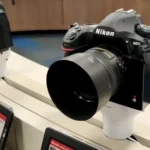
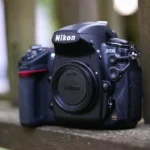
Bulky DSLRs like the Canon 80D often stay on the shelf simply because they take up too much space.
My Canon 80D is a workhorse. It’s weather-sealed (unlike the others), making it my go-to for heavy rain. But it is bulky. It demands a dedicated bag. A true daily camera should feel like an extension of your hand, not a burden on your shoulder.
2. The Electronic Viewfinder (EVF) is Non-Negotiable
The rise of mirrorless cameras and smartphones has encouraged a bad habit: holding the camera away from your body, parallel to your face, looking at the LCD screen.
A viewfinder allows for three points of contact, stabilizing your shot and immersing you in the scene.
Shooting with your arms extended is unstable and disconnects you from the subject. A viewfinder allows you to press the camera against your eye, creating a stable three-point contact system. It gives you control. It blocks out distractions. If you want to move fast and be precise, you need an EVF. This is actually a drawback of the Canon M6 Mark II (unless you buy the external attachment).
3. Dual Control Dials
Menu diving is the killer of creativity. When you are on the street, the light changes in seconds. You need to adjust your shutter speed and aperture instantly.
Dedicated dials for aperture and shutter speed are essential for manual control without menu diving.
A good daily camera should have dedicated physical dials for these settings. It’s about tactile feedback. You should be able to change your exposure without even taking your eye away from the viewfinder. It makes the process fluid and comfortable.
4. The Screen: Tilt vs. Articulate
This is where videographers and photographers often disagree.
* Fully Articulating Screens (Flip-out): Great for video and vlogging (like on the Panasonic G7).
* Tilting Screens: Superior for street photography.
A simple tilting screen is faster and more discreet for street photography than a flip-out screen.
Why? Because flipping out a screen to the side takes two movements and doubles the width of your camera footprint. It looks obvious. It slows you down. A tilting screen requires one motion. You look down, you shoot, you move on. It’s subtle and efficient.
The Winner: Why I Chose the Olympus
Out of my lineup—the high-spec Canon M6 II, the reliable Panasonic G7, the tank-like Canon 80D, and the Olympus OM-D E-M10 Mark III—the Olympus takes the crown.
Small, cheap, and packed with features: The Olympus OM-D E-M10 Mark III.
It checks every single box:
1. Tiny form factor (Micro Four Thirds system).
2. Great EVF.
3. Tactile dials.
4. Tilting screen.
But most importantly, it cost me $300.
At that price point, I am “300 dollars cautious,” not “3,000 dollars paranoid.” This difference in mindset translates directly to the number of photos I take. I take more risks with angles. I get closer to subjects. I carry it everywhere.
Conclusion
If you find yourself stuck in a creative rut, or if you own a high-end camera but rarely use it, consider picking up an older model on the used market. Look for something small, with a viewfinder, that doesn’t break the bank.
Don’t worry about megapixels or the latest autofocus AI. Worry about how the camera feels in your hand and whether you’re afraid to scratch it. Owning a “cheap” camera that you genuinely enjoy using is the secret to capturing more moments and improving your craft.