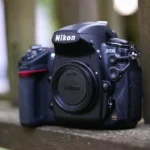
In the fast-paced world of digital photography, cameras usually have a shelf life similar to a smartphone. Five years pass, and they are considered obsolete; ten years, and they are ancient relics. Yet, there is one camera that defies this logic, standing tall like an old oak in a forest of saplings: the Nikon D700.
Released all the way back in 2007, this camera is rapidly approaching two decades of existence. By modern standards, its spec sheet should be laughable. But if you talk to any seasoned photographer who has shot with Nikon, the mere mention of the D700 elicits a nod of respect.
Today, I took this legendary DSLR out into the autumn woods to answer a burning question: Does this 12-megapixel beast still have a place in the bag of a modern landscape photographer in 2024?
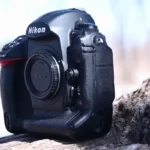
Before we even look at the images, we have to talk about the physical experience of the D700. In an era of shrinking mirrorless bodies that sometimes feel like fragile toys, picking up the D700 is a reminder of what “professional grade” used to mean.
The tactile controls and top LCD of the D700 offer a shooting experience that modern menu-diving cameras often lack.
The body is chunky, heavy, and incredibly reassuring. It has a deep grip that fits perfectly in the hand, and the magnesium alloy chassis feels like it could survive a war zone—or at the very least, a heavy tumble in the woods. It features comprehensive weather sealing, plenty of dedicated buttons, and switches for almost every setting you need on the fly. You aren’t tapping a touchscreen; you are physically commanding a machine.
However, it’s not perfect. Being the “little brother” to the flagship Nikon D3, Nikon had to nerf it slightly to protect their top-tier sales. The most notable compromise is the viewfinder coverage. Unlike the 100% coverage on the D3, the D700 offers roughly 95%. It’s a small annoyance, meaning sometimes unwanted elements might creep into the extreme edges of your frame, but it’s a small price to pay for such a robust tool.
The 12-Megapixel Debate: Is It Enough?
This is the controversy. In a world where 45, 50, and even 60 megapixels are becoming the standard for landscape photography, 12 megapixels sounds positively microscopic. Can you really capture the grandeur of nature with such low resolution?
The answer is a nuanced “Yes.”
It depends entirely on what you are shooting and, more importantly, why you are shooting it. If your goal is to photograph grand, sweeping vistas of Norwegian mountains where you need to crop in 300% to resolve every individual pine needle, then the D700 will struggle. You simply don’t have the cropping latitude.
For intimate landscapes and scenes where texture matters more than infinite zoom, 12 megapixels provides a beautiful, organic rendering.
However, for “intimate landscapes”—scenes like a forest path, a lone tree, or architectural details—12 megapixels is often more than enough. In fact, there is a distinct advantage to this sensor. Because the pixel count is low on a full-frame sensor, the individual photosites (pixels) are physically larger. This often results in what photographers call “fat pixels,” leading to incredible light gathering capabilities and a very specific, organic look to the files that clinical modern sensors sometimes lack.
Unless you are printing billboard-sized images, a 12MP file can easily produce stunning A3 or even A2 prints if the technique is solid.
The “Hybrid” Shooter’s Dream
One of the most underrated features of the D700 is its bridge between eras. If you are someone who shoots both film and digital, the D700 is arguably the best companion you can own.
Because it utilizes the legendary Nikon F-mount and possesses an internal focus motor, it shares lens compatibility with decades of Nikon glass. You can take a vintage lens from a Nikon F3 film camera, slap it onto the D700, and it just works. This eliminates the need for a “double setup” where you carry separate lenses for your film and digital bodies. It unifies your workflow in a way that modern Z-mount adapters can do, but without the adapter bulk.
Into the Woods: A Field Test
Heading into the forest, the goal was to capture the shifting autumn colors. The conditions were tricky—the light was fighting between harsh, direct sunlight and heavy cloud cover. This is where the D700’s dynamic range is put to the test. While it doesn’t have the “ISO invariance” of a modern Nikon D850, the files are surprisingly malleable.
The color science of the D700 sensor is legendary for a reason, rendering autumn tones with a rich, film-like depth.
The forest itself presented challenges. A recent storm had torn through the area, leaving fallen trees blocking paths and creating a chaotic environment. Finding a clean composition among the debris was difficult. Photography in these conditions becomes less about technical perfection and more about seeing—isolating order from chaos.
The D700 forces you to slow down. You compose carefully because you know you can’t just crop your way out of a bad composition later.
Finding Beauty in Decay
Moving out of the dense forest, I stumbled upon an abandoned building complex. This provided a perfect subject to test the camera’s ability to render texture and color contrast. The beige walls of the structure were being reclaimed by nature, covered in deep red and yellow vines.
The D700 excels at texture. The contrast between the rigid architecture and the organic vines is rendered beautifully without over-sharpening.
The images from this session highlight the D700’s strength: Color. There is a richness to the colors from this generation of Nikon sensors (often attributed to the CFA—Color Filter Array used at the time) that requires very little post-processing. The reds of the vines pop against the muted concrete, and the details in the masonry are sharp without looking “digital” or over-processed.
Conclusion: Soul Over Specs
So, is the Nikon D700 worth buying in 2024?
If you are a commercial photographer needing to deliver massive files for retouching, or a bird photographer needing crop-mode, then no. Look elsewhere.
But, if you are a hobbyist, a student, or a landscape photographer who values the process as much as the result, the D700 is a steal. It is a camera with a soul. It feels mechanical and precise. It produces images that feel like photographs, not computer data.
It reminds us that photography isn’t about the number of pixels you have; it’s about how you use them. Even amidst storm-damaged forests and difficult lighting, this 2007 veteran proves it can still dance with the best of them.
Pros
Legendary Build Quality: Feels indestructible.
“Fat Pixel” Look: Organic image rendering and great color science.
Lens Compatibility: Native support for decades of F-mount glass.
Price: An absolute bargain on the used market today.
Cons
Resolution: 12MP limits cropping potential.
Viewfinder: 95% coverage can be annoying for strict framing.
Weight: It is heavy by modern standards.
Sometimes, looking back is the best way to move forward in your creative journey. The Nikon D700 is proof of that.