In the fast-paced world of 2025, where mirrorless cameras are pushing 60, 80, and even 100 megapixels with AI-driven autofocus that can track a bird’s eye through a hurricane, it feels almost rebellious to pick up a DSLR from 2008.
Yet, here we are. I recently decided to leave my high-end mirrorless rig at home and take a walk with a legend: the Nikon D700.
If you’ve been in the photography game for a long time, the mere mention of the D700 likely triggers a sense of nostalgia. If you’re new, you might wonder why anyone would bother with a 12-megapixel brick that weighs as much as a small tank. The answer isn’t on the spec sheet—it’s in the files.
Today, I’m taking you along on a photo walk through a massive bridge construction site and a desolate, beautiful abandoned mine. The goal? To see if this 17-year-old camera, paired with some “ancient” screw-drive Nikkor lenses, can still deliver professional-grade art in 2025.
Before we dive into the images, let’s talk about the kit. In 2025, we are spoiled by S-Line lenses and G-Master glass that offer clinical perfection. But clinical isn’t always better.
For this shoot, I utilized a trio of older AF Nikkor lenses. These are the ones with the aperture rings and the mechanical focus coupling—no silent stepping motors here.
The Nikkor AF 35-105mm: An older push-pull zoom design that offers surprising character despite its age.
Nikkor AF 35-105mm f/3.5-4.5: A quirky “push-pull” macro zoom. It’s not the sharpest lens in history, but it covers a versatile range.
Nikkor AF 20mm f/2.8: A classic wide-angle prime. Essential for the massive scale of infrastructure projects.
Nikkor AF 70-210mm f/4-5.6: A budget telephoto that punches well above its weight class.
The D700 body itself is the star, though. Its 12MP full-frame sensor has massive photosites (pixels), which results in a dynamic range and low-light performance that, frankly, still looks more “organic” and film-like than many modern high-res sensors.
Subject 1: The Titans of Industry (Bridge Construction)
There is something inherently photogenic about large-scale construction. It’s a temporary state of chaos before order is established. We visited a site where a new suspension bridge is being erected parallel to an existing one. This is the perfect playground to test dynamic range and geometric composition.
Finding Composition in Chaos
When you are shooting a construction site, your biggest enemy is clutter. There are wires, fences, temporary barriers, and debris everywhere. The challenge is to isolate the subject.
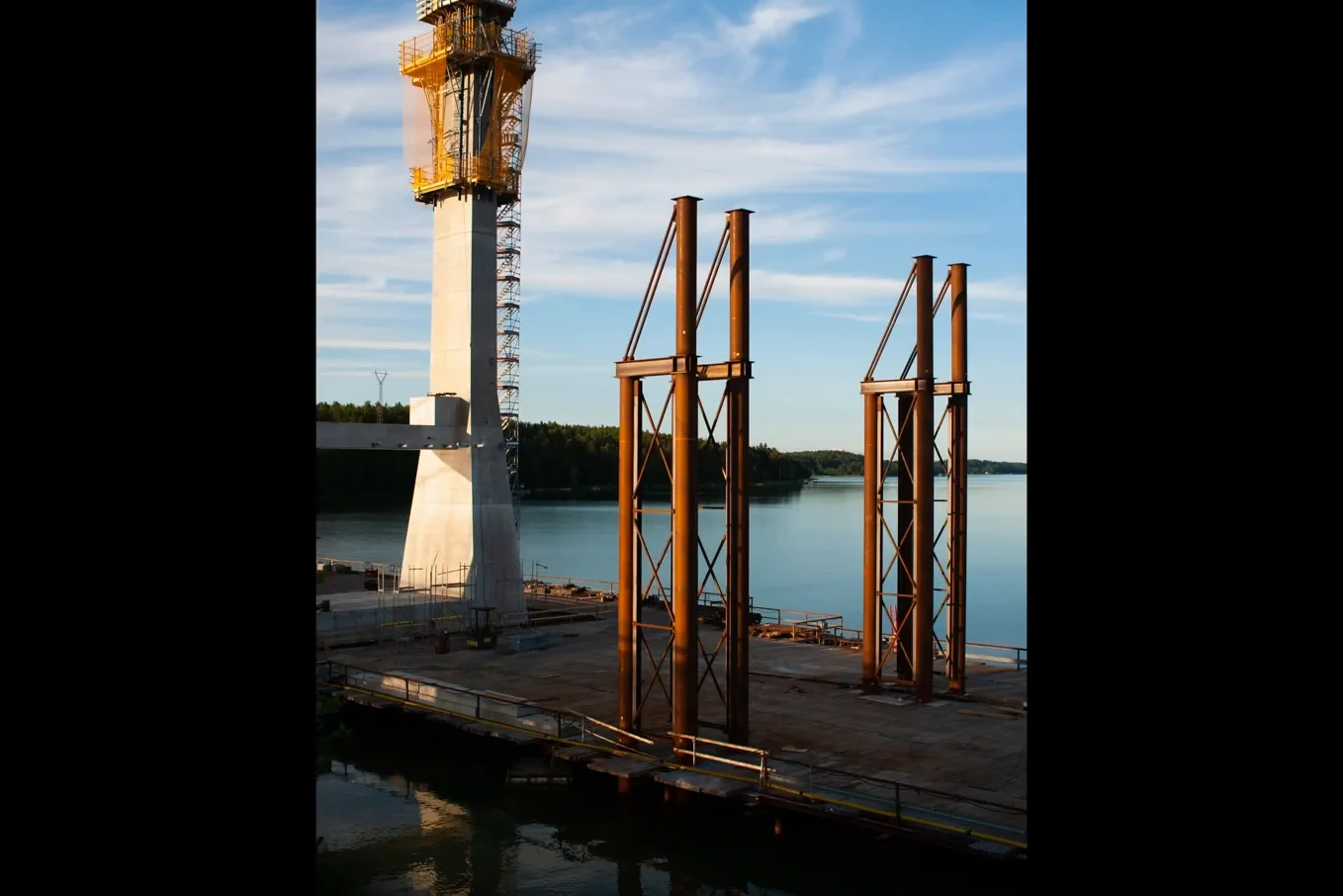
I started with the 35-105mm. Standing on the pedestrian walkway of the old bridge, the lighting was tricky—shooting directly into the sun. This is where modern lens coatings usually save the day, but older glass tends to flare. However, looking at the results, the D700 handled the high-contrast scene beautifully.
The sheer scale of these pylons is captured perfectly. Note the warm rendering of the late afternoon sun on the concrete.
The color rendition of the D700 is legendary for a reason. In 2025, we often spend hours grading RAW files to get rid of the “digital” look. With the D700, the files come out with a rich, thick tonality. The blues in the sky and the warm hues of the sunset hitting the concrete pylons required very little post-processing.
The Power of the Wide Angle (20mm)
To truly capture the magnitude of a suspension bridge, 35mm often isn’t wide enough. I switched to the 20mm f/2.8.
Wide-angle photography isn’t just about “fitting more in.” It’s about exaggerating perspective. By getting close to the cables or the railing and shooting wide, you create leading lines that draw the viewer deep into the frame.
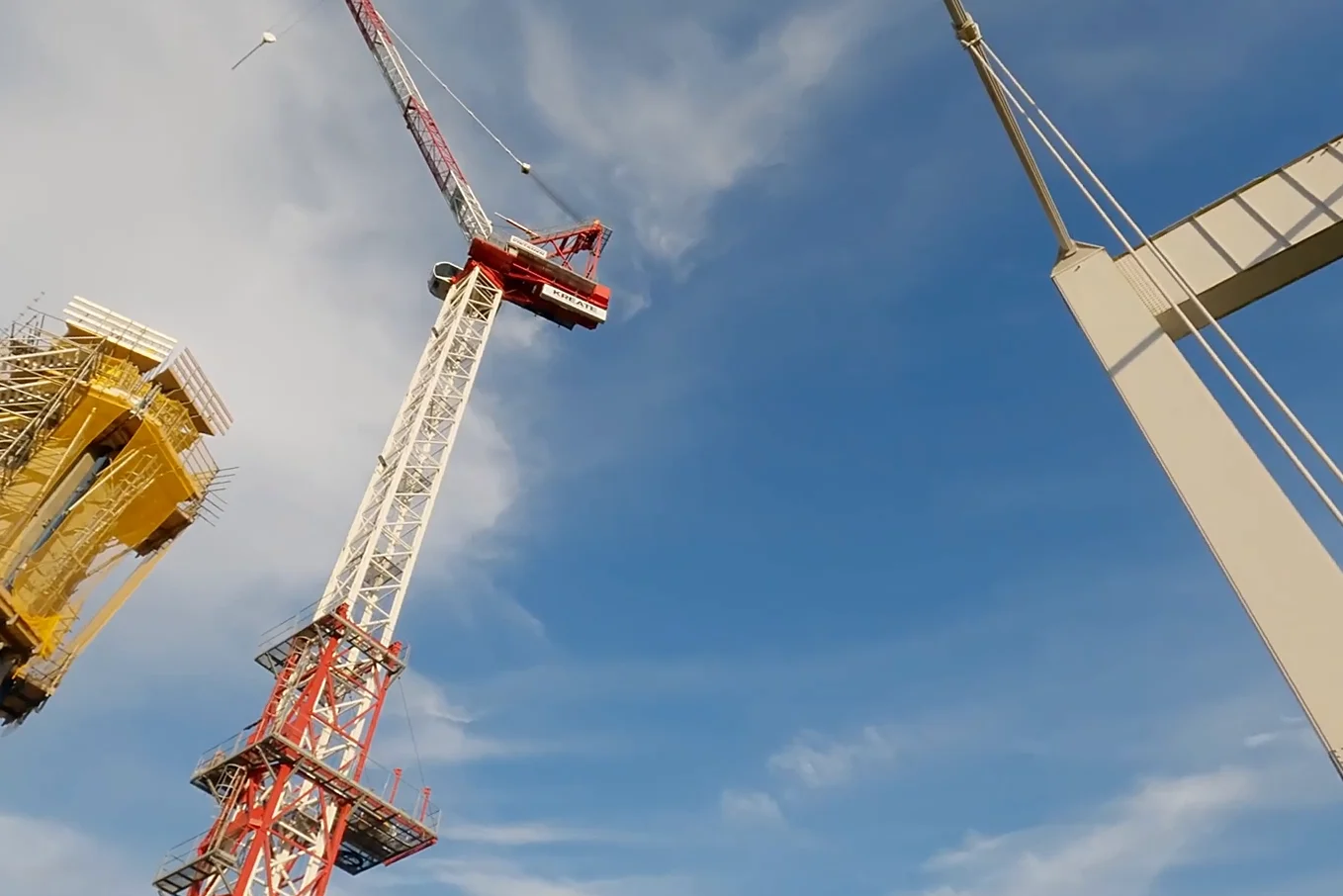
The 20mm focal length exaggerates the height of the crane and the pylon, creating a sense of vertigo and grandeur.
In the shot above, notice how the cables fan out. The distortion of the 20mm lens actually aids the composition here, making the bridge tower feel looming and monumental. The D700’s metering system (the 1005-pixel RGB sensor which was revolutionary at the time) nailed the exposure, balancing the bright white concrete against the deep blue sky.
Texture and Repetition
One of my favorite shots from the day involved the massive wooden scaffolding structure used for pouring concrete. It was a dense grid of timber, a repeating pattern that looked almost like a digital glitch in real life.
Thousands of wooden beams create a mesmerizing texture. The D700 resolves these details with a pleasing, natural sharpness.
Here, the “low” 12MP resolution is actually a benefit. sometimes, ultra-high-resolution cameras can suffer from moiré patterns when shooting tight grids like this. The D700 rendered the wood with a natural softness that feels tactile. The warm, golden light hitting the wood against the cool blue shadows is a testament to Nikon’s color science from that era.
Subject 2: The Silent Quarry (Industrial Decay)
After leaving the bridge, I moved to a quieter, more somber location: an old mine/quarry filled with turquoise water. This location offered a completely different color palette and mood.
Industrial decay is a genre that demands a sensor capable of capturing subtle textures—rust, moss, crumbling concrete.
The “Film Look” of the D700
We talk a lot about “film simulation” presets in 2025. Fujifilm has mastered it, and everyone else is trying to copy it. But the Nikon D700 naturally produces images that look like high-quality slide film.
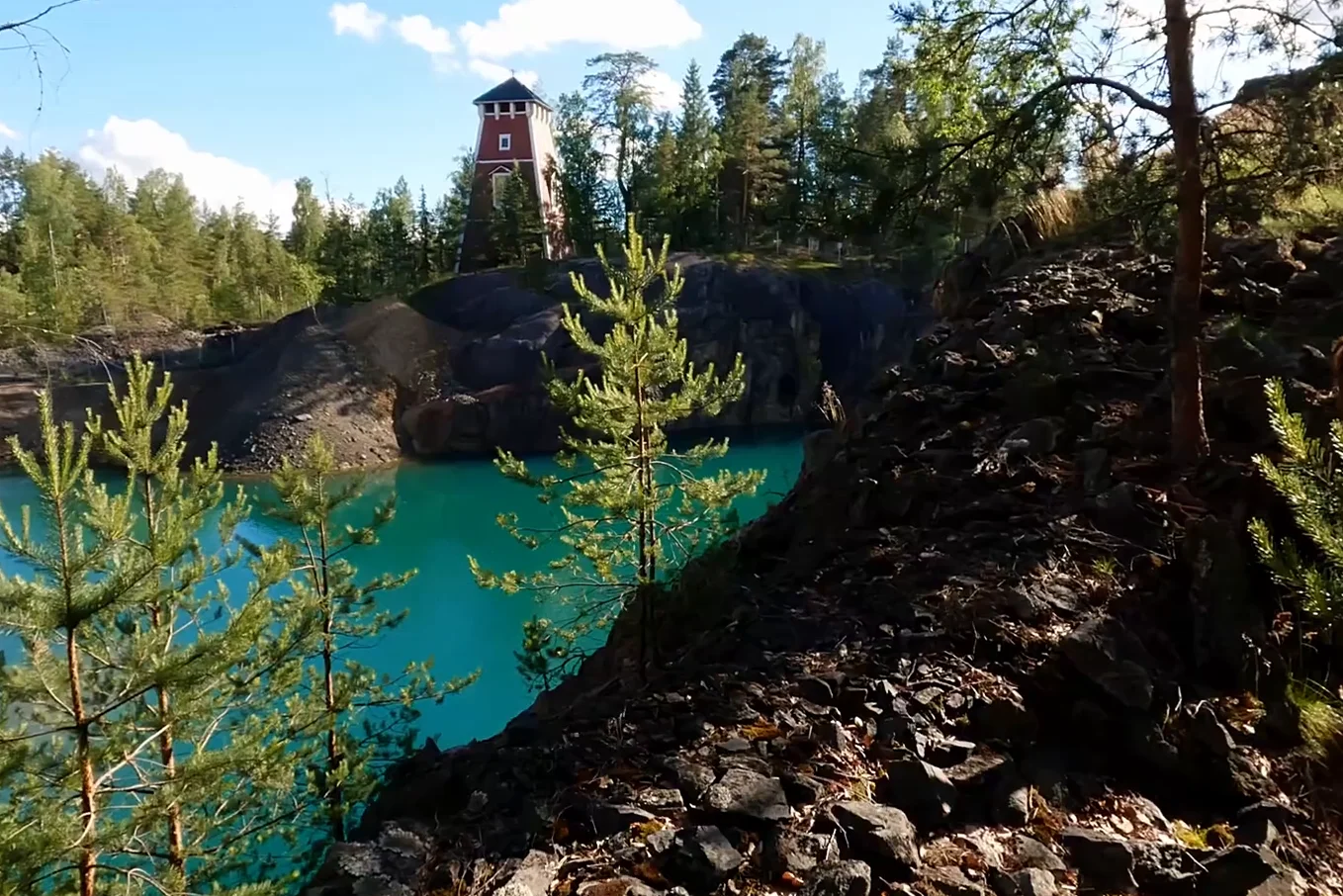
At the quarry, the water was a vibrant, unnatural turquoise (likely due to mineral content), contrasting with the red rust of the surrounding rock and machinery.
The turquoise water pops against the earthy tones. This color separation is where the D700 sensor shines.
I used the 20mm again here to frame the water with the jagged rocks in the foreground. The dynamic range was tested here—bright sky, dark rocks, and reflective water. While a modern Z8 or Z9 might recover 5 stops of shadow detail, the D700 recovers enough to look real. Deep shadows stay black, preserving the contrast, rather than becoming a muddy gray HDR mess.
Capturing Ruins
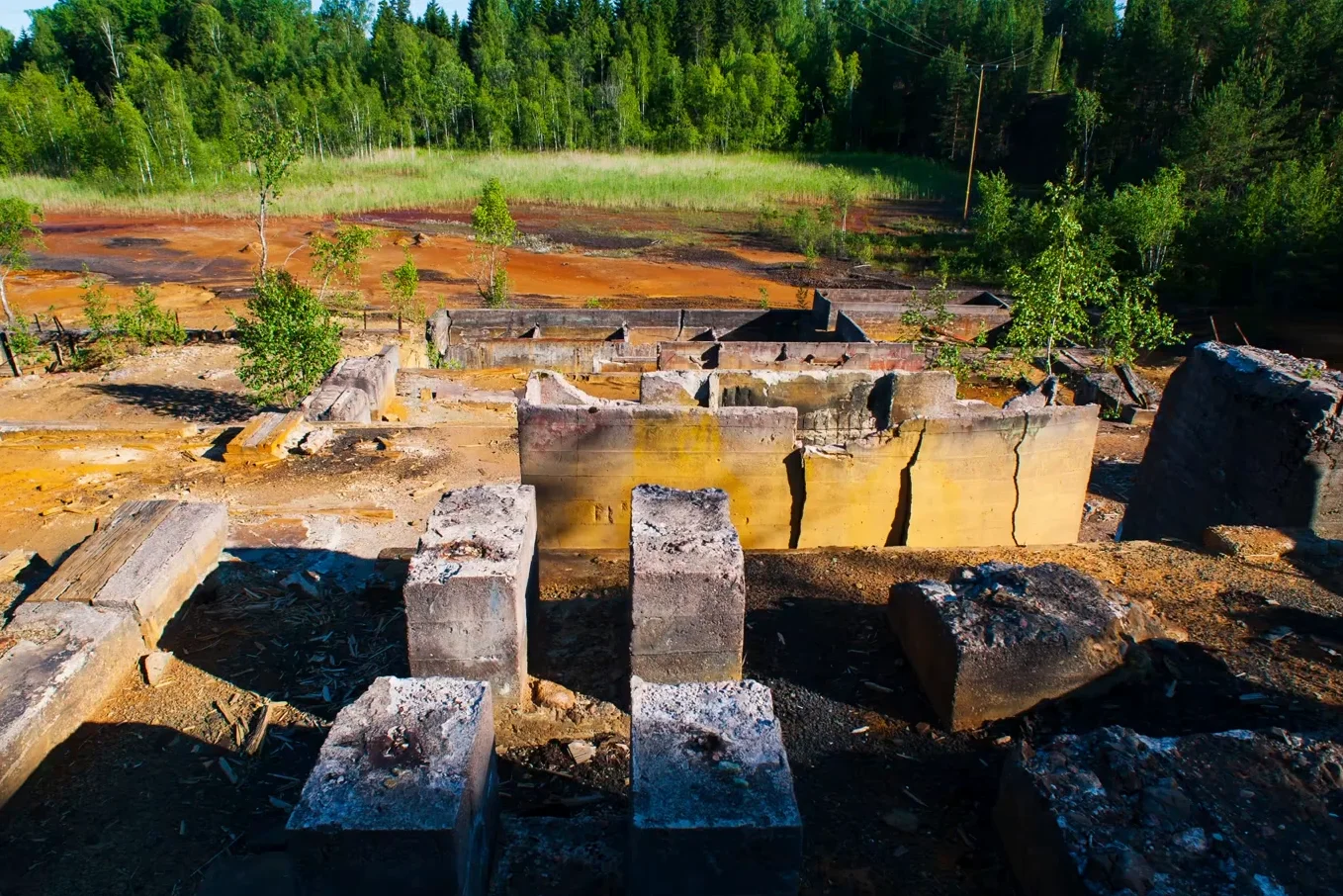
The concrete foundations of the old mine buildings were like a brutalist maze. Shooting these ruins is about finding geometry in destruction.
I focused on the interplay of light and shadow within the concrete “rooms.” The rust dripping down the walls adds a splash of orange to the grey slabs.
Texture is key here. The juxtaposition of the hard, decaying concrete and the resilient green sapling growing through it tells a story of time passing.
Using the AF 20mm, I could get right inside these structures. The distortion creates a slightly claustrophobic feeling, which fits the subject matter perfectly. The lens, being an older design, has some corner softness wide open, but stopped down to f/8, it’s sharp where it counts.
Why Use Vintage Gear in 2025?
Reviewing the images on my computer later, I was struck by how little work they needed. But beyond the image quality, there is the experience.
1. The Optical Viewfinder (OVF)
In 2025, Electronic Viewfinders (EVFs) are amazing. They are bright, they show you the exposure in real-time, and they have zero lag. But they are still screens. Looking through the D700’s big, bright glass pentaprism connects you to the scene differently. You are seeing the light itself, not a digital interpretation of it.
2. The “Fat Pixel” Magic
The D700 has a pixel pitch of about 8.45µm. Compare that to the ~3.7µm of a 60MP camera. Larger pixels gather light more efficiently. This creates a smoothness in tonal transitions—the “roll-off” from light to dark—that high-megapixel sensors sometimes struggle to replicate without heavy processing.
3. Tactile Feedback
The older AF lenses rely on the camera body’s motor to drive the focus (the “screw drive”). You can feel the torque; you can hear the zzzt-zzzt as it locks on. It’s mechanical. It feels alive. It slows you down just enough to make you think about your shot, but it’s fast enough to capture the moment.
Conclusion: The Legend Lives On
Is the Nikon D700 a camera for everyone in 2025? No. It doesn’t shoot video (well, not really), it doesn’t have SnapBridge, and it lacks eye-detect AF.
But for the pure joy of photography? For walking around a construction site or a landscape and creating art? It is absolutely still a heavyweight contender.
The photos from this bridge and mine are proof that you don’t need the latest $4,000 body to capture stunning images. You need good light, a good eye, and a camera that you trust. The D700 is, and always will be, a camera you can trust.
If you have an old DSLR gathering dust in your closet, do yourself a favor: charge the battery, grab a cheap prime lens, and go for a walk. You might just fall in love with photography all over again.
What is your favorite “vintage” digital camera that you still use today? Let me know in the comments below!