

In a world dominated by computational photography and increasingly capable smartphones, the dedicated compact camera—often called the “point-and-shoot”—occupies a strange limbo. Is it worth carrying an extra device when your phone shoots 4K? After spending quality time with the Canon G7X Mark II, my answer is a resounding yes, but with a few caveats that honest photographers need to know.
This isn’t just a spec-sheet rundown. This is a look at how this little powerhouse fits into a real workflow, specifically for those who love street photography, travel documentation, and having tactile control over their images. Let’s break down the reality of owning this camera, from its brilliant design choices to its frustrating limitations.
The Art of Being Invisible: The Retractable Screen
One of the greatest challenges in street photography is “the observer effect.” As soon as you raise a camera to your eye, people notice. They stiffen up, they pose, or they get annoyed. The moment is lost.
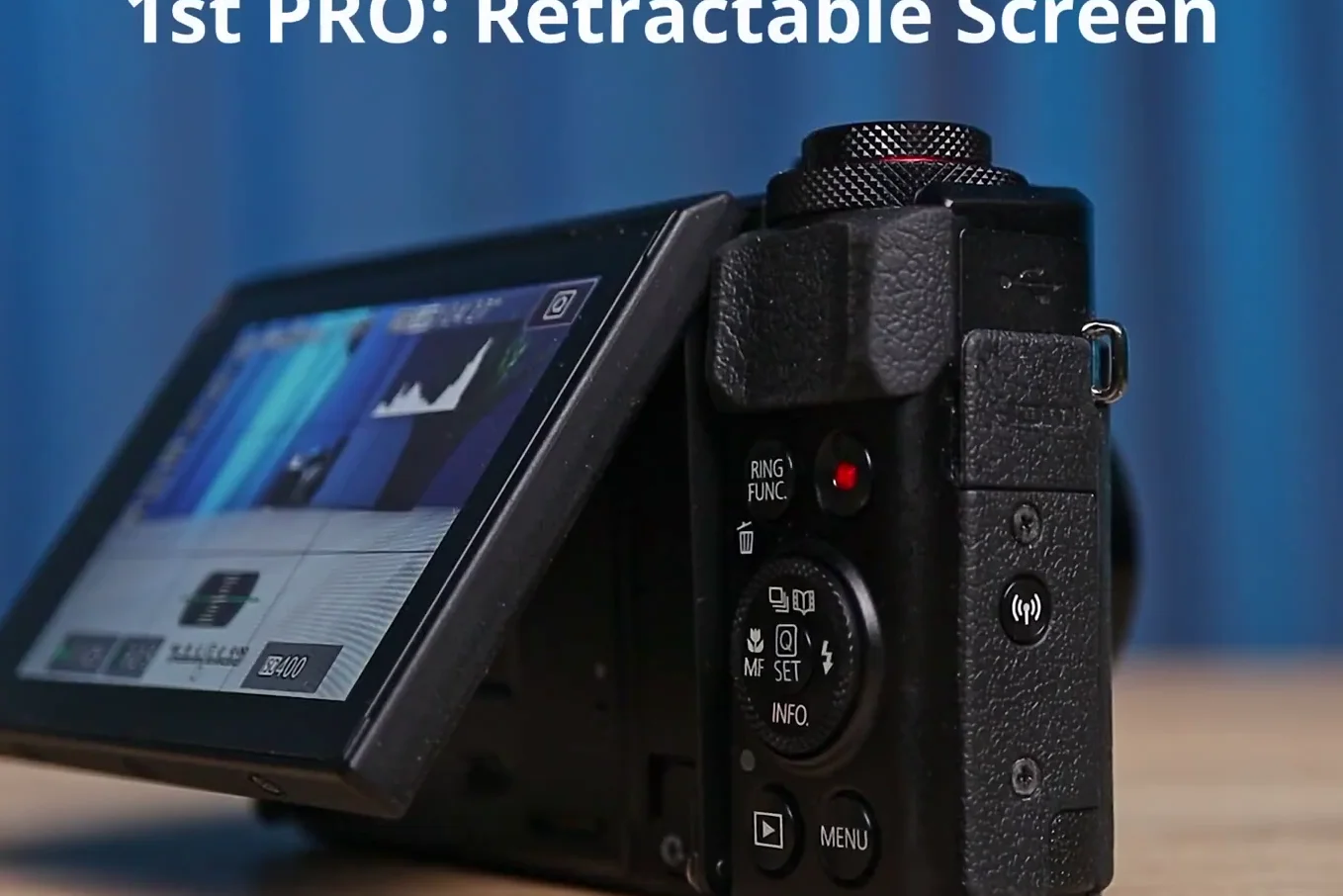
The G7X Mark II offers a brilliant workaround that I find indispensable: the retractable, tilting touchscreen. While many cameras have articulating screens, the way this one flips up allows you to shoot from the waist or chest level. This changes your posture entirely. You aren’t looking at your subject; you are looking down at your device.
To the average passerby, you look like you’re checking your settings or reviewing a photo. This allows you to blend into the environment. You become less threatening, allowing you to capture candid moments with an authenticity that a smartphone (which everyone recognizes as a camera these days) often fails to get. Furthermore, this flexibility makes low-angle shots—like capturing reflections in a puddle or the perspective of a pet—incredibly easy without having to lie on the ground.
The “1-Inch” Advantage: Physics Still Matters
There is a common misconception that high-end phones have caught up to dedicated cameras. While AI processing in phones is amazing, it cannot cheat physics. The G7X Mark II houses a 1-inch sensor.
To put this in perspective, this sensor is significantly larger than what you find in standard smartphones. Why does this matter?
1. Natural Bokeh: You get real background separation, not the “portrait mode” software blur that often messes up hair strands or glasses.
2. Dynamic Range: It retains more detail in the shadows and highlights.
However, we need to manage expectations. While it crushes a smartphone, it is not a full-frame DSLR.

As shown in the comparison above, the 1-inch sensor is the “Goldilocks” size—small enough to fit in a pocketable body, but large enough to provide professional-looking image quality. Just don’t expect it to perform miracles in pitch-black darkness like a Sony A7S III. It occupies a sweet spot for travel and daily carry.
Optical Precision vs. Digital Crop
One feature that keeps me coming back to the G7X Mark II is the glass. It features a built-in lens with a 4.2x optical zoom, roughly equivalent to 24-100mm in full-frame terms.
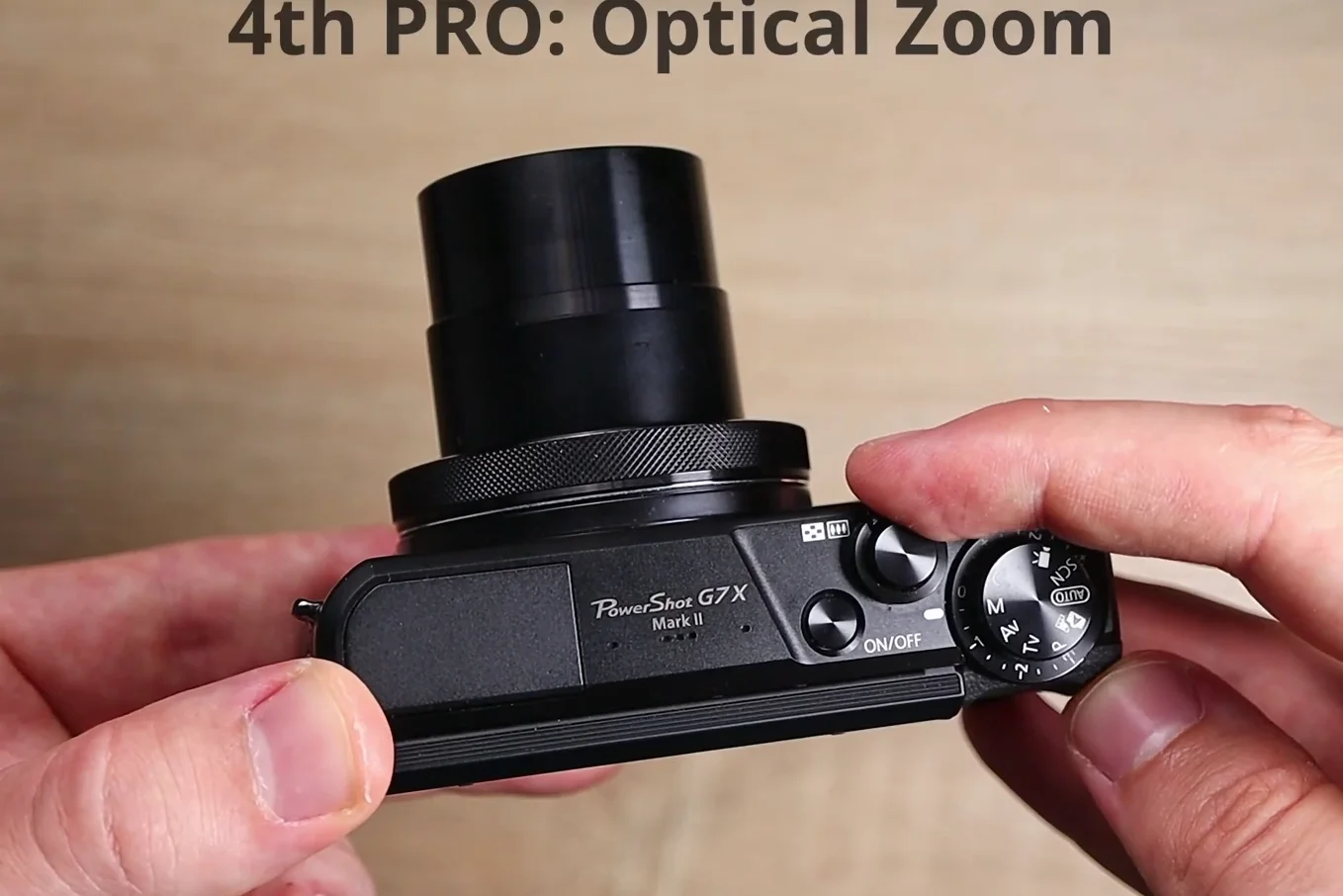
Smartphones often use “digital zoom,” which essentially crops the image and degrades quality. The G7X zooms optically, meaning the glass elements move to magnify the image, preserving full resolution and detail at 100mm. This range is incredibly versatile. At 24mm, you have a wide angle for architecture and vlogging. At 100mm, you can compress the background and take flattering portraits or capture details on a building from across the street.
Tactile Control: The Photographer’s Joy
The mantra “the best camera is the one you have with you” is true, but I would add: “the best camera is the one you enjoy using.” Touching a glass screen on a phone feels numb.
The G7X Mark II excels in ergonomics. It features a dedicated control ring around the lens. In Manual or Aperture Priority mode, you can assign this ring to control aperture or shutter speed.
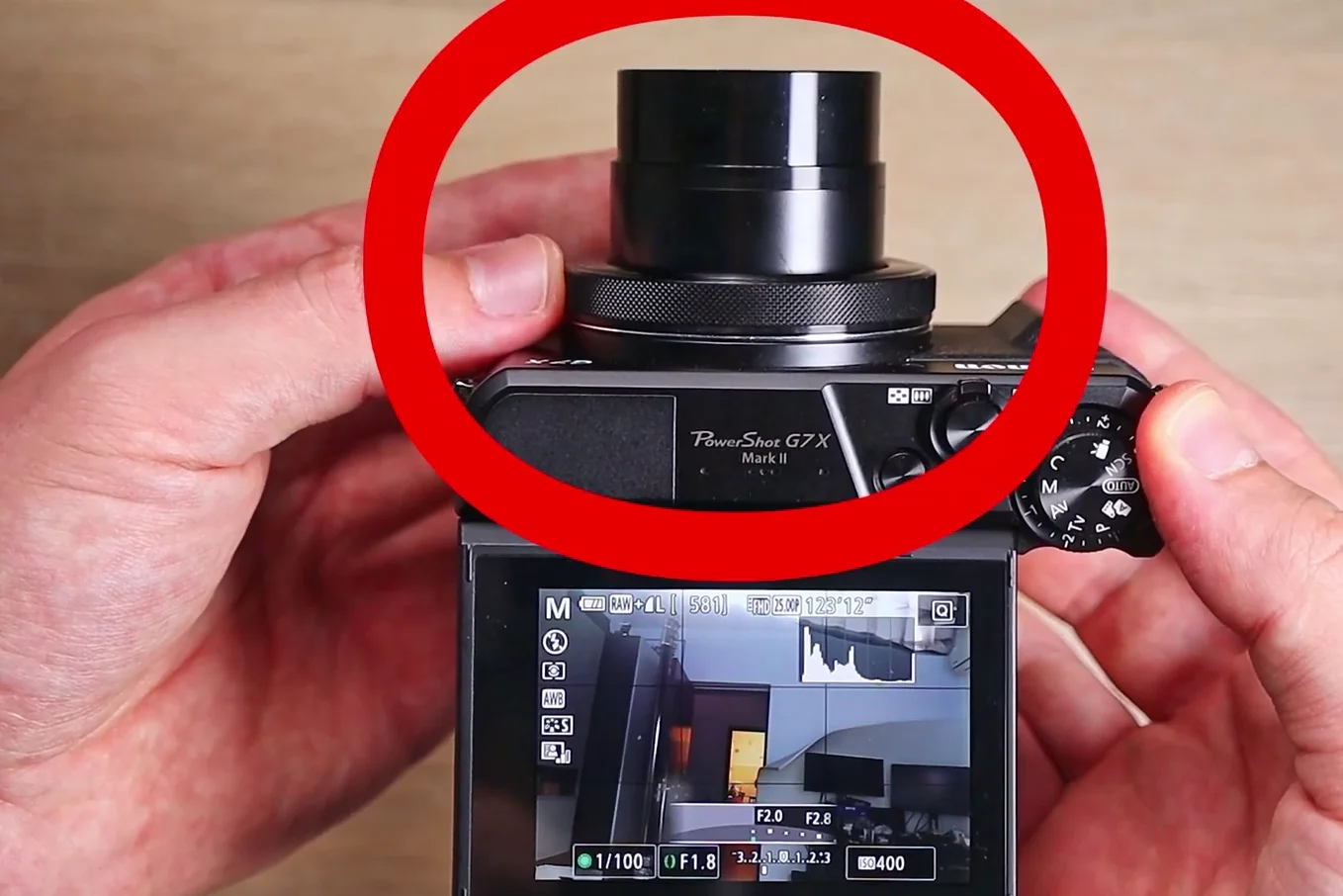
There is a satisfying click and resistance when you turn the ring. It allows you to develop muscle memory. You can adjust your exposure without looking, something impossible on a touchscreen. This tactile feedback makes you feel more connected to the process of creating an image. Combined with the dedicated exposure compensation dial on top, you have full control right at your fingertips.
The Reality Check: Where the G7X Stumbles
No camera is perfect, and despite my love for this compact device, there are three significant downsides that might specific types of shooters.
1. The Missing Viewfinder
This is the biggest omission. The G7X Mark II relies entirely on the rear LCD screen. On a bright, sunny day, glare can wash out the screen, making it difficult to compose your shot. A viewfinder (EVF) also provides a point of contact with your face, which adds stability. If you are a purist who needs a viewfinder, you might want to look at the Sony RX100 series (though you will pay a premium for it).
2. Low Light Limitations
Despite having a 1-inch sensor, high ISO performance isn’t limitless. Once you push past ISO 1600 or 3200, noise becomes visible. It’s better than a phone, but if you are shooting primarily in dimly lit clubs or night streets without streetlamps, an APS-C camera with a fast prime lens would serve you better.
3. The “Wake Up” Lag
Street photography is about the “decisive moment.” The G7X uses a telescoping lens that needs to extend when you power it on.
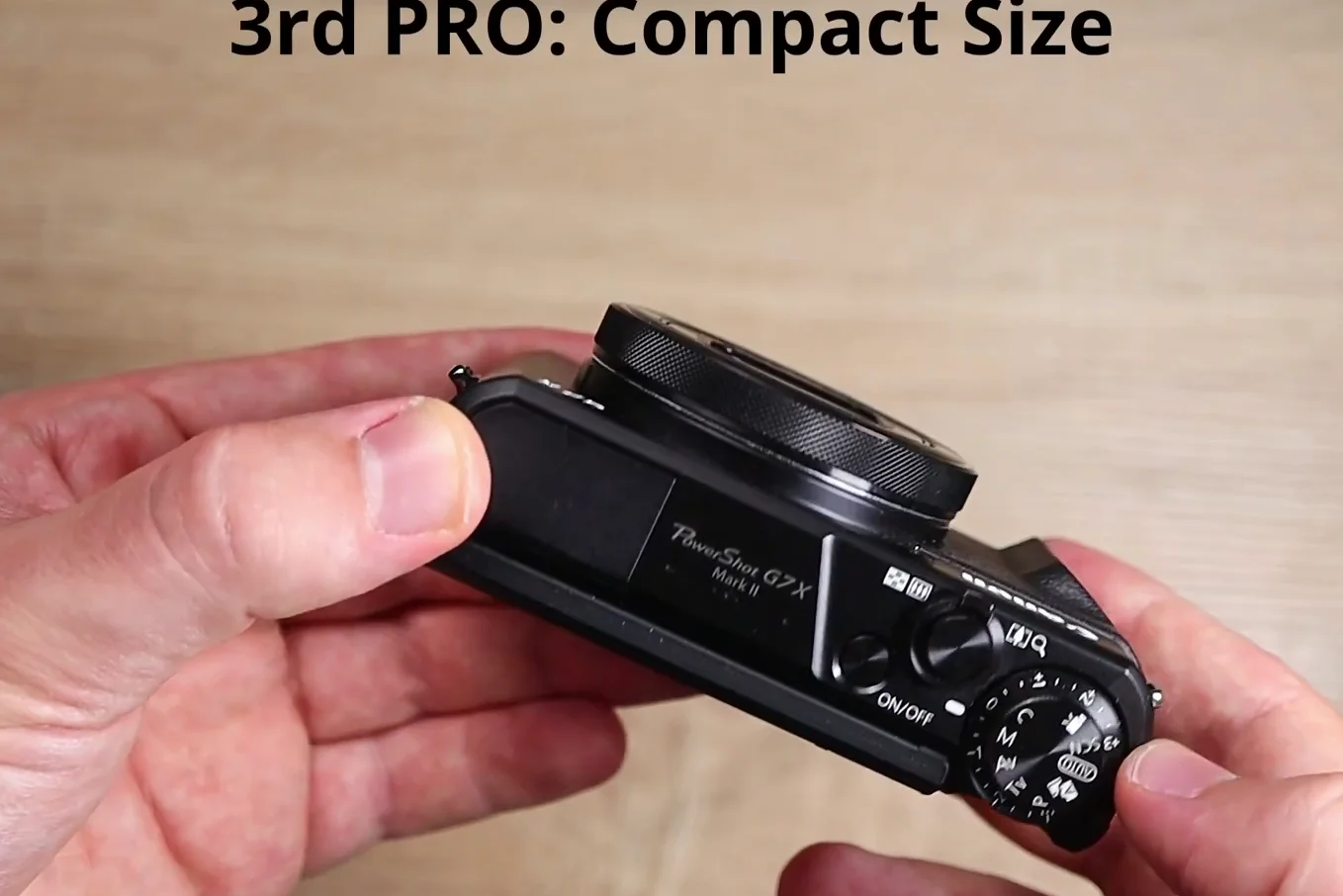
This process takes about 2 seconds. That sounds fast, but in the world of photography, 2 seconds is an eternity. A fleeting expression or a bird taking flight will be gone by the time the lens extends. You have to anticipate the shot and keep the camera powered on if you expect action.
Final Verdict
The Canon G7X Mark II remains a legendary camera for a reason. It bridges the gap between convenience and quality perfectly.

If you are a vlogger, a travel enthusiast, or a street photographer who values discretion over raw power, this camera is a fantastic tool. It fits in a jacket pocket, feels professional in the hand, and produces files that are rich and malleable in post-processing. It brings the joy back into casual photography—a joy that smartphones, for all their convenience, often fail to deliver.


