It had been fifteen years. That’s a lifetime in the photography world. The last time I seriously strapped a macro lens to my camera and headed into the bushes, I was a teenager. Back then, patience was in short supply, and technique was a guessing game.
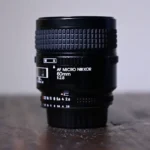
Recently, I decided to dust off the old skills (and the lens) to trade the chaotic concrete of street photography for the quiet chaos of nature. I took a Canon EF-S 60mm macro lens to the park, expecting a relaxing afternoon. What I got was a masterclass in humility, physics, and the sheer wonder of the microscopic world.
If you are thinking about trying macro photography, or if you’ve tried it and thrown your camera bag down in frustration, this is for you. Here are the seven lessons I learned—some technical, some philosophical—when I finally slowed down enough to look at the little things.
We live in a world of “spray and pray.” In street photography, sports, or even events, we are often chasing the moment, running gun-and-gun. Macro is the antithesis of this.
The first thing that hit me wasn’t the difficulty, but the peace. To photograph a tiny insect or the texture of a leaf, you cannot rush. You physically have to stop moving. You have to breathe slower to stabilize your hands. You become an observer rather than a hunter.
There is a meditative quality to staring at a patch of bark for five minutes, waiting for an ant to cross a specific ridge. It quiets the noise in your head. If you are feeling burnt out creatively, don’t buy a new camera body; just go outside and stare at a flower through a macro lens. It reconnects you with the fundamental joy of seeing.
2. The Focus Struggle is Real (Especially with Moving Subjects)
Then, reality sets in. The relaxation phase ends the moment you try to hit the shutter on a moving target.
Here is the physics problem: As you get closer to your subject—approaching that glorious 1:1 magnification ratio—your Depth of Field (DoF) becomes razor-thin. We aren’t talking inches; we are talking millimeters. Sometimes, fractions of a millimeter.
When you push a lens to its 1:1 limit, the margin for error effectively vanishes.
If you are photographing a watch or a coin on a table, this is fine. But living things? They don’t care about your focal plane.
I spent a significant amount of time trying to photograph a bee. In the macro world, a bee moving its head slightly to the left is the equivalent of a portrait subject sprinting across a room. You might get the wing in focus, but the eye is blurry. You get the eye, but the proboscis is gone.
This taught me that “continuous autofocus” is often useless in macro. The best way to focus isn’t twisting the lens ring; it’s rocking your entire body back and forth millimeters at a time until the texture pops in the viewfinder. It’s a dance, and you will step on your partner’s toes often.
3. The Wind is Your Arch-Nemesis
You might think, “Okay, insects move. I’ll just photograph plants. Plants stay still.”
False. Plants are never still.
When looking through a macro lens, a gentle, refreshing summer breeze looks like a violent hurricane. Because you are magnified, every micro-movement is exaggerated. A flower swaying 2mm back and forth makes framing impossible and focus a nightmare.
Even if the insects stand still, the leaf they are standing on acts like a sailboat in the wind.
I found myself holding a branch with my left hand to stabilize it while trying to shoot with my right hand. It’s a juggling act. If you are serious about flower macro photography, you might even bring a “plamp” (a clamp on a flexible arm) to hold stems steady. Otherwise, you are at the mercy of the weather.
4. The Tripod Paradox: Support vs. Mobility
Traditional advice says: “Macro requires stability. Use a tripod.”
My experience says: Leave the tripod at home.
Unless you are in a controlled studio environment or shooting a dormant subject (like mushrooms or moss), a tripod is a shackle. Nature is dynamic. Insects crawl under leaves. The light shifts. The angle you need is usually three inches off the ground, tucked behind a root.
Setting up a tripod, adjusting the legs, and leveling the head takes time. By the time you are ready, the beetle has walked away, or the bee has flown to the next county.
Trying to chase these fast-moving ants with a tripod would be an exercise in futility.
A tripod kills your spontaneity. It tires you out carrying it, and it makes you lazy with your angles. You settle for the shot the tripod can get, rather than the shot the subject demands. For video? Yes, bring the tripod. For photography? trust your hands and shutter speed.
5. You Need Light… Lots of It
This was the hardest technical lesson. You might be shooting on a sunny day, but your camera will think it’s midnight.
Why?
1. Aperture: To get more than just a sliver of the subject in focus, you need to stop down. f/2.8 is useless for a full insect body; you need f/8, f/11, or even f/16. That cuts your light drastically.
2. Shutter Speed: Because you are handheld (see lesson 4) and magnified, camera shake is amplified. You need fast shutter speeds—at least 1/250s, preferably faster.
3. Light Loss: Macro lenses physically lose light transmission as they extend to 1:1 magnification (the effective f-stop changes).
When a cloud passed over the sun, I was in trouble. I had to crank my ISO up, introducing noise.
The Solution: If I were to do this professionally, I would invest in a flash. Not the pop-up flash, but a speedlight with a massive diffuser (like a softbox) close to the lens. Flash freezes motion and allows you to stop down to f/16 for detail without raising ISO. Without artificial light, you are at the mercy of the sun.
6. Macro is Calisthenics
Photography is usually an eye-level or chest-level activity. Macro is a “knees, elbows, and stomach” activity.
To get a compelling shot, you have to enter the subject’s world. If you are photographing a dandelion, looking down from six feet above is boring. You need to be down in the grass, looking up at it against the sky.
The best perspective is often found by getting your camera (and yourself) down into the dirt.
I spent half the day squatting, kneeling, or contorting my body to find the right angle. You have to move around the subject. Check the backlight. See how the background colors shift if you move two inches to the right.
If you come home with clean knees, you probably didn’t get the best shots. It is physically demanding work, which makes the result feel earned.
7. A New Appreciation for Nature
Despite the wind, the blurry shots, the high ISO, and the sore knees, this is the most important lesson: The world is spectacular.
When you finally nail that focus—when you zoom in on the back of your camera and see the compound eye of a fly or the spiral geometry of a snail shell—it feels like discovering a new planet.
Macro photography reveals the intricate geometry of nature that we walk past every single day.
We walk past these miracles every day on our way to work or the grocery store. We ignore the textures of the trees and the complexity of the weeds growing in the cracks of the sidewalk. Macro photography forces you to acknowledge them. It builds a bridge between you and the environment.
Even if you never become a “macro photographer,” renting a lens for a weekend changes how you see. You stop looking at scenes and start looking into them.
Final Thoughts for Beginners
If you want to try this, don’t be intimidated by the difficulty. Embrace it. Here is my quick starter pack of advice based on this session:
* Aperture: Start around f/5.6 or f/8. Don’t go wide open.
* Shutter: Keep it fast. 1/250s or faster.
* Burst Mode: Use high-speed continuous shooting. If you rock back and forth, one of those 5 shots will be sharp.
* Patience: You will delete 90% of your photos. That’s normal. The 10% that work will be magic.
Go outside, get low, and good luck chasing the bugs.