In a world obsessed with the latest mirrorless autofocus tracking, 8K video, and sensors that can see in the pitch dark, looking back at a DSLR from 2009 might seem like nostalgia bait. But let’s be real for a moment. Photography, at its core, hasn’t changed. Light, composition, and the moment remain king.
I recently decided to revisit the Nikon D300s, a camera that was once the king of the DX (APS-C) hill. Back in July 2009, this body alone would set you back $1,700—that’s over $2,500 in today’s money comfortably. It was a serious tool for serious photographers.
Today? You can pick one up for under $200. In fact, if you look around the used market, finding one in decent condition for $150 is entirely possible. The question isn’t whether it’s “old technology.” The question is: Does a 15-year-old professional-grade body offer more value than a cheap, plastic modern camera?
After putting this tank through its paces in 2025, from freezing temperatures to fast-moving subjects, I have a definitive answer.
The Feel of a Flagship: Build Quality & Ergonomics
The very first thing you notice when you pick up a D300s is the confidence. There is no other word for it.
Modern entry-level and even mid-range cameras often feel hollow. They are light, which is great for travel, but they lack that tactile feedback that tells you, “I can take this anywhere.” The D300s is built on a magnesium alloy chassis. It feels dense. It feels like a tool designed to hammer nails if you ran out of hammers (please don’t actually do that).
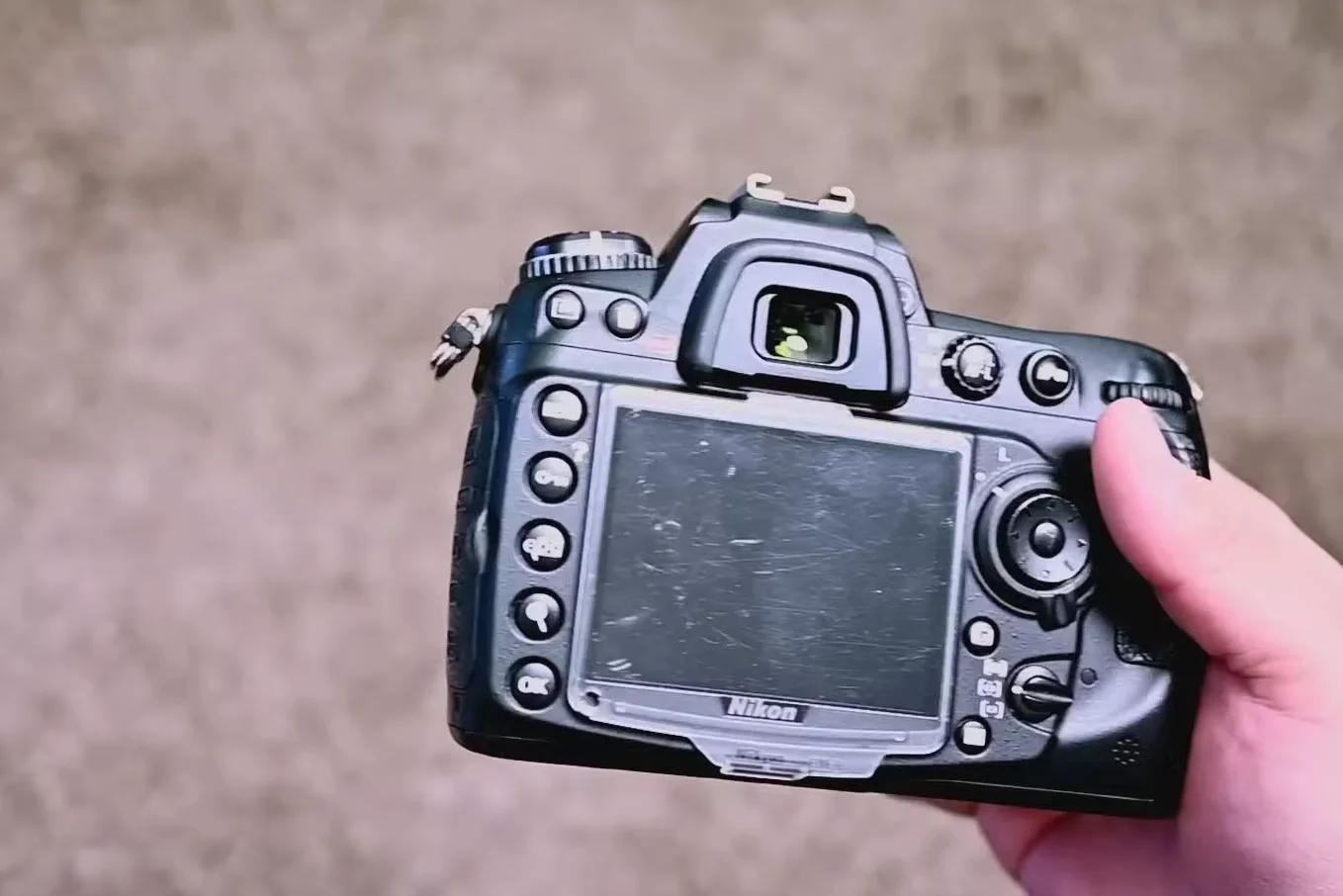
The rugged build and professional button layout provide a tactile experience modern touchscreens can’t replicate.
The Professional Layout
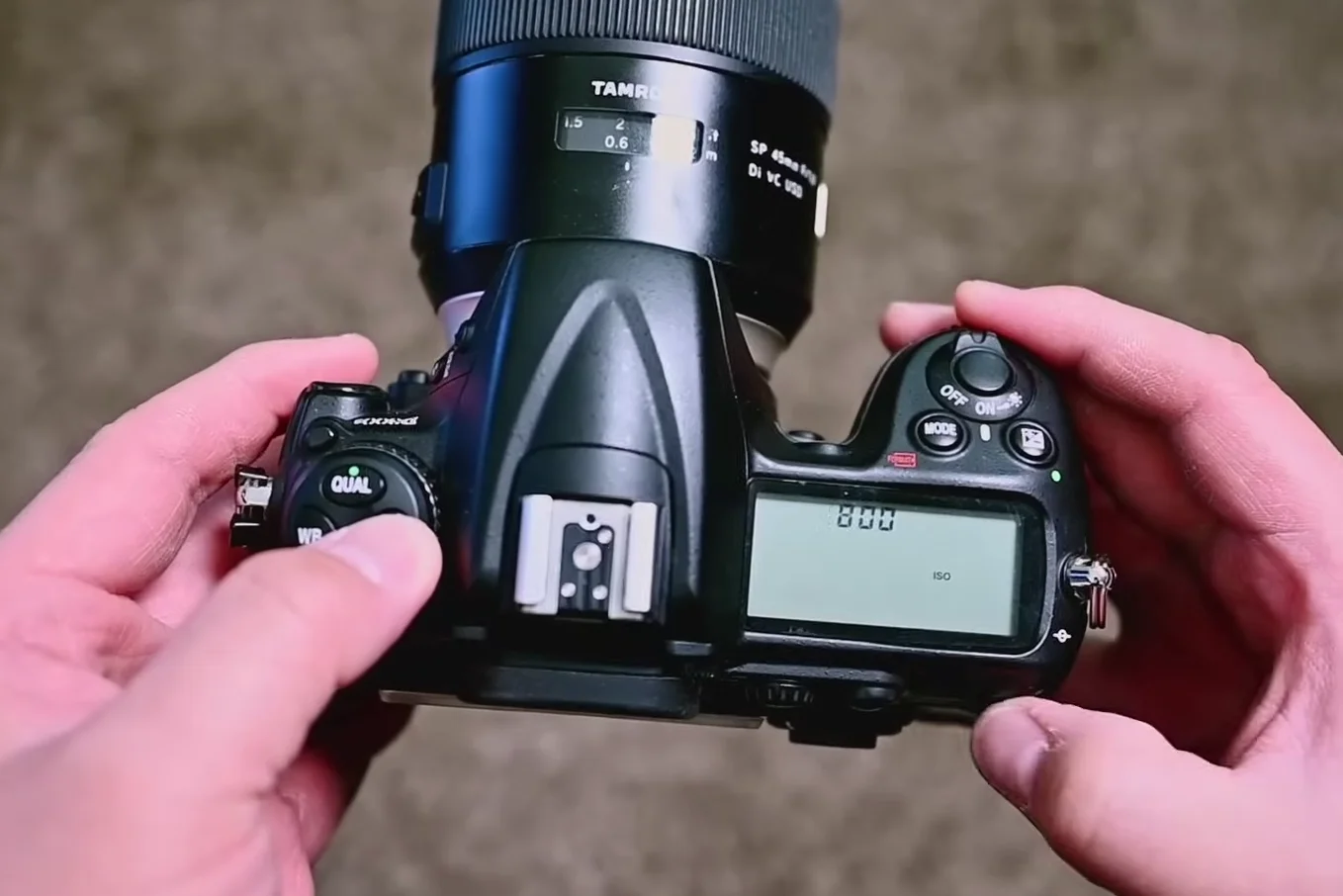
If you are used to diving into menus to change your ISO or White Balance, the D300s will be a revelation. This camera comes from an era where Nikon believed every major setting deserved a physical button.
On the top left turret alone, you have dedicated buttons for Quality, White Balance, and ISO. You can change these settings without taking your eye away from the viewfinder. This is muscle memory heaven. Once you learn this camera, you become faster than anyone fumbling with a touchscreen menu.
The grip is deep and substantial. Even without a battery grip, it fits larger hands comfortably. If you attach a heavy lens, the camera balances it perfectly. It doesn’t feel front-heavy like a small mirrorless body does when you slap a pro lens on it.
Specs: The Reality Check
Let’s address the elephant in the room: the spec sheet. If you compare this to a 2025 spec sheet, you might laugh. But specs don’t take photos; photographers do.
Sensor: 12.3 Megapixel DX CMOS
Auto Focus: 51 Points (with 15 Cross-type sensors)
ISO: 200-3200 (Expandable to 6400)
Speed: 7 Frames Per Second (8 FPS with grip)
Storage: Dual Slots (Compact Flash + SD)
Is 12 Megapixels Enough?
In 2025, we are spoiled by 24MP, 45MP, and even 60MP sensors. However, unless you are printing billboard-sized advertisements or cropping in 50% on every shot, 12.3 megapixels is surprisingly sufficient.
For Instagram, Facebook, and web usage, 12MP is actually overkill (4K resolution is only about 8MP). The files from the D300s are robust, beautiful, and importantly, they don’t clog up your hard drive. You can shoot thousands of images without needing to buy a new 4TB SSD every month.
The Secret Weapon: Autofocus & Drive Speed
This is where the D300s separates itself from the “cheap old camera” pack. Nikon didn’t put a consumer AF system in this; they put in the Multi-CAM 3500DX.
With 51 autofocus points, the D300s still offers respectable tracking for sports and wildlife.
With 51 autofocus points, this camera was a sports and wildlife monster in its day. Even by modern standards, the phase-detection AF is snappy. When you pair this with a good lens, it locks on instantly. I took this out to track cars and fast-moving subjects, and while it doesn’t have the AI eye-tracking of a Z9, it captures the action reliably if you know what you’re doing.
Shooting at 7 frames per second (mechanically!) sounds satisfying. It’s a machine-gun shutter sound that lets everyone around you know you’re working. If you add the battery grip, you get 8 FPS. For a sub-$200 camera, getting nearly 8fps with a pro-grade AF system is an insane value proposition for budding sports photographers.
The “Screwdriver” Advantage
One of the biggest financial advantages of owning a semi-pro Nikon body like the D300s is the built-in focus motor, often called the “screw drive.”
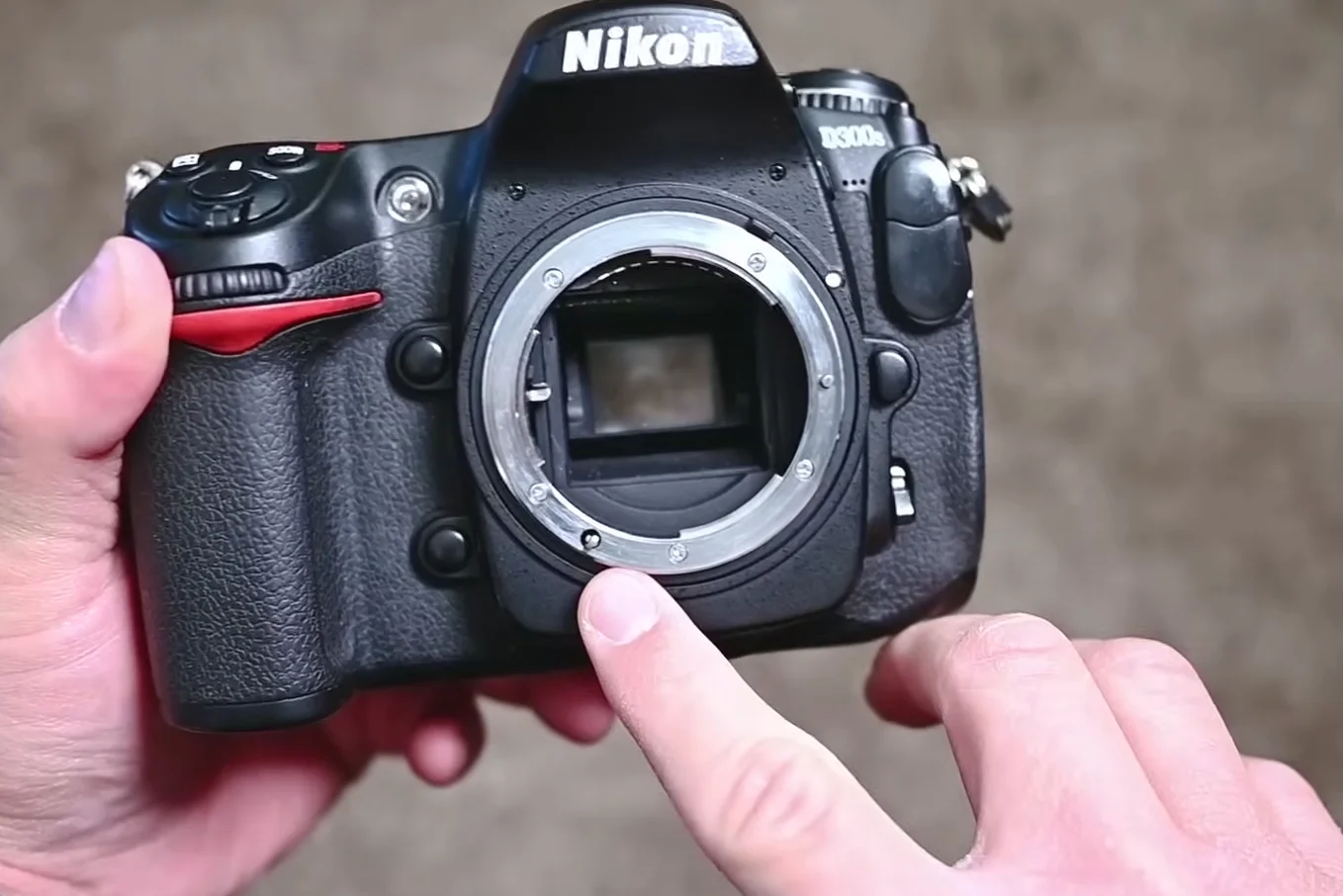
That small screw drive pin allows you to use decades of affordable, high-quality Nikon AF-D lenses.
Entry-level cameras (like the D3000 or D5000 series) lack this motor, meaning they can only autofoucus with newer, more expensive “AF-S” or “AF-P” lenses. The D300s, however, can drive older AF-D lenses.
Why does this matter? Because Nikon made incredible glass in the 90s and early 2000s that is optically superb but dirt cheap today because it relies on the camera body to focus. You can pick up a 50mm f/1.8 D or an 85mm f/1.8 D for a fraction of the price of their modern counterparts. The D300s opens the door to a massive, affordable ecosystem of professional optics.
Image Quality & Low Light Performance
This is the area where age shows the most. Sensor technology has improved strictly in terms of dynamic range and high ISO noise handling.
The D300s shines at base ISO (200). The colors are rich, typical of that older Nikon color science—slightly punchy but accurate. Skin tones look organic.
However, once you push past ISO 2000, things get grainy. And not the pleasing “film grain” simulation, but color noise.
The ISO range is modest by today’s standards. Sticking below ISO 2000 yields the best results.
Is it unusable? No. But it requires a change in mindset. You cannot just underexpose by 3 stops and hope to recover the shadows in Lightroom like you can with a Nikon D750 or Z6. You have to get the exposure right in-camera. In a way, this makes it an even better learning tool. It forces you to understand light.
If you are shooting indoor sports in a poorly lit gym, you might struggle. But for outdoor sports, portraits, landscapes, and street photography during the day, the image quality holds up beautifully.
Video: The Achilles Heel
Let’s be blunt: Do not buy this camera for video.
The D300s was the first in this line to offer video (the original D300 didn’t have it), maxing out at 720p at 24fps.
While it can record video, the limitations are severe:
1. Resolution: 1280×720 is low by modern standards.
2. Autofocus: It relies on contrast detection in Live View. It is slow, it hunts, and it is noisy. It is effectively unusable for moving subjects.
3. Rolling Shutter: The “jello effect” is very prominent if you pan quickly.
4. No Stabilization: There is no In-Body Image Stabilization (IBIS). Unless you are on a tripod, your footage will be shaky.
Video mode exists, but with contrast-based AF and no stabilization, it’s best reserved for static tripod shots.
I tested vlogging with it using a Sigma 10-20mm wide-angle lens. It was a workout. Holding a heavy magnesium body at arm’s length is tiring, and without reliable autofocus, I had to pre-focus and hope for the best. The internal microphone is also lackluster (though it does have a mic jack).
However, if you want a specific “vintage digital” aesthetic—that gritty, early 2010s YouTube look—this camera actually delivers that vibe natively. It’s imperfect in a way that some creators are actually trying to emulate with filters today.
D300s vs. D7000: The Classic Debate
If you are shopping in this price bracket, you will inevitably look at the Nikon D7000, released roughly a year after the D300s.
The D7000 (left) is smaller and has a better sensor, but the D300s (right) offers superior ergonomics and build quality.
Here is the breakdown:
The D7000 is technically the “better” camera on paper. It has a 16.2MP sensor, significantly better dynamic range, better low-light performance (usable up to ISO 3200+), and 1080p video.
The D300s is the “more professional” camera. It has a robust 51-point AF system (vs. 39 on the D7000), a larger buffer for burst shooting, 7-8 FPS speed (vs. 6 FPS), and that purely professional button layout.
Which one should you choose?
If you shoot landscapes or portraits where image quality and resolution are paramount, get the D7000.
If you shoot sports, wildlife, or you want to learn the controls of a professional camera body to eventually upgrade to a D500 or Z8, get the D300s. The D300s feels like a weapon; the D7000 feels like a camera.
Field Test: Durability and Battery Life
I took the D300s out to a frozen lake to photograph ice fishing huts. The temperature was well below freezing (around -10°C).
Mirrorless cameras often struggle in the cold; batteries drain faster as the EVF consumes power. The D300s uses the EN-EL3e battery. Because it uses an optical viewfinder (which consumes zero power), the battery life is legendary. I shot for hours in the freezing cold, and the battery barely dropped.
This reliability is why photojournalists loved this camera. You can throw it in the back of a car, leave it there for weeks, pick it up, and it will turn on and shoot.
Who is the Nikon D300s for in 2025?
It might seem strange to recommend a 15-year-old camera, but the D300s fills a specific niche perfectly:
The Student: If you want to learn photography properly, this camera is a strict but fair teacher. It forces you to use buttons, understand ISO limits, and rely on technique rather than AI assistance.
The Budget Sports Dad/Mom: If your kid plays soccer or baseball and you can’t afford a $2,000 Sony setup, a D300s + an older 80-200mm f/2.8 lens is a killer combo for under $400 total. You will get shots that parents with iPhones can only dream of.
The Adventure Backup: Because it is so cheap and so durable, it’s the perfect camera to take on a canoe trip, a mud run, or a dusty hike where you don’t want to risk your main rig. If it breaks (which is unlikely), you’re only out $150.
Despite its age, the D300s produces sharp, vibrant images with excellent color rendition when paired with good glass.
Final Verdict
The Nikon D300s is a reminder that “new” doesn’t always mean “necessary.”
Sure, it doesn’t have Wi-Fi, the video is practically a gimmick, and it’s heavy. But when you hear that mechanical shutter slap, look through that big bright optical viewfinder, and feel the magnesium grip, you remember why you love photography.
It captures the moment instantly. It focuses with authority. And for the price of a couple of fancy dinners, you can own a piece of professional history that is still capable of producing magazine-quality images.
If you have $200 and want to get into photography, skip the entry-level plastic bodies. Buy a D300s, buy a 35mm f/1.8 DX lens, and go shoot. You won’t regret it.