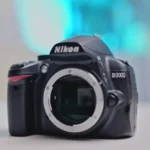
In the fast-paced world of digital imaging, five years is an eternity. New models are churned out annually, boasting more megapixels, faster processors, and AI-driven autofocus that feels like magic. But amidst the noise of the “latest and greatest,” there sits a camera that quietly continues to be a workhorse for many professionals and enthusiasts alike: the Nikon Z6.
Released back in late 2018, the Z6 was Nikon’s serious entry into the full-frame mirrorless war. Now, half a decade later, the question arises: Is this camera still relevant in 2024? Can it compete with modern tech, or is it just an outdated paperweight?
I’ve spent the last five years pushing the Nikon Z6 to its limits—from weddings and sports to rainy automotive events and casual travel. This isn’t just a spec-sheet rundown; this is a deep dive into what it’s actually like to live with this camera, the quirks that drive me crazy, and why I believe it might be the best budget full-frame deal on the market right now.
If you are coming from a bulky DSLR background like the beloved Nikon D750, picking up the Z6 feels like a breath of fresh air. It is significantly lighter and more compact without feeling like a toy. Nikon nailed the ergonomics right out of the gate; the grip is deep, and the buttons fall naturally under the thumb.
But the real game-changer isn’t the size—it’s the technology inside.
At the heart of the Z6 is a 24.5-megapixel BSI (Back-Side Illuminated) CMOS sensor. In 2024, 24 megapixels might sound “standard” or even low to pixel peepers, but for 90% of photographers, it is the sweet spot. It offers enough resolution for large prints while keeping file sizes manageable.
The 24.5MP BSI sensor is still a low-light beast by modern standards.
The dynamic range on this sensor is phenomenal. You can pull detail out of shadows that look pitch black, and recover highlights that seem blown out. It gives you a safety net in post-production that allows for creative editing without the image falling apart.
IBIS: The Invisible Tripod
One feature that Nikon Z6 users swear by is the IBIS (In-Body Image Stabilization). If you have shaky hands or love shooting in low light without a tripod, this is a revelation.
I’ve managed to get sharp, usable images handheld at shutter speeds as slow as 1/5th of a second. That is absurd. It allows you to keep your ISO down in dark situations, resulting in cleaner images. It’s not just marketing hype; it fundamentally changes how you shoot static subjects at night.
Speaking of night shooting, the high ISO performance of the Z6 is one of its strongest selling points. Because it “only” has 24 megapixels packed onto a full-frame sensor, the individual pixels are larger and gather more light.
Handheld at 1/6s shutter speed. The stabilization combined with high ISO performance opens up new creative possibilities.
I routinely push this camera to ISO 3200 and 6400 without a second thought. Even at ISO 8000, the files are surprisingly usable with a bit of modern noise reduction. If you are a concert photographer or someone who hates using flash at events, the Z6 remains a top-tier performer, holding its own against cameras released yesterday.
One of the biggest hesitations for photographers switching to mirrorless is the cost of new lenses. Nikon solved this with the FTZ (F to Z) adapter.
This adapter is indispensable. It allows you to mount almost any Nikon F-mount lens (and third-party lenses from Sigma, Tamron, and Tokina) onto the Z6 body.
The FTZ adapter bridges the gap between decades of F-mount glass and the modern Z-mount system.
A few crucial notes on the FTZ experience:
* AF-S Lenses: Work flawlessly. The autofocus speed is nearly native.
* Old “D” Lenses: You can mount them, and they will meter correctly, but they will not autofocus. The Z6 lacks the screw-drive motor found in older DSLR bodies to drive these lenses.
* Manual Focus: If you enjoy vintage glass, the Z6 is a dream. With focus peaking (which highlights the in-focus areas in a color of your choice), hitting critical focus with manual lenses is easier than it ever was on a DSLR.
I definitely recommend checking lens compatibility, especially with third-party lenses like the Tamron 45mm 1.8, which might need a firmware update to track properly. But generally, the FTZ adapter saves you thousands of dollars by letting you keep your existing glass.
Even massive telephoto lenses work perfectly with the adapter, breathing new life into older optics.
The internet loves to bash the Nikon Z6’s video autofocus compared to Canon or Sony. Is it perfect? No. Is it usable? Absolutely.
The Z6 shoots beautiful 4K video. The footage is crisp, the colors are pleasing (typical Nikon science), and the IBIS helps smooth out handheld jitters.
For autofocus in video, I recommend using the AF-F (Full-time AF) mode. While it might hunt occasionally in very challenging, low-contrast scenes, for 95% of event work, family videos, or YouTube B-roll, it works just fine. If the camera misses focus, a quick tap on the LCD screen usually corrects it immediately.
Video autofocus is responsive enough for most b-roll and event coverage if you understand the settings.
People often blame the gear when they haven’t mastered the settings. If you learn the limitations and settings of the Z6 video AF, you can produce professional-grade results.
No camera is perfect, and after 5 years, the cracks (literally) start to show. Here are the things about the Nikon Z6 that genuinely annoy me:
1. The Peeling Rubber
This is a known Nikon issue. The rubber grip, specifically on the memory card door and thumb rest, tends to expand and peel off over time. It feels cheap and ruins the aesthetic of an otherwise premium-feeling body. It doesn’t affect performance, but it’s a tactile nuisance.
Long-term wear and tear: The rubber grip expanding and peeling is a common annoyance for Z6 users.
2. The Single Card Slot
The Z6 uses a single XQD (or CFexpress Type B) card slot. When it launched, people lost their minds over this. For wedding photographers who need immediate redundant backups, this is a dealbreaker. However, for enthusiasts and many pros, XQD cards are incredibly reliable. I’ve shot for five years on a single slot without a failure, but the anxiety is always there.
3. EVF Blackout
When shooting high-speed bursts (sports or wildlife), the Electronic Viewfinder (EVF) has a blackout effect or a slideshow effect. Unlike the flagship Z9, you lose that real-time connection to a fast-moving subject, making panning shots tricky. You can lose tracking of a car or a runner because you’re seeing a delayed stream of images.
If you own a Z6 or are planning to buy one, these three customizations will transform your experience.
1. Utilize the “U” Modes (User Settings)
The mode dial has U1, U2, and U3. These are lifesavers. You can save a complete snapshot of your camera’s settings to these slots.
* U1: I set this for Portraits (Single point AF, ISO 100, Wide aperture priority).
* U2: I set this for Sports/Action (High shutter speed, Auto-ISO, Continuous AF).
* U3: I keep this for Styles (like a Black & White setup or a specific creative look).
Switching from a static portrait to a running dog is as simple as clicking the dial, rather than diving into menus.
The User Modes (U1, U2, U3) allow you to instantly switch between completely different camera setups.
2. Customize Focus Peaking
As mentioned earlier, if you use manual lenses, turn on Focus Peaking. Go to Custom Setting Menu > d Shooting/Display > Peaking Highlights. Set the level to “Standard” or “High” and choose a color (Red or Yellow usually pops best). This highlights the edges of whatever is in focus, making manual shooting fast and accurate.
3. Silent Photography (With Caution)
The Z6 has a fully silent electronic shutter. This is amazing for wedding ceremonies, golf, or candid street photography. However, be careful under artificial lighting (like fluorescent tubes), as it can cause “banding”—ugly horizontal lines across your image. Use the mechanical shutter if the lighting is tricky.
So, is the Nikon Z6 worth it in 2024?
If you are looking at the used market, the answer is a resounding YES. You can often find these bodies for under $1,000, and sometimes even closer to $800 in good condition.
At that price point, you are getting a professional-grade, weather-sealed, full-frame body with excellent image quality, IBIS, and 4K video. There is currently very little on the market that offers this much “bang for your buck.”
Don’t get hung up on the internet hate regarding autofocus or single card slots. Unless you are shooting the Olympics or high-stakes commercial work where redundancy is non-negotiable, the Z6 is more camera than most people will ever need. It has been my trusty companion for five years, and despite its quirks, it’s a piece of technology that still holds up.
If you want to step up your photography game without mortgaging your house for the newest flagship, the Nikon Z6 remains a legend in the budget category.