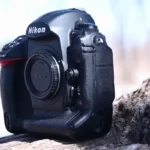
In a world obsessed with 50-megapixel sensors, 8K video, and eye-detect autofocus that can track a bird through a hurricane, picking up a camera from 2008 seems like a step backward. But if you talk to seasoned photographers, you’ll often hear a whisper of reverence for one specific model: the Nikon D700.
I’ve been shooting with the Nikon Z6—a fantastic modern mirrorless workhorse—but I find myself constantly reaching back for the D700. Why? Because specs on a sheet of paper don’t tell the whole story. Photography is about the feeling of the process and the soul of the image.
Here is why this legendary 12-megapixel tank is arguably the best budget full-frame camera you can buy today, even when people tell you it’s “obsolete.”
Let’s get the numbers out of the way. If you look at the D700 through the lens of modern marketing, it looks underpowered. But if you look at it through the lens of a working photographer, it’s a beast.
The 12.1 MP full-frame sensor is famous for its large photosites and beautiful color rendition.
Sensor: 12.1 Megapixel FX (Full Frame)
ISO Range: 200–6400 (Boostable to 25,600)
Autofocus: 51-point AF system (the same pro system found in the flagship D3)
Build: Magnesium alloy chassis with weather sealing
Compatibility: Internal focus motor (screw drive) for older AF-D lenses
For a camera released over a decade ago, having a native ISO up to 6400 and a boost to 25,600 was revolutionary. But the real magic isn’t in how high the number goes, but in how the camera handles the light.
1. The “Mythical” Image Quality
The biggest argument against the D700 is usually the resolution. “Is 12 megapixels enough?”
The short answer: Absolutely.
Unless you are printing billboard-sized advertisements or cropping in 200%, 12 megapixels is the sweet spot. For social media, web portfolios, and even standard prints (up to A3 size), the resolution is more than sufficient.
But it’s not just about sharpness. The D700 shares the same sensor architecture as the Nikon D3. Because the pixel count is lower on a large full-frame sensor, the individual pixels (photosites) are physically larger. This results in a “fat pixel” look—rich colors, smooth tonal transitions, and a certain depth that modern high-resolution sensors sometimes struggle to replicate without heavy editing.
Controls are tactile and immediate, allowing for quick adjustments on the fly.
2. Low Light Performance: Noise vs. Grain
This is where the D700 separates itself from even my modern Nikon Z6. When you push a modern sensor to high ISOs, you get digital noise. It looks like colored confetti; it looks like a computer glitch.
When you push the D700 to ISO 3200 or 4000, you don’t just get noise; you get grain.
There is an aesthetic quality to the interference on the D700 sensor that feels organic, almost like film grain. I am not afraid to shoot this camera at ISO 3200. The resulting images have a gritty, authentic atmosphere that is incredibly hard to fake in Lightroom. It gives your photos character, whereas modern noise just degrades quality.
3. The Joy of Small Raw Files
We often overlook the “cost” of high resolution: storage space and processing power. Shooting with the Nikon D800 or D850 produces massive files that can choke older laptops.
A 16GB CF card can hold nearly 800 Raw files, keeping your workflow lean and fast.
The D700’s raw files are lean. On a modest 16GB Compact Flash card, I can fit nearly 800 raw images. Importing them into Lightroom is instant. Editing is snappy. You spend less time waiting for previews to render and more time actually grading your photos. For event photography or just walking around the city, this efficiency is a breath of fresh air.
4. Ergonomics: Built Like a Tank
There is a distinct difference between holding a gadget and holding a tool. Mirrorless cameras are marvels of technology, but they often feel like computers with lenses attached.
The Nikon D700 feels like a weapon. It is heavy, dense, and fits into the hand with a confidence-inspiring grip. When you hold it, you feel like you can break down a door with it (please don’t), and then immediately take a photo of the aftermath.
The ergonomic layout puts every essential function at your fingertips, reducing menu diving.
The button layout is professional. You aren’t tapping a touchscreen; you are physically flipping switches for focus modes, metering, and drive modes. Muscle memory kicks in faster with the D700 than almost any other camera I’ve used.
5. The “Screw Drive” Advantage
One of the hidden gems of the D700 is the built-in focus motor. This allows you to use older Nikon AF-D lenses. These lenses are often optically fantastic, built out of metal, and cost a fraction of the price of modern Z-mount or G-series lenses.
The internal motor allows you to autofocus with legendary vintage glass like the 80-200mm f/2.8 push-pull.
For example, pairing this body with the older 80-200mm f/2.8 creates a professional kit for pennies on the dollar compared to modern equivalents. You get that “pro” look without the “pro” debt.
The Verdict: Is It Obsolete?
I recently took the D700 to a local car meet with the Sigma 35mm f/1.4 Art attached. A photographer standing behind me saw the camera and called it “obsolete.”
I didn’t argue. I just kept shooting.
There is a misconception that you need the newest gear to take good photos. The reality is, if an image isn’t connecting with the viewer, it’s rarely because of the pixel count. It’s because of the composition, the light, or the moment.
If you can find a Nikon D700 in good condition (shutter counts under 50k are great finds) for around $350-$400, buy it. Whether you are a student on a budget, a pro looking for a backup body with soul, or just someone who misses the tactile feel of a true DSLR, the D700 remains a legend for a reason.
It might be old tech, but the soul it captures is timeless.